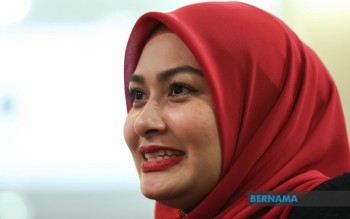
The government must take concrete steps to reduce Lembaga Tabung Haji's (TH) vulnerability to income generated by Urusharta Jamaah Sdn Bhd's (UJSB) sukuk, with Bentong MP Young Syefura Othman highlighting that this reliance represents an unresolved financial vulnerability requiring urgent attention. During parliamentary debate on the Royal Commission of Inquiry (RCI) findings into TH's operations, Young Syefura underscored that the sukuk contribution—accounting for approximately 26 per cent of the pilgrim fund's annual income according to the RCI Report—creates structural fragility that could undermine institutional stability if market conditions shift or if the arrangement faces disruption. This concentration of revenue from a single financial instrument exposes TH to risks that extend beyond normal investment volatility, she cautioned, emphasizing the government's responsibility to clarify its strategy for gradually reducing this dependence through early redemption mechanisms and broader income diversification.
Speaking during a Special Sitting of the Dewan Rakyat where Minister in the Prime Minister's Department (Religious Affairs) Dr Zulkifli Hasan briefed lawmakers on government actions to restore TH's financial health, Young Syefura framed the sukuk dependency question within a broader institutional governance imperative. She stressed that TH's long-term credibility among Malaysian pilgrims depends not merely on financial recovery but on demonstrable strength flowing from robust portfolio management and transparent decision-making frameworks. The MP's intervention reflects growing parliamentary concern that without addressing underlying structural vulnerabilities, any financial turnaround remains contingent on continuing favorable external conditions rather than genuine institutional reform.
Beyond the sukuk issue, Young Syefura pressed the government for comprehensive disclosure regarding the financial damage from 14 problematic investment decisions that the RCI flagged for forensic auditing. These investments span multiple sectors and entities including TH Plantations Bhd, TH Properties, and FGV Holdings, with significant asset depreciation documented across the portfolio. She demanded the government quantify total losses or value destruction from these decisions and explain the current status of forensic investigations designed to determine whether losses resulted from market misjudgment or from more culpable conduct.
The MP's emphasis on forensic auditing reflects the critical distinction between ordinary investment underperformance and potential misconduct requiring accountability. By specifically requesting that investigators determine whether negligence, abuse of power, or breach of fiduciary duty occurred in relation to these investments, Young Syefura signaled that parliamentary oversight expects not just financial recovery mechanisms but also identification and appropriate consequences for individuals or entities responsible for decisions that harmed the institution. This accountability dimension addresses concerns that TH's institutional culture may have enabled poor governance without corresponding personal consequences for decision-makers.
Young Syefura also raised the question of asset recovery potential, asking how much value might realistically be salvaged from the depreciated investments identified by the RCI. This query underscores a pragmatic parliamentary approach: understanding not only what went wrong historically but also what TH can realistically recover through active asset management, restructuring, or divestiture. Her line of questioning suggests that while forensic investigation serves accountability purposes, parallel efforts to maximize recovery of remaining value remain essential for TH's financial restoration.
Recognizing that governance lapses identified in the RCI report reflect systemic institutional weaknesses, Young Syefura proposed strengthening TH's financial and investment oversight architecture through expanded roles for established regulators. She specifically advocated greater involvement by Bank Negara Malaysia and the Securities Commission Malaysia in supervising TH's investment decisions and financial management. This proposal acknowledges that TH's previous governance structures failed to prevent large-scale value destruction and that independent regulatory engagement could introduce external discipline and expertise currently lacking within the institution.
Her recommendations extended to requiring independent risk assessment and rigorous due diligence processes for all major investments undertaken by TH going forward. This prospective governance measure would establish systematic gatekeeping mechanisms designed to prevent future replication of the poor investment decisions documented in the RCI findings. By emphasizing independent assessment rather than relying solely on internal TH expertise or decision-making, Young Syefura highlighted the need for institutional humility given the scale of previous failures.
The MP also advocated applying the "fit and proper" principle to appointments of board members and senior management, suggesting that TH's governance weaknesses partly reflected inadequate standards for evaluating whether appointees possessed the competence, integrity, and independence required for stewardship roles. This governance recommendation aligns with best practices in regulatory frameworks across Southeast Asia and seeks to ensure that future institutional leadership meets transparent, objective standards rather than advancing through patronage or political connections.
Young Syefura's parliamentary intervention carries significance beyond immediate TH-specific concerns, as it highlights how major institutional crises in Malaysia increasingly trigger demands for strengthened regulatory oversight and clearer separation between political patronage and professional governance standards. TH's crisis—involving billions in losses—has become a focal point for broader scrutiny of how government-linked entities operate and whether existing accountability mechanisms adequately protect public assets. The RCI process itself represents acknowledgment that standard institutional governance failed catastrophically.
For Malaysian pilgrims and their families, the parliamentary debate underscores the tension between TH's traditional social role as a trusted repository for hajj savings and its contemporary reality as a financially fragile institution dependent on sukuk income and facing legacy asset impairments. The pathway toward genuine restoration involves not only financial measures but also institutional transformation that residents across Malaysia can credibly believe protects their accumulated savings and ensures TH's long-term viability as a pilgrimage financing vehicle.

