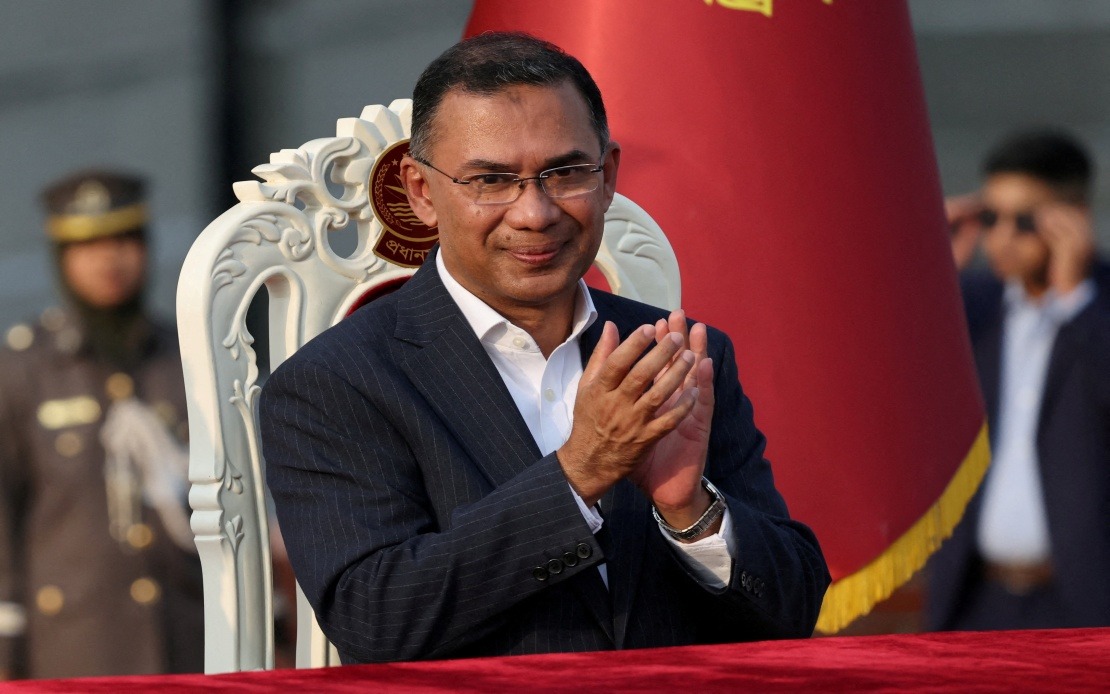
Bangladesh's newly appointed Prime Minister Tarique Rahman will touch down in Malaysia on June 22, embarking on what constitutes his first official bilateral visit to any nation since taking office in February 2026. The visit, conducted at the formal invitation of Prime Minister Datuk Seri Anwar Ibrahim, signals the continued importance of Malaysia-Bangladesh relations and reflects both countries' commitment to deepening strategic engagement across multiple sectors.
The visit will commence with a ceremonial reception at the Perdana Putra Complex, where Rahman will be formally received with the customary honours befitting a visiting head of government. Following the official welcoming protocols, the two prime ministers will engage in substantive bilateral discussions designed to chart the course of cooperation between their nations over the coming years. This opening engagement will set the tone for what Malaysian officials have indicated will be a comprehensive discussion agenda touching on economic, security, and regional matters.
During their meeting, Anwar and Rahman are expected to review progress achieved under existing cooperation frameworks and identify new avenues for collaboration. The discussions will focus particularly on expanding bilateral ties in several strategically important sectors. Trade and investment activity features prominently, alongside human resource development initiatives that have long formed a cornerstone of Malaysia-Bangladesh people-to-people engagement. The semiconductor industry represents an emerging area of mutual interest, reflecting both nations' aspirations to develop high-technology manufacturing capabilities. Energy cooperation, agricultural advancement, and educational partnerships round out the substantive agenda items both sides hope to advance.
The visit will yield concrete outcomes in the form of binding diplomatic instruments. Both countries will sign a memorandum of understanding focused on deepening cultural cooperation, recognising the substantial cultural affinities that bind their populations. Additionally, two exchanges of notes will be formalised: one addressing collaborative research and capacity-building in counter-terrorism operations, and another streamlining investment promotion and facilitation mechanisms. These instruments represent more than ceremonial gestures; they establish institutional frameworks through which expanded cooperation can materialise.
The economic relationship between Malaysia and Bangladesh has grown substantially in recent years. During 2025, bilateral trade totalled RM12.18 billion (US$2.84 billion), positioning Bangladesh among Malaysia's more significant trading relationships globally at 28th position. However, within the South Asian region, Bangladesh ranks second only to India as Malaysia's trading partner, export destination, and import source, underscoring the region's economic significance to Malaysian commerce. This trade composition reveals important economic complementarities: Malaysia primarily exports petroleum products to Bangladesh, with 2025 outflows reaching RM10.08 billion (US$2.35 billion). Conversely, Bangladesh supplies Malaysia with labour-intensive manufactured goods, particularly textiles, apparel, and footwear, with annual imports valued at RM2.10 billion (US$500 million).
The choice of Malaysia for Rahman's inaugural foreign visit carries symbolic weight within South Asian diplomatic circles. By selecting Malaysia rather than a traditional South Asian neighbour, Rahman signals openness toward deepening engagement with Southeast Asian economies and perhaps indicates the new Bangladeshi administration's foreign policy orientation toward regional integration beyond South Asia's conventional frameworks. For Malaysia, hosting this inaugural visit represents an opportunity to cement its position as a regional hub for dialogue and cooperation, particularly among developing economies seeking balanced partnerships.
The delegation accompanying Rahman reflects the visit's high-level significance. His spouse, Dr Zubaida Rahman, will join him, alongside Foreign Minister Dr Khalilur Rahman and senior government officials whose presence indicates the technical depth at which bilateral discussions will occur. This comprehensive representation ensures that not only political considerations but also substantive policy implementation mechanisms will receive attention during the visit.
The timing of this visit arrives during a period of evolving regional dynamics in South Asia and Southeast Asia. Bangladesh's recent political transitions have created opportunities for the country to recalibrate its external relationships and strategic posture. Malaysia, as a successful Muslim-majority nation with significant technological and industrial capabilities, offers a valuable model for development and a constructive partner for advancing shared interests. The expanded cooperation agenda suggests both countries recognise mutual benefits in closer engagement across economic, security, and cultural dimensions.
For Malaysian stakeholders, the visit underscores opportunities within South Asian markets as regional supply chains increasingly diversify away from traditional concentration patterns. Bangladesh's large population and growing manufacturing base present significant potential for Malaysian investors, particularly in sectors aligned with both countries' comparative advantages. Similarly, Bangladesh's substantial labour force and textile expertise complement Malaysia's capital and technological resources, creating possibilities for integrated regional value chains. The institutional frameworks being established through this visit will facilitate such commercial developments by reducing transaction costs and creating predictable operating environments for bilateral business engagement.
%22%2F%3E%3C%2Fpattern%3E%3C%2Fdefs%3E%3Crect%20width%3D%22100%25%22%20height%3D%22100%25%22%20fill%3D%22url(%23ph1h9cdg)%22%2F%3E%3Crect%20width%3D%22100%25%22%20height%3D%22100%25%22%20fill%3D%22url(%23ph1h9cdp)%22%2F%3E%3Ctext%20x%3D%2250%25%22%20y%3D%2250%25%22%20text-anchor%3D%22middle%22%20dominant-baseline%3D%22central%22%20fill%3D%22rgba(255%2C255%2C255%2C0.95)%22%20font-family%3D%22Georgia%2C%20'Times%20New%20Roman'%2C%20serif%22%20font-weight%3D%22700%22%20font-size%3D%22136%22%20letter-spacing%3D%22-0.02em%22%3ETerengganu%3C%2Ftext%3E%3C%2Fsvg%3E)