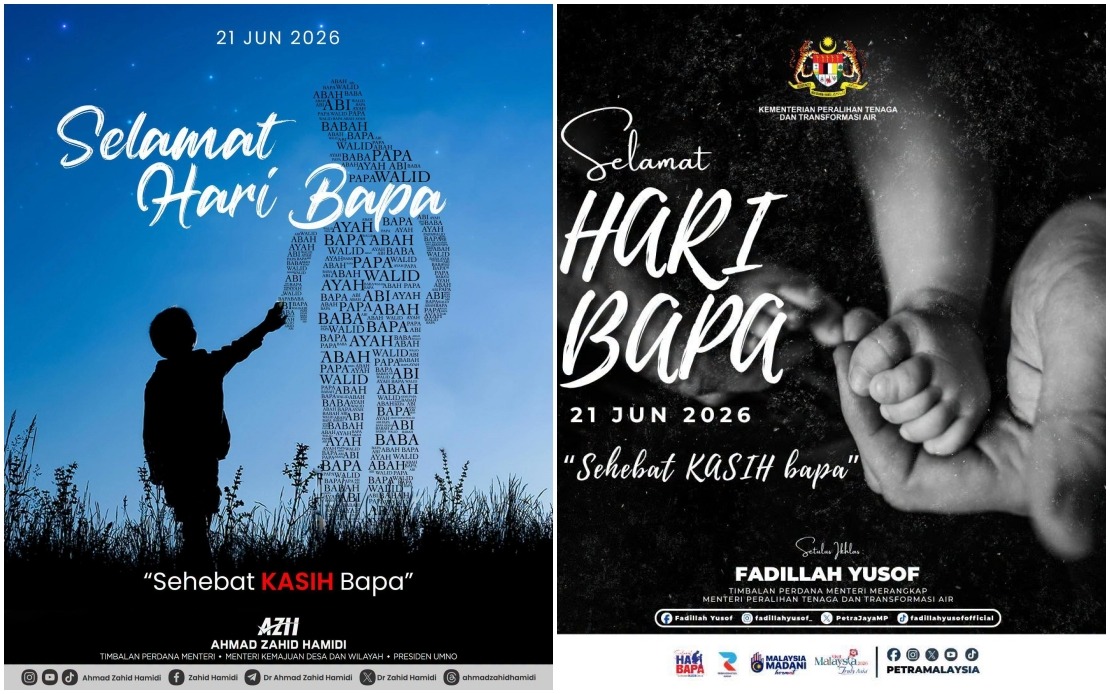
Malaysia's top government leadership used Father's Day on June 21 to publicly honour the role of fathers across the nation, with Deputy Prime Ministers Datuk Seri Dr Ahmad Zahid Hamidi and Datuk Seri Fadillah Yusof joining other Cabinet members in celebrating paternal devotion. The coordinated tributes reflected broader recognition of fathers' contributions to family and society, moving beyond traditional acknowledgments to explore the deeper dimensions of parental responsibility in Malaysian culture.
Datak Seri Dr Ahmad Zahid Hamidi, who holds the portfolio of Rural and Regional Development Minister, articulated a vision of fatherhood rooted in quiet resilience rather than visible grandeur. He drew a parallel to the film Papazola to illustrate how paternal affection frequently operates beneath the surface of daily life, manifesting through actions rather than declarations. His perspective emphasised that fathers routinely undertake hardship, offer constant prayer and dedication, and make countless personal sacrifices—all directed towards ensuring their families thrive and their children's futures remain secure. This characterisation challenges stereotypes of fatherhood by portraying it as fundamentally an act of service rather than authority.
The Deputy Prime Minister extended his message beyond mere celebration to issue a call for reciprocal engagement from adult children. Zahid encouraged younger generations to actively demonstrate appreciation while their fathers remain alive, arguing that quality time, regular check-ins and the honest expression of long-withheld affection constitute meaningful gifts. His appeal resonates particularly in Malaysian contexts where cultural norms sometimes inhibit overt emotional expression between family members, creating a gap between genuine feeling and articulation that can persist across generations.
Fadillah Yusof, serving simultaneously as Minister of Energy Transition and Water Transformation, expanded the conceptual framework for understanding fatherhood within Malaysian society. Rather than limiting fathers to economic provider roles, he positioned them as multifaceted figures who embody educational responsibility, protective duty and exemplary conduct. Fadillah's approach acknowledged the linguistic diversity of the Malaysian family unit, invoking the various terms by which fathers are called—bapa, ayah, abah, papa, walid, abi, appa, and apak—reflecting the multicultural composition of the nation and the different cultural traditions that shape how families structure authority and affection.
The Energy Transition Minister's framing positioned paternal sacrifice as intertwined with broader social cohesion. By emphasising that the wisdom fathers impart through counsel and the ethical foundation they provide through personal example become cornerstones of stable families and harmonious communities, Fadillah connected individual household dynamics to national wellbeing. This systemic perspective suggests that honouring fathers extends beyond sentiment to recognising their instrumental role in social stability and cultural transmission across generations.
Communications Minister Datuk Fahmi Fadzil contributed a more straightforward acknowledgment, offering gratitude for paternal love, sacrifice, guidance and familial dedication while invoking blessings for fathers' continued health, vitality and contentment. His intervention, though briefer than those of the Deputy Prime Ministers, nonetheless added ministerial weight to the national conversation, signalling government-wide recognition of the occasion.
Datak Seri Dr Dzulkefly Ahmad, the Health Minister, introduced a health-centric dimension to Father's Day observance by urging fathers to prioritise their own physical wellbeing. This framing recontextualises paternal health not as personal vanity but as familial responsibility—positioning self-care as an obligation enabling fathers to witness their children's future achievements and important life events. In a nation where chronic diseases including cardiovascular conditions and diabetes increasingly affect middle-aged and older men, this message carries particular relevance, linking individual health decisions to family continuity and generational transmission of values.
The coordinated nature of these tributes suggests deliberate government messaging around fatherhood that transcends ceremonial acknowledgment. Rather than treating Father's Day as a commercial occasion or mere calendar entry, Malaysia's ministerial leadership engaged substantively with questions about how paternal roles evolve, how emotional connection within families can be strengthened, and how fathers' wellbeing contributes to societal stability. This approach aligns with broader global discussions around masculinity and parenting that challenge narrower conceptions of male family participation.
The emphasis on sacrifice permeating these statements warrants scrutiny in the Malaysian context, where economic pressures on households remain significant and where many fathers genuinely struggle to balance work demands with family engagement. By celebrating paternal sacrifice without explicitly addressing structural barriers to meaningful family time—including demanding work cultures, extended commutes and inadequate parental leave provisions—the tributes risk romanticising hardship rather than proposing systemic solutions.
Multicultural Malaysia presents distinctive dynamics for fatherhood discourse. The invocation of multiple linguistic and cultural traditions of paternity suggests recognition that Malaysian fathers operate within diverse frameworks shaped by Malay, Chinese, Indian, indigenous and other communal norms. These distinct traditions sometimes emphasise different aspects of paternal responsibility, from economic provision to spiritual guidance to emotional availability, creating a heterogeneous landscape that unified national messaging must navigate carefully.
The ministers' focus on unspoken love and unexpressed affection taps into a tension particularly acute in many Asian cultures, where emotional restraint and formal respect hierarchies sometimes prevent the articulation of feeling. By naming this gap and encouraging its closure, the officials implicitly acknowledged that Malaysian families might benefit from cultural permission to express attachment more openly—a subtle but potentially significant departure from traditionally more reserved family communication patterns.
Looking forward, these Father's Day tributes reflect evolving conversations about parental roles in contemporary Malaysia. As the nation navigates demographic shifts, economic transformation and social modernisation, discussions of fatherhood inevitably become forums for negotiating broader questions about family structure, gender roles and intergenerational obligation. The ministerial engagement with these themes suggests that government recognises fatherhood as a matter of public concern rather than purely private or domestic significance.
%22%2F%3E%3C%2Fpattern%3E%3C%2Fdefs%3E%3Crect%20width%3D%22100%25%22%20height%3D%22100%25%22%20fill%3D%22url(%23ph28d0eg)%22%2F%3E%3Crect%20width%3D%22100%25%22%20height%3D%22100%25%22%20fill%3D%22url(%23ph28d0ep)%22%2F%3E%3Ctext%20x%3D%2250%25%22%20y%3D%2250%25%22%20text-anchor%3D%22middle%22%20dominant-baseline%3D%22central%22%20fill%3D%22rgba(255%2C255%2C255%2C0.95)%22%20font-family%3D%22Georgia%2C%20'Times%20New%20Roman'%2C%20serif%22%20font-weight%3D%22700%22%20font-size%3D%22151%22%20letter-spacing%3D%22-0.02em%22%3EStrategic%3C%2Ftext%3E%3C%2Fsvg%3E)
%22%2F%3E%3C%2Fpattern%3E%3C%2Fdefs%3E%3Crect%20width%3D%22100%25%22%20height%3D%22100%25%22%20fill%3D%22url(%23ph3284yg)%22%2F%3E%3Crect%20width%3D%22100%25%22%20height%3D%22100%25%22%20fill%3D%22url(%23ph3284yp)%22%2F%3E%3Ctext%20x%3D%2250%25%22%20y%3D%2250%25%22%20text-anchor%3D%22middle%22%20dominant-baseline%3D%22central%22%20fill%3D%22rgba(255%2C255%2C255%2C0.95)%22%20font-family%3D%22Georgia%2C%20'Times%20New%20Roman'%2C%20serif%22%20font-weight%3D%22700%22%20font-size%3D%22320%22%20letter-spacing%3D%22-0.02em%22%3EUS%3C%2Ftext%3E%3C%2Fsvg%3E)
%22%2F%3E%3C%2Fpattern%3E%3C%2Fdefs%3E%3Crect%20width%3D%22100%25%22%20height%3D%22100%25%22%20fill%3D%22url(%23ph31tp1g)%22%2F%3E%3Crect%20width%3D%22100%25%22%20height%3D%22100%25%22%20fill%3D%22url(%23ph31tp1p)%22%2F%3E%3Ctext%20x%3D%2250%25%22%20y%3D%2250%25%22%20text-anchor%3D%22middle%22%20dominant-baseline%3D%22central%22%20fill%3D%22rgba(255%2C255%2C255%2C0.95)%22%20font-family%3D%22Georgia%2C%20'Times%20New%20Roman'%2C%20serif%22%20font-weight%3D%22700%22%20font-size%3D%22226%22%20letter-spacing%3D%22-0.02em%22%3EHamzah%3C%2Ftext%3E%3C%2Fsvg%3E)