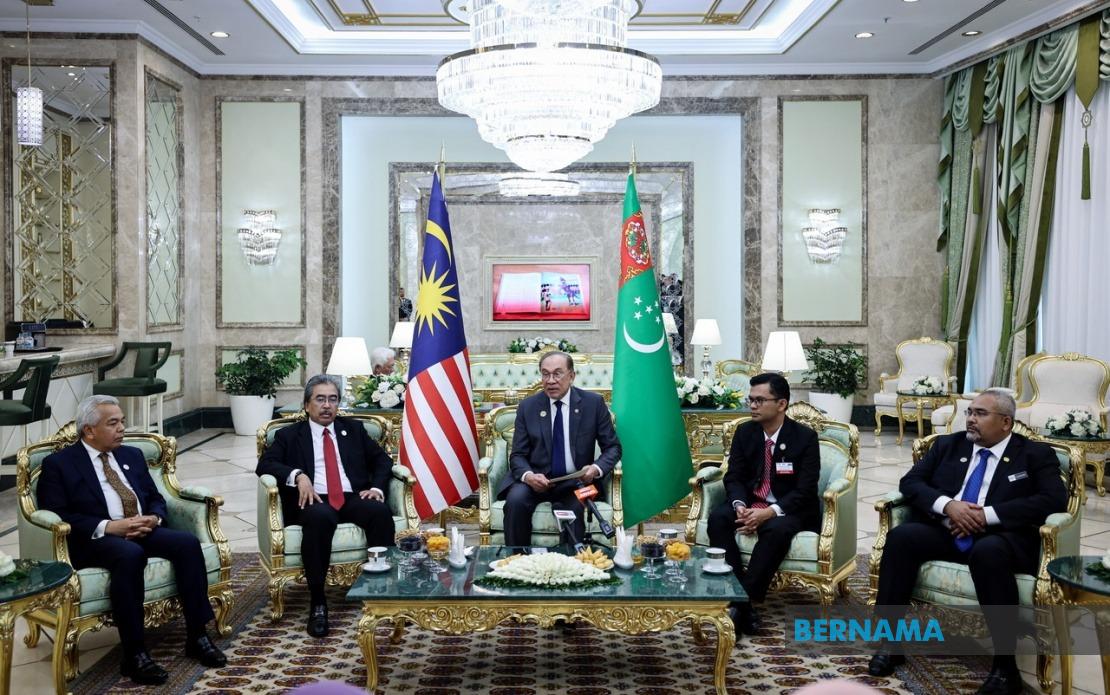
Prime Minister Datuk Seri Anwar Ibrahim has characterized his recent official visit to Turkmenistan as a watershed moment for Malaysia's engagement with the Central Asian nation, delivering tangible gains in strengthening diplomatic bonds and laying groundwork for expanded cooperation. Speaking from Kuala Lumpur, Anwar underscored how the two-day mission, which commenced on June 18, represented not merely a ceremonial courtesy call but a substantive effort to establish durable frameworks for bilateral collaboration across multiple sectors of mutual concern.
The energy sector emerged as the primary focal point of the discussions during the visit, reflecting Malaysia's strategic interest in diversifying its energy partnerships beyond traditional suppliers in the Middle East and Southeast Asia. Turkmenistan possesses vast hydrocarbon reserves, particularly natural gas resources, which present considerable commercial potential for Malaysian enterprises and could potentially supply feedstock for petrochemical and liquefied natural gas operations. By positioning energy cooperation as a cornerstone of the new relationship, Anwar signalled Malaysia's recognition that Central Asian resources warrant serious diplomatic and commercial attention, especially as global energy markets undergo significant realignment amid the energy transition.
The significance of this visit lies partly in its timing and historical context. This represents Anwar's inaugural official trip to Turkmenistan since assuming the premiership in November 2022, making it a carefully choreographed diplomatic overture following his election to Malaysia's highest office. The visit occurred at the explicit invitation of President Serdar Berdimuhamedov, indicating reciprocal interest from the Turkmenistan side in cultivating a substantive relationship with Southeast Asia's third-largest economy. For Malaysia, establishing closer ties with Caspian-region nations reflects a broader diversification strategy in foreign policy, moving beyond purely regional concerns to embrace opportunities in Europe's eastern periphery.
Anwar's delegation composition underscored the economic and commercial dimensions of the mission. The inclusion of Minister of Investment, Trade and Industry Datuk Seri Johari Abdul Ghani and Minister of Economy Akmal Nasrullah Mohd Nasir signalled that concrete business initiatives were on the negotiating agenda, rather than purely political symbolism. The presence of PETRONAS officials proved particularly instructive, as Malaysia's national petroleum corporation possesses the technical expertise and capital resources necessary to undertake major energy projects. This institutional arrangement permitted discussions to proceed at both governmental and corporate levels simultaneously, potentially accelerating transaction processes that might otherwise languish in bureaucratic channels.
The Malaysian Prime Minister extended formal acknowledgement to President Berdimuhamedov and the broader Turkmenistan administration for their hospitality and cooperation during the visit. Such diplomatic niceties, while sometimes dismissed as ceremonial flourish, function as critical signalling mechanisms in international relations, particularly in contexts where cultural and linguistic differences might otherwise complicate rapport-building. By publicly lauding the reception extended to the Malaysian contingent, Anwar reinforced the bilateral relationship at a moment when public attention could amplify the message domestically within both nations.
Anwar's statements emphasised the prospect of establishing fresh avenues for expanding bilateral engagement, deliberately employing language suggesting the relationship had entered new territory. This rhetorical framing allowed domestic Malaysian audiences to perceive the visit as generating tangible progress rather than merely maintaining existing channels. The explicit reference to exploring cooperation "for the prosperity of both countries" positioned the relationship as fundamentally reciprocal, avoiding the asymmetrical undertones that might characterise relationships between larger and smaller economies, thereby enhancing the diplomatic palatability of any agreements ultimately reached.
The logistical success of the visit warranted Anwar's specific commendation of the ministry teams, the Malaysian Embassy in Ashgabat, PETRONAS, security personnel, and media representatives who facilitated the delegation's activities. Such institutional acknowledgements, while appearing mundane, serve important functions in maintaining morale within the diplomatic corps and encouraging institutional buy-in for ongoing bilateral engagement. The Malaysian Embassy in Ashgabat, as a relatively modest mission in a geographically distant country, would have required substantial preparation to accommodate a prime ministerial visit, making explicit recognition of its efforts both gracious and strategically sound.
For Malaysian stakeholders in the energy sector, this visit represents potential market expansion opportunities. Turkmenistan's significant natural gas reserves and the country's geographic position along transit routes to European and Asian markets create multiple commercial pathways. Malaysian companies with expertise in liquefied natural gas processing, petrochemical production, and energy infrastructure could potentially establish partnerships or joint ventures with Turkmen entities, provided regulatory frameworks and security conditions permit such arrangements.
The broader geopolitical implications merit consideration as well. Malaysia's diplomatic engagement with Central Asian nations reflects a hedging strategy in an era of great power competition, wherein Southeast Asian states increasingly cultivate relationships beyond traditional spheres of influence. By establishing closer ties with Turkmenistan, Malaysia positions itself as a nation capable of forging partnerships across Eurasia rather than remaining confined to Asian regional concerns. This approach aligns with Malaysia's historical positioning as a bridge between civilisations and demonstrates pragmatic foreign policy thinking that prioritises economic opportunity and strategic diversification.
The Central Asian dimension has traditionally received limited attention from Southeast Asian governments, partly due to geographic distance and limited historical ties. Anwar's visit potentially signals a recalibration of Malaysian foreign policy priorities, recognising that energy security and economic diversification necessitate engagement with actors beyond the immediate regional neighbourhood. Should this visit catalyse substantive commercial agreements, particularly in the energy sector, it could establish a template for expanded Malaysian engagement throughout Central Asia, potentially extending to neighbouring Kazakhstan, Uzbekistan, and other regional actors.

%22%2F%3E%3C%2Fpattern%3E%3C%2Fdefs%3E%3Crect%20width%3D%22100%25%22%20height%3D%22100%25%22%20fill%3D%22url(%23ph2hy9vg)%22%2F%3E%3Crect%20width%3D%22100%25%22%20height%3D%22100%25%22%20fill%3D%22url(%23ph2hy9vp)%22%2F%3E%3Ctext%20x%3D%2250%25%22%20y%3D%2250%25%22%20text-anchor%3D%22middle%22%20dominant-baseline%3D%22central%22%20fill%3D%22rgba(255%2C255%2C255%2C0.95)%22%20font-family%3D%22Georgia%2C%20'Times%20New%20Roman'%2C%20serif%22%20font-weight%3D%22700%22%20font-size%3D%22272%22%20letter-spacing%3D%22-0.02em%22%3EAnwar%3C%2Ftext%3E%3C%2Fsvg%3E)