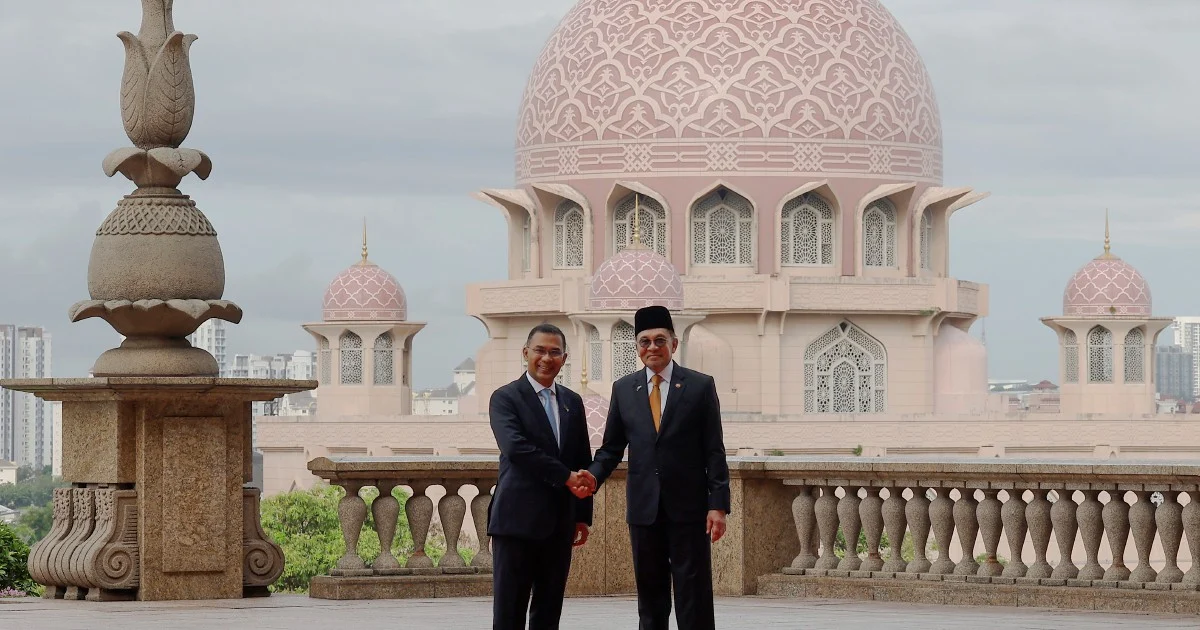
Prime Minister Anwar Ibrahim extended a formal state welcome to Bangladesh Prime Minister Tarique Rahman at the Perdana Putra Complex in Putrajaya, marking a significant diplomatic engagement between the two South and Southeast Asian neighbours. The two-day official visit represents an opportunity for Malaysia and Bangladesh to renew dialogue at the highest political level after a period of limited high-level interaction between Dhaka and Kuala Lumpur.
The ceremonial reception in Putrajaya underscores the importance both nations place on their bilateral relationship. Official welcomes of this nature signal commitment to strengthening ties across multiple sectors, from trade and investment to security and cultural exchange. For Malaysia, welcoming a sitting Bangladesh premier demonstrates its continued focus on deepening regional engagement beyond its immediate ASEAN circle, reflecting the country's broader foreign policy of maintaining constructive relations with key South Asian partners.
Bangladesh, as the world's eighth most populous nation with nearly 170 million people, represents both a significant economic market and a crucial regional player in South Asia. Its position as a major garment manufacturing hub and emerging digital economy makes it strategically important for Malaysian businesses and investors seeking diversification opportunities. The timing of Rahman's visit may also reflect Bangladesh's interest in expanding partnerships beyond traditional South Asian frameworks, particularly as it navigates complex geopolitical dynamics in the region.
The two-day format of the visit suggests a comprehensive agenda beyond ceremonial functions. Such official tours typically include bilateral meetings, sector-specific discussions, and potentially memoranda of understanding or joint declarations addressing areas of mutual interest. Trade relations, tourism, education, and investment opportunities are likely focal points, given the complementary nature of both economies and their shared interests in regional stability.
For Malaysia, engaging with Bangladesh's leadership comes at a time when the country is actively pursuing economic diversification and regional integration strategies. The presence of a significant Bangladeshi diaspora in Malaysia, numbering in the hundreds of thousands across various sectors including construction, manufacturing, and domestic work, adds a people-to-people dimension to official relations. These communities often serve as bridges between nations, and their concerns regarding migration, worker rights, and family connectivity frequently feature in high-level diplomatic discussions.
The visit also carries implications for Myanmar-adjacent regional stability. Bangladesh shares a border with Myanmar and has hosted over a million Rohingya refugees, making it a central player in one of Southeast Asia's most pressing humanitarian crises. Malaysia's ongoing engagement with Bangladesh on this issue, both through bilateral channels and regional mechanisms like ASEAN, provides an important platform for coordinating humanitarian responses and exploring durable solutions.
From a geopolitical perspective, Bangladesh's diplomatic outreach to Southeast Asia reflects Dhaka's strategy of strengthening ties with regional partners while maintaining its core South Asian relationships. The country has been actively engaging with Vietnam, Thailand, and Indonesia in recent years, viewing Southeast Asia as a crucial partner in its economic development agenda and regional security architecture. Malaysia, as a major Southeast Asian economy and influential ASEAN member, naturally features prominently in this engagement strategy.
The official reception also demonstrates the importance both nations place on ceremonial diplomacy. The use of Perdana Putra for welcoming distinguished guests signals the visit's significance within Malaysia's diplomatic calendar. Such formalities, while sometimes viewed as merely symbolic, serve important functions in establishing rapport, demonstrating respect, and creating conducive atmospheres for substantive negotiations on contentious or sensitive issues.
Bilateral trade between Malaysia and Bangladesh has room for expansion. While Bangladesh remains a relatively smaller trading partner compared to Malaysia's engagement with developed economies or larger ASEAN neighbours, the relationship holds untapped potential. Malaysian companies have investments in Bangladesh's manufacturing and energy sectors, while Bangladeshi entrepreneurs have begun establishing footholds in the Malaysian market. Enhanced trade agreements and investment frameworks could be among the outcomes pursued during this visit.
The timing of this visit may also reflect evolving political dynamics within Bangladesh itself. Rahman's government, which took office following significant political transitions, has been eager to strengthen international partnerships and demonstrate its commitment to regional diplomacy. A successful visit to Malaysia, resulting in concrete agreements and renewed cooperation, would serve to enhance his administration's international standing and showcase effective foreign policy management.
Educational and cultural exchanges represent another dimension of Malaysia-Bangladesh relations worthy of expansion. Both nations share Islamic heritage while maintaining diverse, multicultural societies. Universities and cultural institutions in both countries have opportunities to develop academic partnerships, research collaborations, and student exchange programmes that could deepen mutual understanding and create lasting people-to-people connections.
Moving forward, the outcomes of this official visit will likely set the tone for Malaysia-Bangladesh relations in the coming years. Whether the visit produces concrete agreements, enhanced trade commitments, or strengthened security cooperation, it signals to both nations' populations and the broader international community that geographical distance and different regional alignments need not impede meaningful diplomatic engagement. For Malaysia particularly, it reinforces its positioning as a truly regional power engaged with partners across the Indian Ocean and beyond, rather than one confined solely to Southeast Asian frameworks.