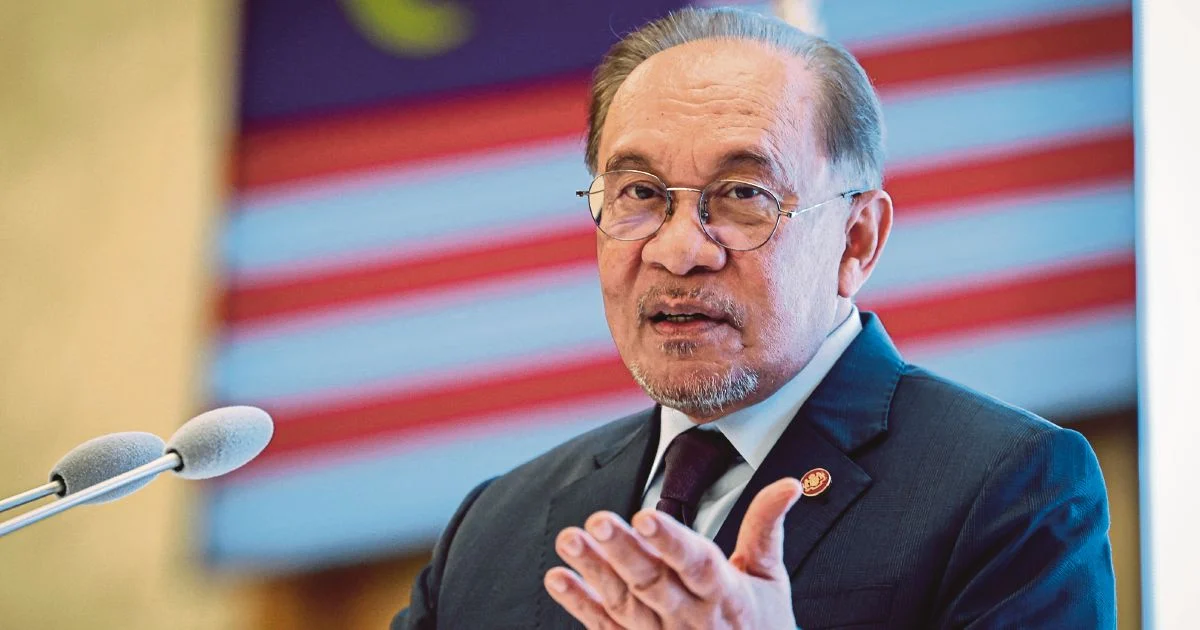
Prime Minister Datuk Seri Anwar Ibrahim has interpreted Turkmenistan's selection of Petronas as a strategic partner in one of the world's largest gas fields as a significant endorsement of Malaysia's position on the global stage. Speaking in Batu Kawan, Anwar framed the deal as reflecting broader international confidence in the nation's political stability, social cohesion, and economic capabilities — a perspective that underscores how resource agreements can serve as barometers of a country's standing among major international investors.
The partnership represents a substantial vote of confidence from a Central Asian energy producer with considerable reserves. Turkmenistan possesses some of the planet's most substantial natural gas deposits, and the decision to entrust a Malaysian company with a meaningful stake indicates that Petronas has successfully competed against other international oil and gas majors. This outcome carries tangible implications for Malaysia's energy security and economic diversification, as participation in offshore gas development projects can generate long-term revenue streams and technological expertise.
Anwar's interpretation of the deal extends beyond commercial mechanics to encompass the broader political messaging around Malaysia's global image. In recent years, Southeast Asian nations have faced scrutiny over governance issues, geopolitical alignment, and economic management. When major energy-producing nations allocate contracts to Malaysian firms, they implicitly signal that they regard the country as a reliable, professional partner capable of managing complex projects according to international standards. This perception matters considerably when competing for foreign direct investment across multiple sectors.
Turkmenistan's confidence in Petronas also reflects the national oil and gas company's operational track record and technical expertise. Petronas operates across the Asia-Pacific region and maintains established relationships with international partners, giving it credibility in executing large-scale resource extraction projects. The company's experience managing challenging subsea environments and coordinating with multiple stakeholders positions it as a capable counterparty for ventures requiring significant capital investment and technical sophistication.
For Malaysia's economy, energy sector deals of this magnitude carry multiple layers of significance. Beyond the direct revenue accruing from operational profit-sharing arrangements, such partnerships typically generate downstream benefits including engineering contracts, supply chain opportunities, and skilled employment. The presence of international energy projects within Malaysia's corporate ecosystem also attracts ancillary service providers, creating a multiplier effect throughout the economy. Additionally, securing stakes in foreign reserves reduces Malaysia's dependence on domestic production, which has been declining gradually over recent decades.
The timing of this partnership announcement holds relevance within Malaysia's broader strategic positioning. As global energy markets transition and fossil fuel demand patterns evolve, securing long-term exposure to stable, high-quality gas reserves provides a hedge against uncertainty. Unlike shorter-duration projects, major field developments typically commit participating parties to two-to-three-decade timeframes, meaning Petronas has locked in decades of cash generation from Central Asian operations.
Anwar's public emphasis on this deal also serves domestic political purposes. In Malaysia, evidence of international commercial confidence can bolster narratives about national competence and forward momentum. Highlighting foreign partners' faith in Malaysian institutions helps reinforce the government's economic management credentials and provides tangible counter-arguments to critics who question the direction of recent policy. Resource agreements with major energy producers represent easily understood symbols of national achievement for domestic audiences.
Regionally, the Turkmenistan deal situates Malaysia within a broader network of energy relationships spanning Central Asia, the Middle East, and the Asia-Pacific. This positioning matters as competition intensifies for access to hydrocarbon resources and for influence over energy supply chains. Southeast Asian nations increasingly recognize that energy diversification and international resource partnerships enhance both economic resilience and geopolitical flexibility. Petronas's successful negotiation of this arrangement strengthens Malaysia's hand in pursuing similar opportunities elsewhere in the energy-rich Central Asian republics.
The agreement also highlights how Malaysian corporations can leverage the nation's financial markets, technical expertise, and diplomatic relationships to punch above their regional weight. Petronas competes directly with American, European, Russian, and Asian energy majors in securing premium assets. When a Malaysian firm prevails in such competition, it validates the quality of local corporate governance and technical capability, potentially opening doors for other Malaysian companies seeking partnerships in other sectors.
Looking forward, successful execution of this Turkmenistan partnership will determine whether initial international confidence translates into sustained credibility. Energy projects spanning decades encounter unforeseen challenges, regulatory changes, and market volatility. Petronas's performance in navigating these complexities will shape Turkmenistan's willingness to expand the relationship and influence how other energy-producing nations evaluate Malaysian partners.
For Malaysian stakeholders in energy, finance, and manufacturing sectors, the Turkmenistan agreement signals a renewal of international appetite for partnerships with established Malaysian enterprises. This confidence, Anwar suggests, reflects not merely commercial calculations but also recognition of Malaysia's broader institutional strengths and reliable governance framework.

%22%2F%3E%3C%2Fpattern%3E%3C%2Fdefs%3E%3Crect%20width%3D%22100%25%22%20height%3D%22100%25%22%20fill%3D%22url(%23ph2hy9vg)%22%2F%3E%3Crect%20width%3D%22100%25%22%20height%3D%22100%25%22%20fill%3D%22url(%23ph2hy9vp)%22%2F%3E%3Ctext%20x%3D%2250%25%22%20y%3D%2250%25%22%20text-anchor%3D%22middle%22%20dominant-baseline%3D%22central%22%20fill%3D%22rgba(255%2C255%2C255%2C0.95)%22%20font-family%3D%22Georgia%2C%20'Times%20New%20Roman'%2C%20serif%22%20font-weight%3D%22700%22%20font-size%3D%22272%22%20letter-spacing%3D%22-0.02em%22%3EAnwar%3C%2Ftext%3E%3C%2Fsvg%3E)