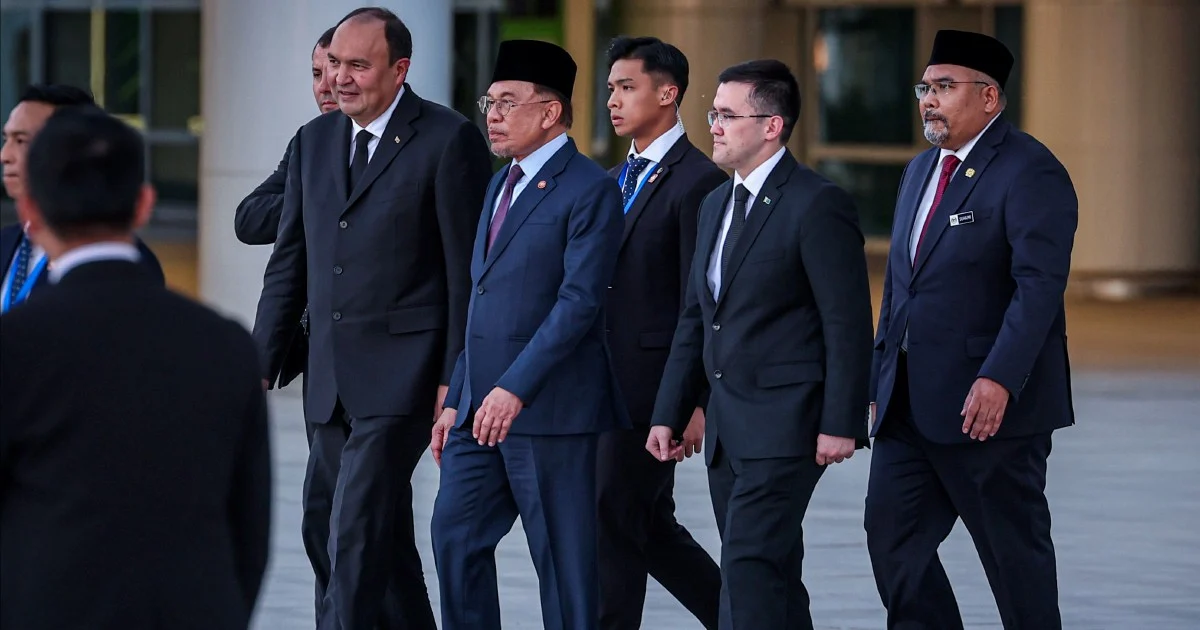
Prime Minister Datuk Seri Anwar Ibrahim is using the final phase of his official visit to Turkmenistan to cement economic partnerships with the Central Asian nation, which commands significant strategic importance along the Caspian Sea's eastern shoreline. The culmination of his diplomatic mission involves a series of high-level bilateral meetings designed to unlock trade opportunities and attract Malaysian investment into the region.
Turkmenistan represents an emerging frontier for Malaysian business expansion, particularly given the country's substantial natural gas reserves and developing infrastructure projects. The nation's position along major transport corridors connecting Asia to Europe and the Middle East makes it strategically valuable for Malaysian companies seeking to establish regional hubs or access broader Central Asian markets. This visit signals Malaysia's recognition that economic diversification beyond traditional Southeast Asian markets is essential for long-term commercial growth.
The bilateral engagement between Anwar and Turkmenistan's leadership will likely explore frameworks for closer cooperation in energy, technology, and manufacturing sectors. Turkmenistan's hydrocarbon-dependent economy creates opportunities for Malaysian expertise in downstream petrochemical industries, refining, and energy-related services. Additionally, the country's ongoing infrastructure modernisation initiatives could attract Malaysian construction and engineering firms with track records in complex regional projects.
Investment protections and facilitations agreements are typically central to such high-level visits, as they provide the legal certainty Malaysian enterprises require before committing substantial capital to unfamiliar markets. Enhanced bilateral investment treaties would reduce perceived risks for Malaysian shareholders considering long-term commitments in Turkmenistan, addressing concerns about regulatory consistency and dispute resolution mechanisms. Such formal arrangements also signal to Malaysian financial institutions that business in the region warrants credit support and insurance products.
For Malaysian exporters, Turkmenistan's position creates advantages in serving neighbouring countries across Central Asia and the South Caucasus, where Malaysia's manufactured goods and services have limited market penetration. The nation's purchasing power, driven by energy revenues, supports demand for quality consumer goods, industrial equipment, and professional services where Malaysian suppliers can compete effectively. Trade missions and business council formations typically emerge from such visits, facilitating ongoing commercial dialogue beyond government-to-government channels.
Turkmenistan's government has increasingly sought to diversify its economic base beyond energy extraction, presenting opportunities aligned with Malaysia's strengths in palm oil processing, electronics manufacturing, and financial services. Joint ventures in these sectors could leverage Malaysian management expertise and technology transfer while creating employment and economic diversification opportunities for Turkmenistan. The Central Asian nation's young, educated workforce represents another attraction for Malaysian companies considering regional manufacturing or service operations.
From a broader Malaysian perspective, engagement with Turkmenistan underscores the government's commitment to expanding ASEAN's influence and commercial networks beyond Southeast Asia. As Chinese and Russian interests dominate Central Asian affairs, Malaysia's independent economic diplomacy offers Turkmenistan an alternative partner with distinct perspectives on trade facilitation and investment structures. This positioning enhances Malaysia's relevance as a bridge economy capable of fostering connections between distant regions.
The timing of Anwar's visit reflects Malaysia's strategic recalibration following post-pandemic economic recovery. Malaysian policymakers recognise that sustained growth requires accessing emerging consumer markets and positioning Malaysian firms within global supply chains that extend far beyond traditional geographic zones. Turkmenistan's untapped potential for Malaysian business expansion aligns with national objectives to increase exports and secure new investment destinations for Malaysian capital seeking competitive returns.
Cultural and educational exchanges typically complement commercial discussions during such visits, as people-to-people connections strengthen commercial relationships over time. Scholarship programmes for Turkmen students at Malaysian universities, training exchanges for civil servants, and tourism promotion agreements all contribute to creating constituencies in both countries with vested interests in sustained economic cooperation. These softer dimensions of bilateral relations often prove decisive in maintaining momentum through inevitable commercial challenges and market fluctuations.
The diplomatic occasion also reflects Malaysia's broader engagement strategy in Muslim-majority regions beyond ASEAN. Turkmenistan's significant Muslim population and secular governance model provide common ground with Malaysia's own approach to religious pluralism and modern state administration. This cultural affinity, combined with commercial interests, creates stable foundations for long-term partnerships less vulnerable to ideological shifts or political tensions that sometimes destabilise relationships based purely on economic calculation.
Successful outcomes from Anwar's Turkmenistan discussions would likely encourage follow-up missions by Malaysian business delegations and government agencies responsible for trade promotion. Trade offices or business representation facilities in Ashgabat could eventually emerge, providing permanent infrastructure supporting ongoing commercial interaction. Such developments represent gradual but meaningful expansion of Malaysia's economic footprint in regions where the country previously maintained minimal commercial presence.

%22%2F%3E%3C%2Fpattern%3E%3C%2Fdefs%3E%3Crect%20width%3D%22100%25%22%20height%3D%22100%25%22%20fill%3D%22url(%23ph2hy9vg)%22%2F%3E%3Crect%20width%3D%22100%25%22%20height%3D%22100%25%22%20fill%3D%22url(%23ph2hy9vp)%22%2F%3E%3Ctext%20x%3D%2250%25%22%20y%3D%2250%25%22%20text-anchor%3D%22middle%22%20dominant-baseline%3D%22central%22%20fill%3D%22rgba(255%2C255%2C255%2C0.95)%22%20font-family%3D%22Georgia%2C%20'Times%20New%20Roman'%2C%20serif%22%20font-weight%3D%22700%22%20font-size%3D%22272%22%20letter-spacing%3D%22-0.02em%22%3EAnwar%3C%2Ftext%3E%3C%2Fsvg%3E)