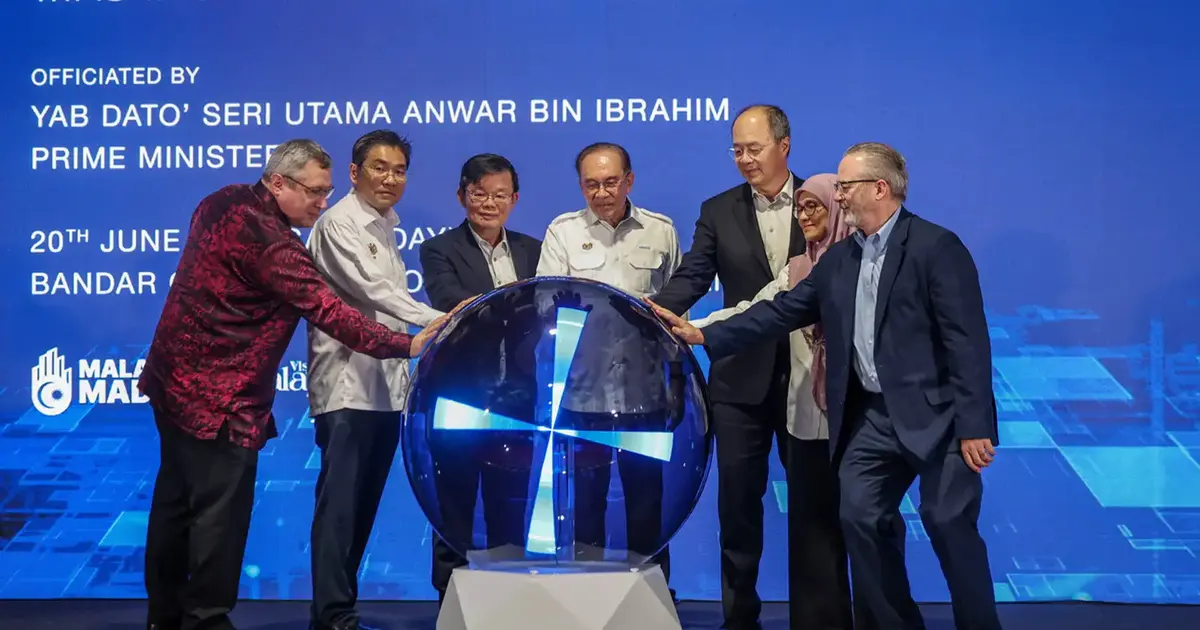
Prime Minister Anwar Ibrahim has moved to deepen the strategic relationship between Malaysia's burgeoning semiconductor sector and its academic institutions by appointing a dedicated adviser to the role, signalling the government's commitment to bridging the gap between industrial practitioners and university-based research.
The appointment underscores a broader policy direction within the Anwar administration to position Malaysia more competitively within the global semiconductor value chain. As the region grapples with supply-chain vulnerabilities and geopolitical tensions surrounding chip manufacturing, the government recognises that sustained collaboration between industry players and research-intensive universities represents a critical pathway to developing domestic talent, fostering innovation, and reducing dependency on foreign expertise and technology transfers.
In announcing the move, Anwar stressed that the appointment would not impose any additional financial burden on the government's budget. This fiscal discipline is noteworthy given Malaysia's ongoing efforts to balance economic stimulus with fiscal consolidation, and suggests the government intends to leverage existing institutional capacity and resources to deliver strategic outcomes in high-technology sectors without widening the deficit.
The decision reflects a recognition that Malaysia's semiconductor industry, which has historically focused on assembly, testing, and packaging operations, faces mounting pressure to move up the value chain. Competition from neighbouring economies and the relentless march of automation mean that maintaining the sector's competitiveness hinges increasingly on innovation, advanced skills development, and the ability to attract cutting-edge manufacturing and design work. Universities, which house much of the nation's engineering talent and research infrastructure, are viewed as essential partners in this transition.
For Malaysian universities, the enhanced collaboration presents both opportunities and responsibilities. It offers departments in electrical engineering, materials science, and related disciplines greater access to real-world industrial challenges and funding opportunities. Simultaneously, it places expectations on academic institutions to align curricula with industry needs, produce graduates immediately deployable in advanced roles, and commercialise research outputs more effectively. The adviser's role will likely centre on facilitating structured dialogue, identifying complementary strengths, and removing administrative or cultural barriers that have historically hindered university-industry partnerships in Malaysia.
The appointment also carries implications for Southeast Asia's technology ecosystem more broadly. Malaysia's semiconductor sector employs tens of thousands and generates substantial export revenue, making any boost to its competitiveness a regional concern. If the initiative succeeds in strengthening local innovation capacity and skill pipelines, it could become a model for other nations in the region seeking to elevate their role in semiconductor value chains rather than remaining passive assembly hubs. Conversely, failure to translate collaboration into tangible outcomes risks widening the technological gap between Malaysia and more advanced semiconductor economies.
The timing of the move is strategic. Global semiconductor markets remain volatile, with demand fluctuations creating both risks and windows of opportunity for smaller players to carve out niches or deepen specialisations. Countries like Taiwan, South Korea, and increasingly Vietnam have leveraged close university-industry ties to capture disproportionate shares of high-value chip manufacturing and design work. Malaysia, despite its considerable manufacturing base, has often been overshadowed in narratives about the industry's technological frontier. A renewed emphasis on academic engagement signals intent to change that narrative.
Challenges remain considerable. Malaysian universities, while respected regionally, often struggle with research funding, brain drain to overseas institutions, and slower technology adoption compared to counterparts in developed economies. Bridging these gaps requires not merely appointing an adviser but committing resources to research centres, graduate training programmes, and intellectual property frameworks that enable knowledge transfer without compromising academic independence. The government's assertion that the appointment incurs no additional cost suggests these mechanisms may already exist or are being repurposed rather than newly built, which raises questions about the depth of institutional support underpinning the initiative.
Industry observers will be watching whether the adviser role translates into concrete mechanisms such as joint research funding pools, internship pathways, or intellectual property-sharing agreements. The semiconductor sector's success ultimately depends on sustained engagement, not merely symbolic gestures, and the true measure of this appointment will lie in how effectively it mobilises existing resources toward tangible collaboration outcomes that strengthen Malaysia's technological sovereignty and industrial resilience.

%22%2F%3E%3C%2Fpattern%3E%3C%2Fdefs%3E%3Crect%20width%3D%22100%25%22%20height%3D%22100%25%22%20fill%3D%22url(%23ph2hy9vg)%22%2F%3E%3Crect%20width%3D%22100%25%22%20height%3D%22100%25%22%20fill%3D%22url(%23ph2hy9vp)%22%2F%3E%3Ctext%20x%3D%2250%25%22%20y%3D%2250%25%22%20text-anchor%3D%22middle%22%20dominant-baseline%3D%22central%22%20fill%3D%22rgba(255%2C255%2C255%2C0.95)%22%20font-family%3D%22Georgia%2C%20'Times%20New%20Roman'%2C%20serif%22%20font-weight%3D%22700%22%20font-size%3D%22272%22%20letter-spacing%3D%22-0.02em%22%3EAnwar%3C%2Ftext%3E%3C%2Fsvg%3E)