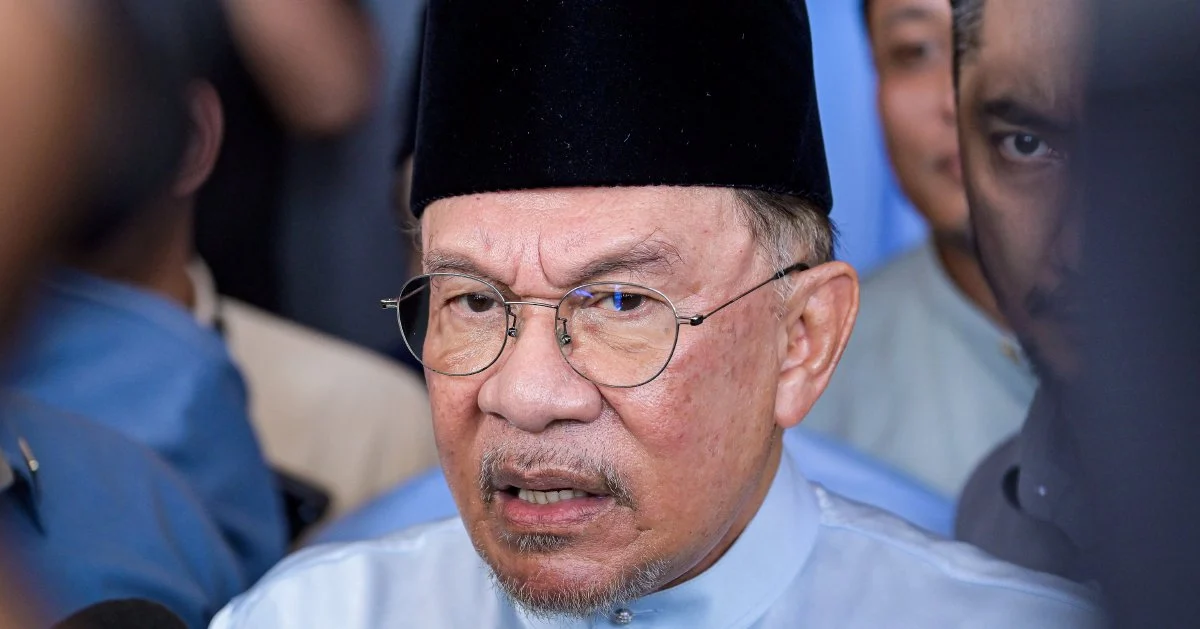
Prime Minister Datuk Seri Anwar Ibrahim has firmly rejected allegations that he ordered caretaker Johor Menteri Besar Datuk Onn Hafiz Ghazi to be excluded from a Felda settlements event, dismissing the claims as without foundation. Speaking at Dengkil, Anwar sought to quell speculation surrounding the controversy, reasserting his commitment to professional governance and fair treatment of political figures regardless of party affiliation.
The incident highlights the persistent tensions within Malaysia's fractious political landscape, where accusations of discrimination and interference often serve as flashpoints in the ongoing power struggles between federal and state leadership. Such disputes, whether rooted in substance or merely perceived slights, can rapidly escalate into broader narratives about fairness and institutional integrity. The denial comes at a sensitive juncture, as Johor continues to navigate the transition between electoral cycles and leadership changes.
Felda, the Federal Land Development Authority, remains a significant institution in Malaysian politics and rural development, with deep historical roots in the nation's agricultural and social policies. Settlements administered by Felda represent constituencies with considerable political weight, particularly in states like Johor where land development schemes have shaped demographic patterns and voting behaviours for decades. Access to such events carries symbolic importance, as they provide platforms for politicians to engage directly with constituents and demonstrate commitment to rural communities.
Onn Hafiz's position as caretaker Menteri Besar places him in an ambiguous political status, neither fully empowered nor entirely sidelined from governance responsibilities. This liminal position has historically been a source of friction during transition periods, when competing claims about authority and legitimacy can create institutional confusion. The suggestion that restrictions might have been imposed raises questions about the protocols governing the involvement of caretaker officials in government-sponsored activities and whether such decisions reflect coordination between federal and state administrations.
Anwar's swift rejection of the allegations underscores the administration's sensitivity to perceptions of political vindictiveness or abuse of federal power. In Malaysia's competitive federation, where states maintain considerable autonomy, the federal government must navigate carefully to avoid appearing to weaponise its resources against opposition-controlled or transitional administrations. Such perceptions, whether justified or not, can erode public confidence in institutional neutrality and fuel cynicism about democratic processes.
The broader context involves ongoing debates about the appropriate division of authority between federal and state governments, and how disputes should be managed when different coalitions control different levels of governance. Johor's political situation has been particularly volatile, with frequent shifts in leadership and coalition alignments that complicate intergovernmental relations. The Felda incident, whether substantive or merely a misunderstanding, reflects these structural tensions.
For Malaysian readers and political observers across Southeast Asia, such controversies illuminate the inherent challenges of multi-level governance in diverse federations. The question of whether officials can be genuinely excluded from public events they might attend—and on whose authority—touches on fundamental principles about the rule of law and institutional independence. The Prime Minister's response suggests a preference for defusing such tensions through public denial rather than detailed explanation, a common approach in Malaysian politics when seeking to move past controversial incidents.
The incident also raises practical questions about event management and the protocols by which government agencies coordinate with political actors at different levels. Felda operates as a statutory body with specific mandates and stakeholders, and decisions about participation in its events presumably involve multiple considerations beyond simple political preference. Yet the existence of allegations suggests that some observers perceived the restrictions, whether real or imagined, as politically motivated.
Moving forward, the denial may help contain the controversy if no additional evidence emerges to contradict Anwar's claim. However, the speed with which such allegations circulate in Malaysia's media ecosystem—both traditional and digital—means that even thoroughly rebutted claims can leave residual doubts among segments of the population. This dynamic underscores the challenge facing any administration seeking to maintain public confidence in its institutional impartiality across competing political constituencies.
The episode serves as a reminder that Malaysian politics continues to grapple with questions of fairness, access, and the proper exercise of power across different tiers of government. How such disputes are resolved—whether through explicit clarification, institutional reform, or simple passage of time—may influence broader public perception of the current administration's commitment to democratic norms and inclusive governance practices.

