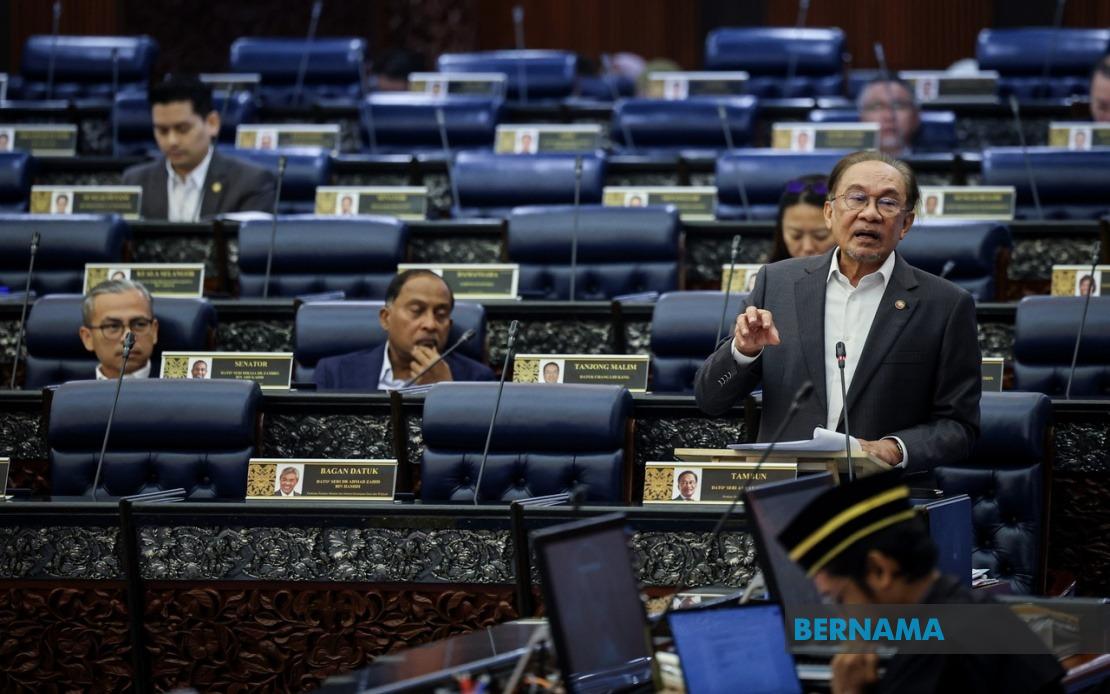
Prime Minister Datuk Seri Anwar Ibrahim moved swiftly on July 7 to dispel suggestions that his earlier remarks about Johor's state election timing represented political overreach. Speaking during parliamentary question time, Anwar characterised his statements as reflections of genuine concern about voter accessibility rather than any attempt to direct the Election Commission's constitutional responsibilities. The clarification came amid questions from opposition lawmakers probing whether the Prime Minister had crossed the line in advocating for a Sunday polling date instead of the Saturday ultimately selected by electoral authorities.
Anwar's defence rested on a straightforward distinction between personal commentary and institutional interference. He acknowledged the Election Commission's independence and its exclusive authority to set voting schedules, while maintaining that his Sunday preference stemmed from practical considerations affecting Malaysian cross-border workers. The Prime Minister noted that many Malaysians employed in Singapore, where Saturday work arrangements often extend into the afternoon, would find it logistically simpler to return home for Sunday voting. This was not, he insisted, a demand or directive but rather an expression of opinion intended to maximise democratic participation.
The Prime Minister's remarks gain significance against Malaysia's constitutional framework, which grants the Election Commission substantial autonomy in electoral matters. This independence is considered fundamental to maintaining public confidence in democratic processes. By explicitly reaffirming the Commission's authority and framing his comments as suggestions rather than prescriptions, Anwar sought to reinforce institutional boundaries that voters and observers closely monitor. Any perception of executive pressure on electoral timing could undermine confidence in the integrity of state-level contests, particularly in strategically important Johor.
The Johor election carries outsized weight in Malaysian politics given the state's economic significance and its status as a traditional stronghold for ruling coalitions. The timing of polling days can materially affect voter turnout, particularly among mobile populations like the estimated hundreds of thousands of Malaysians working across the causeway in Singapore. This cross-border workforce represents a genuine constituency whose voting capacity depends partly on logistics and travel feasibility. By emphasising this pragmatic dimension, Anwar positioned his earlier comments as voter-centric rather than partisan.
When pressed on whether Malaysia might formally coordinate with Singapore regarding voter movements, Anwar firmly rejected the notion. He stressed Malaysia's unwavering commitment to respecting other nations' electoral sovereignty and maintaining non-interference in foreign domestic affairs. While acknowledging his personal rapport with Singapore Prime Minister Lawrence Wong, Anwar drew a clear line between bilateral friendship and electoral matters, which he classified as exclusively domestic concerns. This positioning reflects the delicate balance Southeast Asian democracies maintain when managing cross-border populations with electoral stakes in multiple jurisdictions.
Yet Anwar revealed that informal arrangements with Singapore-based companies had been activated to accommodate Malaysian employees returning to vote. This distinction—between official diplomatic coordination and private sector facilitation—allowed him to address practical realities while maintaining the formal principle of non-interference. Such arrangements typically involve employers granting leave time or flexible scheduling when Malaysian elections occur, a pragmatic accommodation reflecting the region's integrated labour markets.
The episode highlights tensions inherent in modern transnational politics. Malaysia's relationship with Singapore generates substantial numbers of cross-border workers whose electoral participation in Malaysian elections affects domestic political outcomes. Yet formally engaging Singapore's government on electoral logistics risks allegations of sovereignty breach or political coordination across borders. Finding workable middle ground—permitting private sector coordination while maintaining official distance—represents a realistic if somewhat awkward compromise.
Anwar's clarification strategy reflected awareness that statements by incumbent leaders regarding electoral procedures attract heightened scrutiny. Particularly when Prime Ministers suggest preferences for specific polling dates, even oblique suggestions risk being interpreted as political pressure on supposedly independent commissions. Opposition lawmakers including Ahmad Fadhli Shaari and Mohd Sany Hamzan clearly intended to spotlight any such pressure, forcing the government to explicitly reaffirm institutional independence. This parliamentary accountability mechanism, however imperfect, serves an important function in exposing and checking potential executive overreach.
For Malaysian voters and observers, the exchange underscores competing considerations in contemporary electoral politics. Facilitating voter participation—particularly among citizens working abroad—represents a legitimate democratic interest. Simultaneously, protecting electoral commission independence from perception or reality of political influence remains constitutionally essential. Anwar's approach attempted threading this needle by accepting a Saturday date chosen by authorities while explaining the rationale behind his Sunday preference as citizen commentary rather than executive direction.
The broader context involves the Election Commission's ongoing engagement with practical realities of administering elections in an era of substantial geographic mobility. Polling date selection involves weighing numerous factors including voter accessibility, logistical feasibility for election officers, and prevention of electoral manipulation. When Prime Ministers offer input on these considerations, even framed as personal observations, they implicitly invoke executive prestige and resources. The Commission's demonstrated independence in selecting Saturday despite Anwar's preferences may itself have been designed to demonstrate this autonomy to observers sceptical of its institutional separateness from political leadership.
Moving forward, the exchange suggests that Malaysian electoral politics will continue navigating tensions between facilitating transnational voter participation and insulating electoral administration from political interference. Anwar's careful distinction between personal commentary and institutional direction provides a template for how future leaders might address similar concerns. Yet the very necessity of such clarifications indicates broader questions about how Malaysia structures relationships between executive leadership and electoral authorities, particularly regarding decisions affecting strategically important constituencies.

