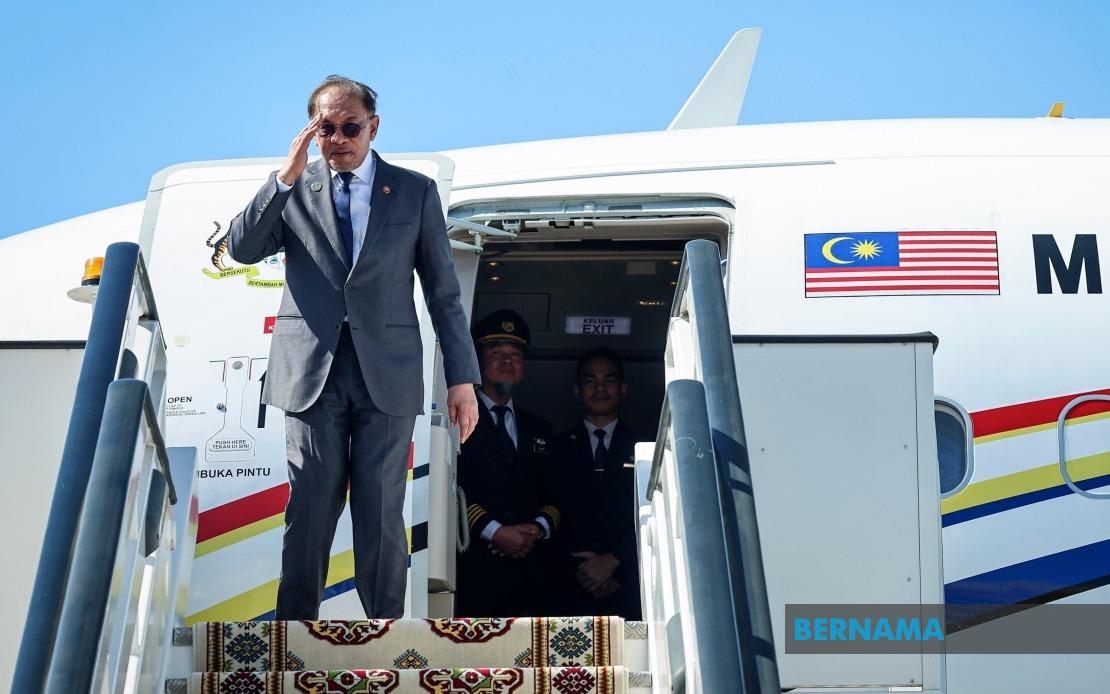
Prime Minister Datuk Seri Anwar Ibrahim transitioned swiftly from his diplomatic engagement in Central Asia to a full schedule of domestic commitments, touching down in Penang immediately after concluding his official visit to Turkmenistan. The compressed itinerary underscores the balancing act demanded of Malaysia's top leadership, juggling international relations with regional economic development and civil society engagement. Anwar's return flight from Ashgabat International Airport departed at 4.45 pm local time, positioning him for an intensive working day across the northern state.
The two-day Turkmenistan mission, which began on June 18, represented a milestone for Malaysia's 10th Prime Minister, marking his first visit to the Central Asian nation since taking office in November 2022. The trip occurred at the formal invitation of President Serdar Berdimuhamedov and carried implications for Malaysia's broader engagement with non-traditional trading partners and energy suppliers. Prior to Turkmenistan, Anwar had participated in the 35th ASEAN-Russia Commemorative Summit in Kazan, demonstrating Malaysia's sustained diplomatic presence in the region despite geopolitical uncertainties. The dual assignment reflected the government's commitment to maintaining ASEAN's centrality in regional architecture while exploring bilateral relationships beyond Southeast Asia's conventional circle.
Back in Penang, Anwar's schedule commenced with the official inauguration of MKS Instruments Malaysia Sdn Bhd at Bandar Cassia Technology Park in Batu Kawan at 11 am. The facility opening aligns with the government's push to attract high-technology manufacturing investments to Malaysia, bolstering the nation's semiconductor and precision instruments sector. MKS Instruments, a global leader in process control technologies, represents the type of knowledge-intensive investment that Putrajaya has prioritized to upgrade the country's industrial profile and reduce reliance on lower-value manufacturing.
At 1 pm, Anwar proceeded to preside over the groundbreaking ceremony for Setia Fontaines Industrial Park at the Setia Experience Centre in Bandar Setia Fontaines, Kepala Batas. This project exemplifies developer Setia's strategic positioning within Penang's economic transformation agenda, particularly through the Northern Corridor development initiative. The industrial park represents long-term capital commitment to the state, with implications for employment generation and supply-chain ecosystem development in the northern region. Accompanying the groundbreaking, Setia unveiled two additional strategic collaborations within the Setia Fontaines township, signalling confidence in the area's growth trajectory.
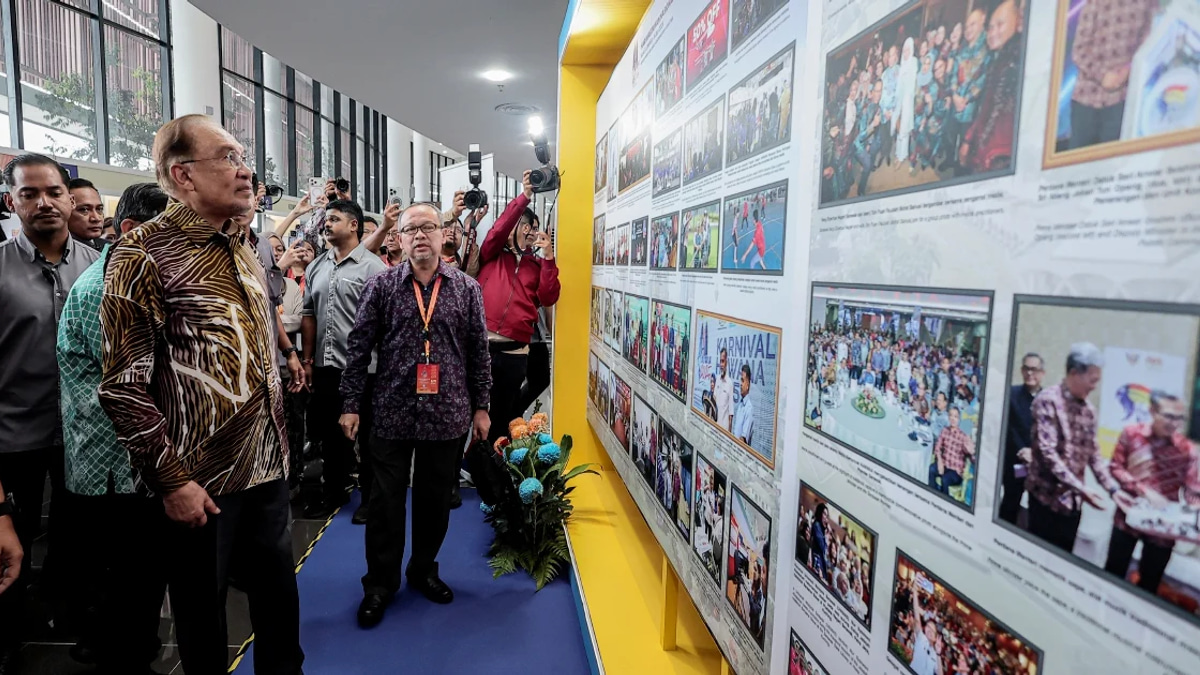
The afternoon centred on honouring Malaysia's fourth estate when Anwar attended the HAWANA 2026 Grand Finale at the PICCA Convention Centre @ Butterworth Arena at 3 pm. The event gathered approximately 1,000 media practitioners from Malaysia and internationally, representing the largest assembly of journalists in the country's calendar. HAWANA—organised by the Communications Ministry with the Malaysian National News Agency (Bernama) as implementing body—functions as the nation's premier recognition platform for journalism excellence and professional dedication. The gathering carries symbolic weight beyond ceremonial functions, offering the government an opportunity to reinforce its relationship with the media landscape and to acknowledge journalism's role in democratic discourse.
During the evening ceremony, Anwar distributed the HAWANA Award and Special HAWANA Award to individuals whose careers exemplified outstanding contributions to journalism and the advancement of public discourse. These accolades serve as industry benchmarks, shaping professional standards and encouraging emerging journalists to aspire toward excellence. Beyond individual recognition, the Prime Minister also presented allocations from Tabung Kasih@HAWANA, a relief fund supporting media practitioners facing financial hardship. This welfare component underscores government acknowledgment of economic pressures within journalism, where structural decline in traditional media revenue has squeezed professional incomes across the region.
The timing of Anwar's Penang visit intersected with broader strategic considerations for his administration. Penang, as Malaysia's technology and manufacturing hub and seat of significant foreign direct investment, requires high-level political attention to maintain momentum. The state's importance to Malaysia's economy and regional positioning means prime ministerial engagement is both symbolically necessary and practically consequential. Investment decisions frequently hinge on perceived government commitment and regulatory certainty, factors reinforced through such high-profile inaugurations and groundbreaking ceremonies.
Anwar's delegation during the Turkmenistan portion included representatives who would typically accompany presidential-level missions, signalling the importance attributed to Central Asian engagement. The accompanying of Investment, Trade and Industry Minister Datuk Seri Johari Abdul Ghani and Economy Minister Akmal Nasrullah Mohd Nasir to the ASEAN-Russia Summit reflected coordination across Malaysia's economic portfolio, with each minister focusing on their respective jurisdictions. This distributed responsibility approach has become characteristic of Malaysia's contemporary economic diplomacy, recognising that trade, investment and economic relations now demand expertise spanning multiple ministerial purviews.
Completing his Penang schedule, the Prime Minister was scheduled to attend a dinner hosted by Himpunan Pertubuhan Lima Generasi (PLG) Malaysia in Negeri Sembilan that evening, extending his regional presence into a third state. This three-state swing within 24 hours exemplifies the geographical spread of modern prime ministerial duties in Malaysia, where domestic commitments span the peninsula and beyond, often interlaced with international travel. The relentless pace demands sophisticated logistical coordination and raises practical questions about governing capacity when the head of government maintains such intensive travel schedules while simultaneously holding the Finance portfolio.
The sequence of Anwar's movements—from Central Asia to Northern Corridor industrial development to media recognition to emerging civil society engagement—illustrates how contemporary Malaysian governance attempts to synthesise multiple imperatives: international standing, regional competitiveness, sector-specific development, institutional relationships, and civil society acknowledgment. Each stop carried distinct stakeholder constituencies and strategic implications, rendering the compressed itinerary a microcosm of the multifaceted demands on national leadership in an increasingly complex geopolitical and economic environment.

%22%2F%3E%3C%2Fpattern%3E%3C%2Fdefs%3E%3Crect%20width%3D%22100%25%22%20height%3D%22100%25%22%20fill%3D%22url(%23ph2hy9vg)%22%2F%3E%3Crect%20width%3D%22100%25%22%20height%3D%22100%25%22%20fill%3D%22url(%23ph2hy9vp)%22%2F%3E%3Ctext%20x%3D%2250%25%22%20y%3D%2250%25%22%20text-anchor%3D%22middle%22%20dominant-baseline%3D%22central%22%20fill%3D%22rgba(255%2C255%2C255%2C0.95)%22%20font-family%3D%22Georgia%2C%20'Times%20New%20Roman'%2C%20serif%22%20font-weight%3D%22700%22%20font-size%3D%22272%22%20letter-spacing%3D%22-0.02em%22%3EAnwar%3C%2Ftext%3E%3C%2Fsvg%3E)