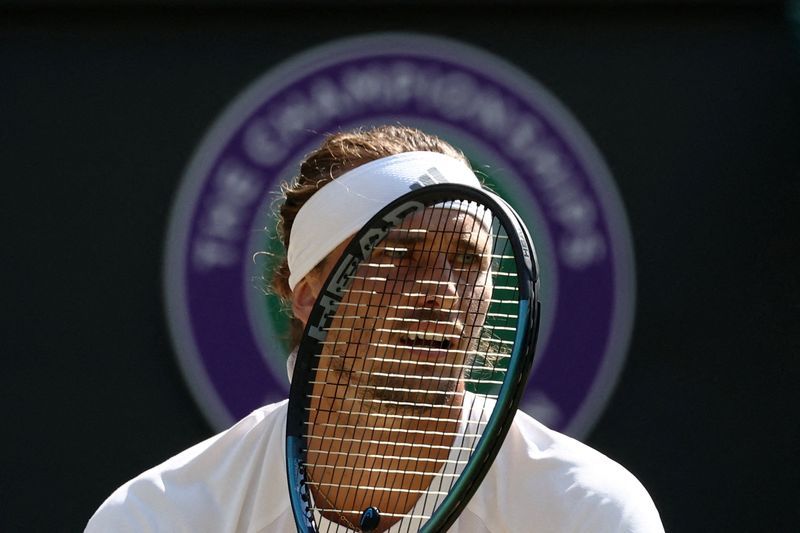
Alexander Zverev has finally vanquished his personal nemesis at Wimbledon, dispatching Taylor Fritz 6-4 6-4 6-2 in the quarter-finals to advance to the semi-finals and maintain his pursuit of back-to-back Grand Slam crowns. The breakthrough victory represented far more than a routine progression for the German second seed; it marked the end of a frustrating two-year losing streak against the American that had stretched across seven previous encounters, including a painful defeat at the All England Club just twelve months earlier.
For tennis analysts tracking Zverev's trajectory this summer, the significance of this particular win cannot be overstated. Having captured the French Open title earlier this season, the 26-year-old arrived at Wimbledon with genuine ambitions of claiming consecutive major championships. However, the psychological burden of his history against Fritz threatened to derail those aspirations in the quarter-final stage. Zverev himself acknowledged the weight of this personal record, admitting in his post-match commentary that defeating an opponent he had not beaten in over two years required nothing short of near-perfect execution.
The match itself unfolded as a masterclass in controlled aggression from the German. Zverev established an early break in the opening set, reaching 5-4 before weathering a spirited counterattack from Fritz in the tenth game to claim the set under intense afternoon heat on Court One. The psychological momentum clearly shifted at this juncture, with the break of serve functioning as a psychological watershed moment in the contest. Zverev's confidence visibly multiplied, and his aggressive baseline play intensified markedly in the second frame.
Fritz's attempts to build momentum were complicated by a medical timeout required for treatment of a persistent right knee issue that surfaced after just three games. This interruption, though necessary for the American's wellbeing, appeared to disrupt his rhythm at a critical juncture. Zverev seized the opportunity ruthlessly, engineering the crucial break that effectively ended Fritz's chances of mounting a genuine challenge. The second set concluded with the German consolidating his advantage through comfortable service holds, extending his lead to two sets to love.
The third set proved a formality as Zverev's dominance crystallized into something approaching clinical efficiency. A scintillating backhand winner at 4-1 sealed a double break, and the German closed out proceedings with minimum resistance to secure passage into the semi-finals. The victory extends Zverev's record at major tournaments to twelve semi-final appearances, though this particular Wimbledon run holds special significance as his maiden appearance in the latter stages of the grass court championship.
Zverev's achievement places him in distinguished company within German tennis history. His progression to the Wimbledon semi-finals makes him the fifth German man to reach this stage during the professional era that commenced in 1968. The quartet he now joins comprises legendary names: Boris Becker, Michael Stich, Rainer Schuettler, and Tommy Haas. For a nation with such a storied tradition in tennis, Zverev's advancement represents both a continuation of that legacy and validation of his credentials among the sport's elite performers.
In characteristic fashion, Zverev acknowledged the difficulty of converting such opportunities at the highest level of professional tennis. In his post-match reflection, he emphasized that even the most routine-appearing matches demand absolute concentration and tactical precision. He noted specifically the challenge presented by the opening game, during which he faced three break points while serving, indicating that maintaining focus from the outset proved essential to executing his match plan effectively.
Zverev also highlighted the psychological dimension of competing against a player who has dominated their recent head-to-head record. The knowledge that Fritz had defeated him repeatedly in the preceding two years created mental pressure that could have undermined his confidence, yet the German approached the task with remarkable equanimity. His acknowledgment that he needed to approach the match with near-perfection suggests tactical maturity and self-awareness regarding the requirements for breaking through such psychological barriers.
Looking toward his semi-final encounter against Arthur Fery, who advanced past Flavio Cobolli, Zverev faces another challenge with its own narrative dimensions. Fery's remarkable journey to the semi-finals represents something approaching a fairytale for the British home favorite, as his first appearance at the Wimbledon penultimate stage carries obvious emotional resonance for the crowd. Zverev acknowledged this dynamic with characteristic humour, jokingly inviting the crowd to support his opponent while maintaining belief in his own capabilities.
The remaining matches at Wimbledon now present contrasting storylines. Zverev carries the identity of the tournament favourite pursuing consecutive Grand Slam titles, a narrative centered on excellence and ambition. Conversely, Fery's storyline emphasizes underdog triumph and national pride, elements that typically resonate powerfully with home crowds. The semi-final encounter between these two contrasting narratives promises compelling theatre, though Zverev's demonstration of resolute tennis and psychological fortitude against Fritz suggests he possesses the mental and technical resources necessary to navigate whatever challenges Fery presents.
For regional tennis observers, particularly those in Southeast Asia where German sporting prowess commands considerable respect, Zverev's progress carries broader significance. His advancement exemplifies the competitive standards demanded at tennis's highest echelon and the psychological resilience required to overcome extended personal struggles against particular opponents. His victory over Fritz affirms that even elite players must confront and overcome mental barriers, suggesting that persistence and tactical adjustment ultimately prevail at professional tennis's most demanding stages.

