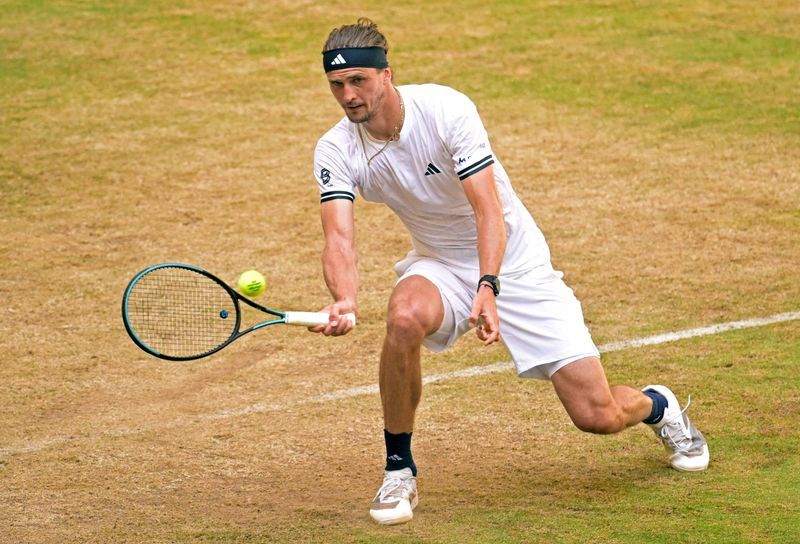
World number three Alexander Zverev attributed his Halle Open semi-final defeat to Taylor Fritz on Saturday to a critical malfunction in his glucose monitoring device, which he relies on to manage his Type 1 diabetes during competition. The German lost the match 6-7(4) 6-4 7-5 after two hours and 39 minutes of play, extending his recent struggles against the American to six consecutive defeats.
The sensor failure proved especially consequential during the opening stages of the contest. Zverev explained that the Medtronic technology he uses delivered inverted readings—indicating dangerously high glucose levels when they were actually critically low. This miscalculation led him to administer considerably more insulin than his body actually required, triggering acute physiological distress that persisted through the crucial early exchanges. In just 45 minutes, he felt compelled to consume approximately 350 grams of sugar in an attempt to stabilize his blood chemistry, yet remained convinced throughout that he was performing at significant physical disadvantage.
Diagnosed with Type 1 diabetes at age four, Zverev has become one of sport's most prominent athletes managing an autoimmune condition on the professional stage. His reliance on continuous glucose monitoring represents a critical component of his training regimen and match preparation protocols. The German has utilized Medtronic's glucose sensors since the mid-2010s, establishing nearly a decade of dependable performance before encountering this unusual failure. The unprecedented magnitude of the malfunction—producing readings so fundamentally at odds with actual glucose concentrations—surprised even someone with extensive experience managing the technology.
Yet despite the obvious frustration and physical toll, Zverev demonstrated considerable sportsmanship in his post-match assessment. He acknowledged that Fritz had outplayed him across the two-hour encounter and deserved recognition for the victory regardless of any external complications. This gracious acceptance reflects the maturity Zverev has developed as a senior competitor, particularly given the frustration of losing to an opponent he had previously managed to defeat multiple times in their earlier career encounters.
The loss represented another missed opportunity for Zverev at the prestigious Halle tournament, a grass-court event that traditionally serves as an ideal preparation ground before the grass-court season's grandest stage. His recent struggles against Fritz—now stretching across six matches—suggest the American has developed a tactical understanding of his game that continues to pose particular difficulties. The mechanical failure cannot fully explain the broader pattern, though it certainly undermined his capacity to compete at optimal physical capacity during this specific encounter.
For Malaysian and Southeast Asian readers, Zverev's situation illuminates the increasingly sophisticated medical support systems that elite athletes employ to manage chronic health conditions. His openness about managing diabetes while competing at sport's highest level represents important representation for the millions of people across the region living with Type 1 diabetes. The incident also highlights how technological systems, despite their sophistication, remain fallible—a reminder that athletes across all sports must remain vigilant about their equipment reliability and maintain contingency protocols.
Looking ahead, Zverev dismissed concerns that the glucose sensor malfunction might continue affecting his preparation for Wimbledon, scheduled to commence on June 29. He expressed confidence that the anomaly represented an isolated incident rather than a systemic problem with the monitoring equipment he has trusted for nearly a decade. The focus now shifts to addressing the specific sensor that failed and ensuring proper recalibration before he returns to competition on grass courts—a surface where his game has historically thrived.
The timing of this technological failure, arriving during the closing phases of the grass-court season, adds an unfortunate layer of complexity to Zverev's bid to capture major titles before summer's traditional vacation period. The Halle tournament remains a significant event within the professional calendar, and squandering an opportunity there to advance further compounds the frustration of suffering a loss attributable to equipment failure rather than purely competitive factors. Nevertheless, the incident provides valuable lessons about redundancy and backup systems that professional athletes managing medical conditions must consider as they navigate the demands of modern elite sport.
%22%2F%3E%3C%2Fpattern%3E%3C%2Fdefs%3E%3Crect%20width%3D%22100%25%22%20height%3D%22100%25%22%20fill%3D%22url(%23ph54x43g)%22%2F%3E%3Crect%20width%3D%22100%25%22%20height%3D%22100%25%22%20fill%3D%22url(%23ph54x43p)%22%2F%3E%3Ctext%20x%3D%2250%25%22%20y%3D%2250%25%22%20text-anchor%3D%22middle%22%20dominant-baseline%3D%22central%22%20fill%3D%22rgba(255%2C255%2C255%2C0.95)%22%20font-family%3D%22Georgia%2C%20'Times%20New%20Roman'%2C%20serif%22%20font-weight%3D%22700%22%20font-size%3D%22320%22%20letter-spacing%3D%22-0.02em%22%3E300%3C%2Ftext%3E%3C%2Fsvg%3E)
%22%2F%3E%3C%2Fpattern%3E%3C%2Fdefs%3E%3Crect%20width%3D%22100%25%22%20height%3D%22100%25%22%20fill%3D%22url(%23ph188wlg)%22%2F%3E%3Crect%20width%3D%22100%25%22%20height%3D%22100%25%22%20fill%3D%22url(%23ph188wlp)%22%2F%3E%3Ctext%20x%3D%2250%25%22%20y%3D%2250%25%22%20text-anchor%3D%22middle%22%20dominant-baseline%3D%22central%22%20fill%3D%22rgba(255%2C255%2C255%2C0.95)%22%20font-family%3D%22Georgia%2C%20'Times%20New%20Roman'%2C%20serif%22%20font-weight%3D%22700%22%20font-size%3D%22151%22%20letter-spacing%3D%22-0.02em%22%3EMalaysian%3C%2Ftext%3E%3C%2Fsvg%3E)
%22%2F%3E%3C%2Fpattern%3E%3C%2Fdefs%3E%3Crect%20width%3D%22100%25%22%20height%3D%22100%25%22%20fill%3D%22url(%23ph5ar27g)%22%2F%3E%3Crect%20width%3D%22100%25%22%20height%3D%22100%25%22%20fill%3D%22url(%23ph5ar27p)%22%2F%3E%3Ctext%20x%3D%2250%25%22%20y%3D%2250%25%22%20text-anchor%3D%22middle%22%20dominant-baseline%3D%22central%22%20fill%3D%22rgba(255%2C255%2C255%2C0.95)%22%20font-family%3D%22Georgia%2C%20'Times%20New%20Roman'%2C%20serif%22%20font-weight%3D%22700%22%20font-size%3D%22226%22%20letter-spacing%3D%22-0.02em%22%3EPolice%3C%2Ftext%3E%3C%2Fsvg%3E)