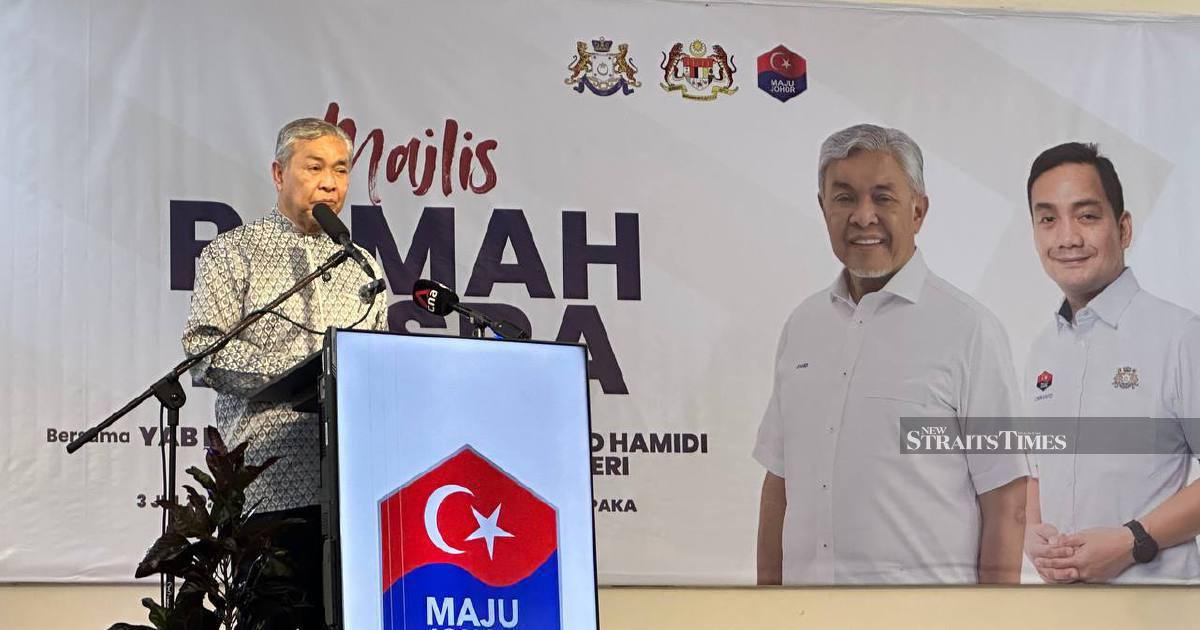
Barisan Nasional chairman Datuk Seri Dr Ahmad Zahid Hamidi has made a direct appeal to his unity government coalition partners to put aside historical criticisms of Umno and the broader BN coalition ahead of the Johor state election. Speaking in Johor Baru, the senior political leader emphasized that the ongoing campaign period demands a unified front rather than one fractured by internal recriminations or references to past disagreements.
The call represents a strategic move to consolidate the loose but crucial political alliance that currently governs Malaysia. The unity government, formed following the 2022 general election, brings together historically antagonistic political forces including Umno, PKR, DAP, and Amanah among others. This arrangement, while unprecedented in its breadth, has occasionally been strained by tensions between partners who retain fundamentally different ideological positions and competing electoral interests.
Zahid's intervention signals mounting concern within the BN leadership that coalition partners may use the Johor campaign to score political points by resurrecting criticisms of Umno's governance record or questionable past financial decisions. Such attacks could undermine the carefully maintained facade of cooperation that has enabled the unity government to function since its inception. In regional politics, where Johor remains a strategic powerhouse as the country's second-largest state by population and economic output, electoral success carries implications far beyond state boundaries.
The Johor election, when held, will serve as a critical test of whether the unity government can maintain cohesion while competing under separate party banners. This fundamental contradiction—allies by day but rivals by night in electoral contests—has proven challenging in other democracies and tested the patience of Malaysian voters. The risk for BN is particularly acute given that some coalition partners may calculate that attacking Umno's historical record could boost their own credibility with anti-establishment voters or those skeptical of traditional political establishments.
Umno itself carries substantial historical baggage. The party dominated Malaysian politics for decades before the 1MDB scandal and associated corruption allegations severely damaged its reputation around 2016-2020. Multiple senior party figures faced legal consequences, and the party's loss of federal power in 2018 reflected public anger over governance failures and perceived endemic corruption. While Umno has since attempted rehabilitation and returned to government through the unity coalition, the party remains vulnerable to criticism from partners seeking to differentiate themselves.
Zahid's plea essentially amounts to a request that coalition partners exercise political restraint during a critical campaign period. The underlying message is pragmatic: attacking one's governing partner risks destabilizing the entire coalition structure, potentially jeopardizing the unity government's fragile consensus on key policy matters, budget allocations, and ministerial portfolios. For smaller coalition components like DAP or Amanah, refraining from attacks on Umno requires a delicate balancing act, as their own supporters expect them to maintain ideological independence from their larger partners.
The timing of this appeal also reflects broader nervousness within BN about electoral prospects. Johor has been an UMNO stronghold historically, but even traditional party heartlands have become competitive in recent years as voter demographics shift and political allegiances become more volatile. Recent state elections have demonstrated that pre-existing advantages count for less than they once did, and campaigns centred on divisive internal coalition disputes could particularly energize opposition candidates.
For observers of Malaysian politics, Zahid's intervention highlights the inherent tensions within unity government arrangements that lack genuine ideological alignment. Unlike coalition governments in other nations that typically unite around shared policy commitments or programmatic platforms, Malaysia's unity government functions primarily as a means for competing parties to access power and resources. This fundamental mismatch between cooperation and competition remains the arrangement's greatest vulnerability.
The broader implications for Southeast Asia are notable. Malaysia's political experiment with broad multi-ethnic and multi-ideological coalition government remains closely watched by other regional democracies dealing with polarization and fragmentation. Whether such arrangements can function effectively while maintaining internal discipline and public confidence remains an open question that the Johor election will help illuminate.
Moving forward, the success of Zahid's appeal will likely depend on whether all coalition partners perceive continuing the unity government as more beneficial than pursuing short-term electoral gains. In Malaysian politics, where power-sharing arrangements frequently fracture under electoral pressure, this represents a considerable ask. The coming weeks will reveal whether political pragmatism or competitive instinct ultimately prevails among the coalition's diverse membership.

