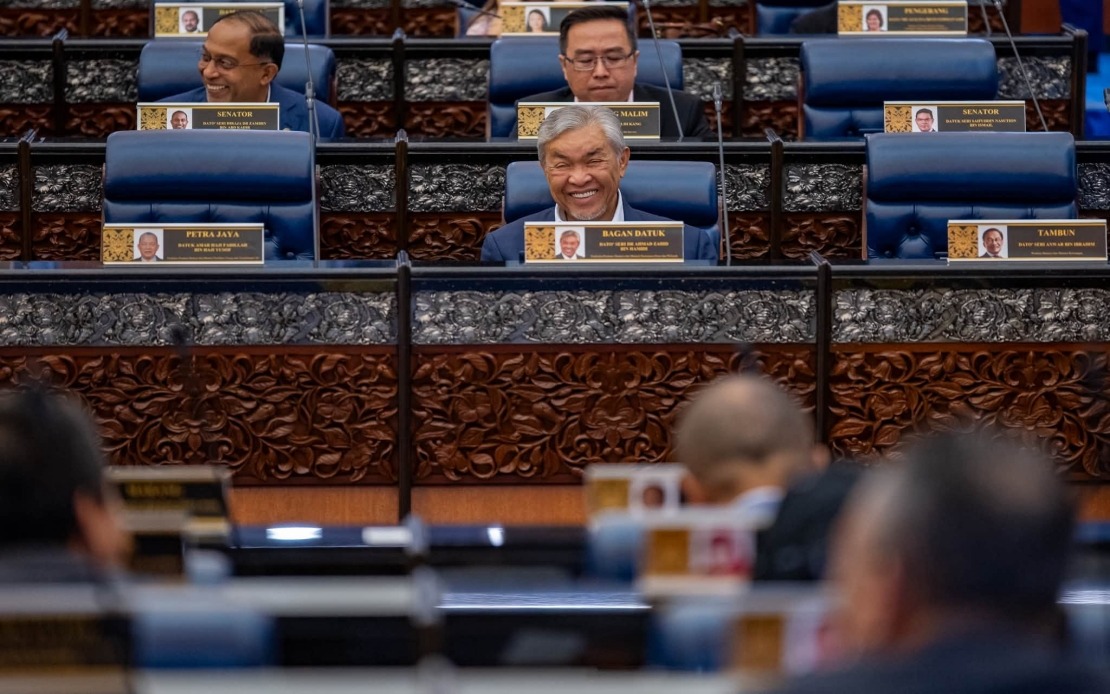
Deputy Prime Minister Datuk Seri Dr Ahmad Zahid Hamidi has stressed that any constructive criticism levelled at Lembaga Tabung Haji must translate into tangible remedial steps, signalling the government's determination to restore confidence in the pilgrimage fund following months of scrutiny and public concern over its governance.
Addressing lawmakers after a special parliamentary sitting dedicated to examining findings from the Royal Commission of Inquiry into Tabung Haji, Zahid emphasised the importance of moving beyond debate into implementation. His remarks underscored the delicate balance authorities must maintain between acknowledging institutional weaknesses and preventing reputational damage to an organisation that manages the savings and spiritual aspirations of millions of Malaysian Muslims.
The parliamentary discussion, which took place on August 11, centred on the RCI's comprehensive review of Tabung Haji's operations spanning 2014 to 2020. Made publicly available on July 29 following a government decision to enhance transparency, the report identified significant management and operational shortcomings while offering 25 specific recommendations for systemic improvement. By late July, Tabung Haji had already begun implementing approximately three-quarters of these proposals, demonstrating institutional responsiveness to the inquiry's findings.
Zahid, who doubles as Rural and Regional Development Minister, positioned the parliamentary forum as a crucial mechanism for MPs to thoroughly examine the RCI conclusions while clarifying contentious matters. By providing this formal avenue for legislative scrutiny, he suggested the government had created proper channels for addressing concerns without allowing speculation or unsubstantiated claims to dominate public discourse. His implicit warning against "excessive allegations" and "perceptions without basis" reflected official anxiety that prolonged controversy could undermine Tabung Haji's ability to function effectively as a trusted financial intermediary for Malaysian pilgrims.
The timing of Zahid's intervention carries particular significance within Malaysia's current political context. Tabung Haji, as a sovereign wealth institution managing billions in pilgrim savings, occupies a unique position at the intersection of religious trust and state administration. Any loss of public confidence in its governance strikes at both dimensions simultaneously. The institution's ability to attract deposits, maintain investment returns, and facilitate hajj arrangements depends fundamentally on perceived integrity and competent management. The RCI's identification of historical weaknesses, while necessary for accountability, risked triggering a confidence crisis if not properly contextualised within a narrative of institutional reform.
The deputy prime minister's appeal for "wisdom and sincerity" in addressing the matter framed the issue as extending beyond technical governance corrections. By invoking religious and national interest considerations, Zahid sought to elevate the discourse from partisan point-scoring or blame-assignment toward collective responsibility for institutional rehabilitation. This rhetorical strategy acknowledged that multiple stakeholders—political rivals, civil society observers, and the general public—were following parliamentary deliberations and that parliamentary conduct would significantly influence public perception of whether genuine reform was genuinely intended.
The RCI report's scope and specificity merit closer examination for Malaysian readers assessing the seriousness of identified problems. The inquiry's focus on the 2014-2020 period corresponds with significant volatility in global markets and shifting investment strategies that affected Tabung Haji's financial performance. The 25 recommendations, three-quarters of which were reportedly already under implementation, suggest the problems identified were not systemic or foundational but rather operational and procedural in nature—issues amenable to correction through management adjustments, enhanced oversight, and revised protocols.
Implementation rates, however, tell only part of the story. Equally important is whether corrective measures address root causes of past weaknesses or merely introduce superficial procedural changes. Parliamentary discussion of the RCI findings provided legislators with opportunity to probe implementation quality, timeline expectations, and mechanisms for ongoing accountability. Zahid's statement implicitly acknowledged that implementation itself requires oversight, suggesting the government anticipated continued parliamentary and public interest in monitoring Tabung Haji's progress toward full RCI compliance.
For the broader Malaysian Islamic finance ecosystem, the Tabung Haji situation carries instructive implications. The institution's challenges reflect governance complexities that can affect any large financial entity managing funds on behalf of constituencies with strong emotional and spiritual attachments to their investments. The recovery trajectory now underway will influence how public confidence in Islamic financial institutions responds to disclosure of operational weaknesses. Successful implementation of reforms, coupled with transparent communication about improvements, could demonstrate that even significant institutional lapses can be addressed through rigorous inquiry and committed reform efforts.
Zahid's emphasis on avoiding "prolonged controversy" also revealed official concern about the cumulative reputational damage from extended public discussion of institutional failures. In contemporary information environments where criticism circulates widely and rapidly, authorities face pressure to contain negative narratives while demonstrating genuine commitment to reform. The parliamentary forum itself represents an attempt to channelise scrutiny into formal, structured processes rather than allowing grassroots concern to crystalise around unverified allegations.
Looking forward, the effectiveness of Tabung Haji's recovery will depend substantially on execution quality across multiple fronts: investment performance, administrative efficiency, transparency in reporting, and stakeholder communication. Each dimension requires sustained attention beyond the immediate post-RCI period. Zahid's call for responsible action thus serves as benchmark against which government and institutional performance can be measured in coming months and years.
The deputy prime minister's statement ultimately reflected the government's recognition that institutional trust, once eroded, requires deliberate reconstruction efforts extending well beyond acknowledgment of past failures. Whether subsequent policy action and institutional conduct match this stated commitment will significantly influence Tabung Haji's ability to retain the confidence of Malaysian Muslims and maintain its position as a cornerstone institution within the country's Islamic finance architecture.

