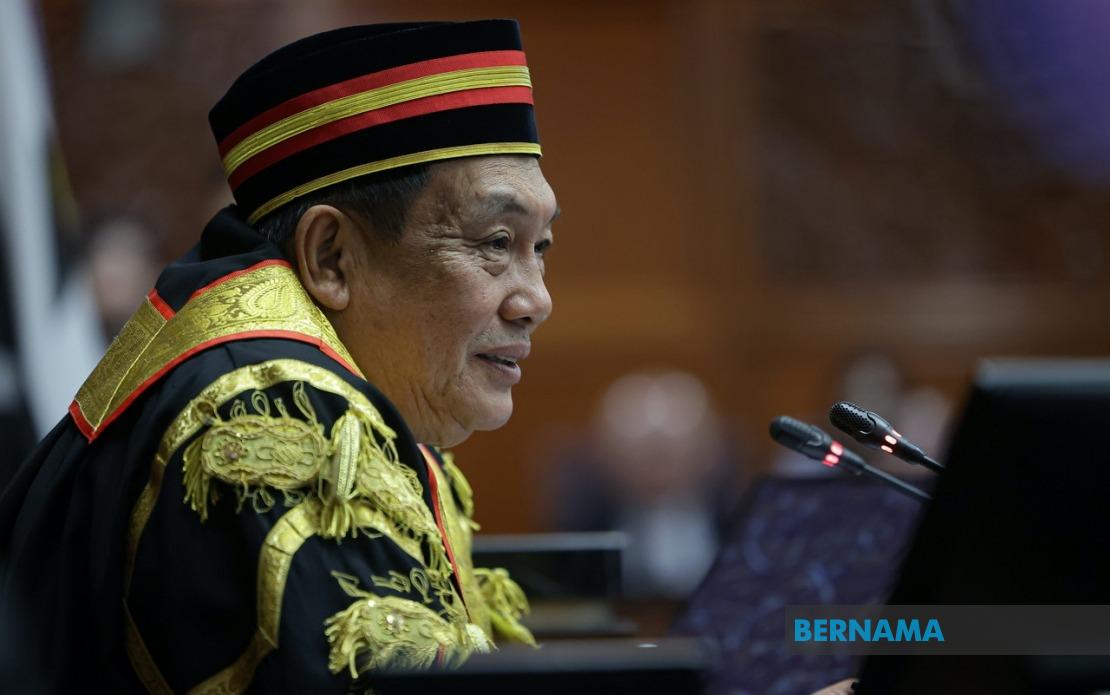
Malaysia's Youth Parliament represents far more than a ceremonial body for young people—it functions as a crucial laboratory for cultivating democratic values and critical citizenship among the nation's emerging generation, according to Dewan Negara President Datuk Awang Bemee Awang Ali Basah. Speaking at an outreach programme held at Universiti Malaysia Terengganu, the Senate president characterised the platform as a "school of democracy," underscoring its role in shaping individuals who grasp democratic principles, engage in rigorous thinking, and articulate their concerns thoughtfully and responsibly.
The significance of youth participation in parliamentary processes extends beyond symbolic representation. By engaging in the Youth Parliament, young citizens acquire tangible experience with the mechanics of democratic governance—articulating positions, engaging in structured debate, absorbing criticism constructively, and ultimately accepting outcomes determined by democratic majorities. These are not abstract lessons confined to textbooks; rather, they constitute formative experiences that mould the ethical foundation of future leaders. Awang Bemee emphasised that genuine leadership encompasses qualities often overlooked in conventional understandings of power: the capacity to listen as critically as one speaks, the inclination to comprehend challenges before prescribing solutions, and an acute awareness that occupying office demands accountability rather than merely exercising authority.
Within Malaysia's broader constitutional framework, the Youth Parliament complements the functioning of Parliament itself by channelling the perspectives and preoccupations of younger demographics into democratic discourse. While Parliament remains the primary decision-making apparatus, the Youth Parliament injects fresh viewpoints and generational insight into the deliberative process, thereby strengthening the legitimacy and responsiveness of Malaysia's democratic institutions. Awang Bemee stressed that engaging youth is not merely about expanding participation rates; it represents an investment in nurturing a generation equipped to meaningfully advance national development and address emerging challenges.
The Senate president articulated three foundational principles required to empower Malaysia's young people effectively. The first centres on fostering inclusive and transparent democratic spaces where citizens—particularly the young—encounter genuine opportunities to express themselves, secure a hearing, and witness their contributions valued through institutional openness, candour, and respect for ideological pluralism. Malaysia's heterogeneous composition across racial, religious, and cultural dimensions presents both potential and risk; harnessing this plurality as a unifying strength demands deliberate cultivation of mutual comprehension and reciprocal regard among communities.
The second pillar redirects educational focus beyond examination performance and credential accumulation toward equipping learners with competencies essential to navigating contemporary and future environments. Beyond conventional academic skills, young Malaysians require grounding in analytical thinking, technological literacy, familiarity with artificial intelligence systems, imaginative problem-solving, persuasive communication, and understanding of civic institutions and processes. Technological advancement, though transformative, demands accompaniment by robust ethical frameworks ensuring young people harness digital tools judiciously rather than destructively.
Acknowledging the expanding economic frontier, Awang Bemee highlighted emerging sectors poised to generate substantial opportunities for Malaysian youth. The Blue Economy—encompassing fisheries, aquaculture, maritime tourism, ocean-based renewable energy generation, and coastal logistics networks—represents a domain offering substantial employment and entrepreneurial possibilities alongside conservation imperatives and infrastructure advancement. Youth equipped with both technical competencies and environmental consciousness can become architects of sustainable maritime development.
The third pillar addresses the paradox inherent in democratic freedom: liberty divorced from obligation becomes licence for harm. Within a democratic polity, individuals retain extensive latitude for expression and thought; however, this freedom presupposes corresponding accountability, particularly regarding technology and social media deployment. Awang Bemee cautioned against conflating freedom of speech with freedom from consequence, noting that unlimited licence to disseminate unverified information, slander, or falsehoods corrodes the informational foundations upon which democratic deliberation depends. Young citizens must cultivate intellectual discipline—verifying claims before amplification, scrutinising assertions before acceptance, comprehending contexts before moral judgment, and contemplating ramifications before decisive action.
The Senate president expressed conviction that Malaysian youth, properly developed through exposure to democratic processes and grounded in civic responsibility, can emerge as bridge-builders capable of transcending sectarian divides, addressing complex societal problems, and guiding the nation toward prosperity. This characterisation reflects an optimistic yet conditional vision: youth potential realises itself only through intentional institutional support, educational reform, and the genuine provision of meaningful participation channels.
The gathering at Universiti Malaysia Terengganu constituted part of a broader parliamentary roadshow designed to deepen youth engagement with democratic processes and narrow the institutional distance separating tertiary education institutions from Malaysia's legislature. The programme featured a substantive forum titled "Malaysian Youth: Drivers or Spectators?" in which Datuk Dr Ahmad Husaini Abdul Rahman, the chief administrator of Parliament Malaysia, engaged directly with students, permitting younger voices to communicate directly with parliamentary leadership. Such structured dialogue acknowledges that meaningful youth engagement demands reciprocal listening from established institutions rather than merely exhorting young people to participate in existing frameworks.
This parliamentary initiative reflects recognition that sustaining democratic vitality depends upon cultivating successive cohorts of informed, ethically grounded, and actively engaged citizens. The Youth Parliament roadshow aims to develop leaders characterised by integrity, equip them with pertinent knowledge, and foster a civic consciousness predisposing them toward constructive participation in national governance. As Malaysia confronts evolving economic, environmental, and social complexities, the quality of its emerging leadership—shaped by platforms like the Youth Parliament and complemented by institutional commitment to genuine youth voice—will substantially determine the nation's trajectory throughout the coming decades.

