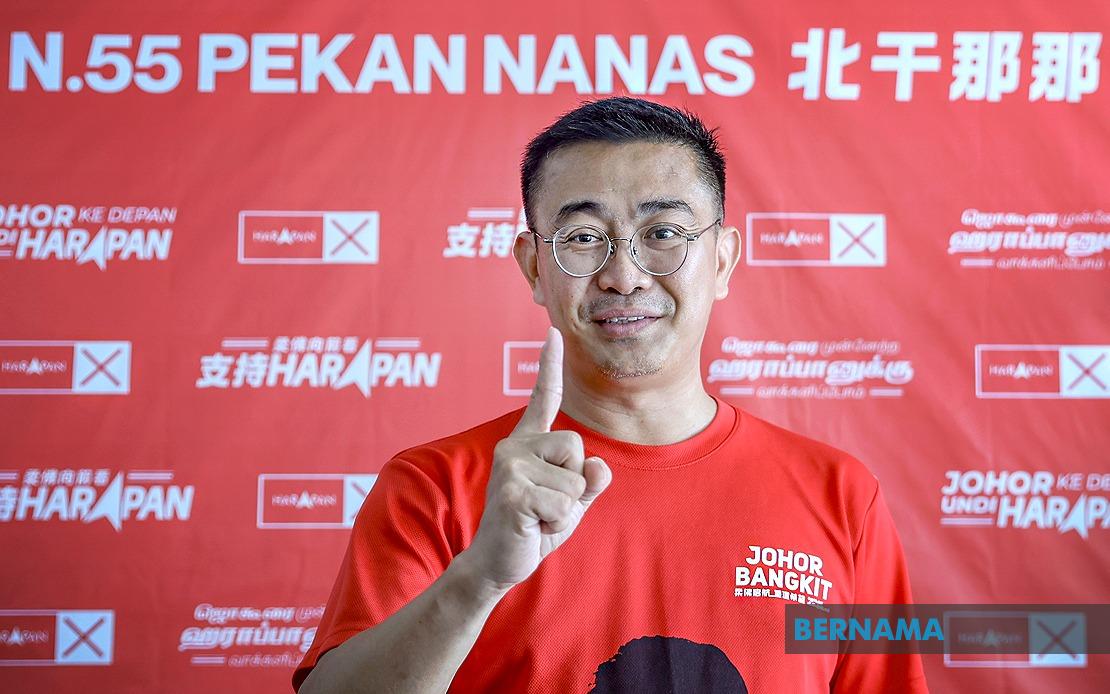
Pakatan Harapan candidate Yeo Tung Siong is mounting a determined bid to reclaim the Pekan Nanas state assembly seat, drawing on his experience as the constituency's representative from 2013 to 2022. In campaigning ahead of the Johor state election, the former assemblyman has projected optimism about his prospects, underpinned by what he characterises as an encouraging reception from voters across the district. His strategy emphasises continuity and proven service delivery—a narrative that reflects the incumbent-seeking playbook common in Malaysian electoral contests where sitting lawmakers often stress their legislative accomplishments and community connections.
Through an intensive grassroots engagement effort, Yeo claims to have met approximately 60 per cent of the Pekan Nanas electorate via multiple outreach channels. These include door-to-door visits, public forums, informal gatherings in neighbourhood settings, and targeted appearances at markets and commercial establishments. This proportionally significant voter contact, in Yeo's assessment, has yielded consistently positive responses, suggesting a residual goodwill toward his tenure or at least curiosity about his return. For a state assembly candidacy—a tier of Malaysian politics often characterised by tighter geographical boundaries and more intimate constituent relationships than federal representation—such direct engagement constitutes meaningful groundwork.
Yeo's prior accomplishments as a state representative form the centrepiece of his campaign narrative. Most prominently, he secured a RM500,000 allocation to rectify long-standing river management issues affecting Pekan Nanas, specifically rectification works on the Pulai River aimed at mitigating chronic flooding. Additionally, he collaborated with private-sector partners on drainage infrastructure at Kampung Melayu Raya. These are tangible, visible improvements that voters can reference when evaluating his stewardship—the type of localised project delivery that often carries weight in state elections, where constituents frequently prioritise immediate, observable benefits over broader policy platforms.
The former teacher and school administrator's positioning emphasises accessibility and responsiveness. Rather than adopting a formal or distant representative posture, Yeo stresses his readiness to engage personally with constituents who require assistance or wish to air grievances. This approach reflects a broader Malaysian electoral trend where candidates frequently highlight their approachability as a competitive advantage, positioning themselves as willing intermediaries between communities and government machinery. In a context where bureaucratic friction and slow administrative response are common voter complaints, the promise of a responsive representative—one who will visit households and intervene directly—carries genuine appeal.
Pervasive voter concerns about traffic congestion and employment scarcity have shaped Yeo's platform priorities. Pekan Nanas residents, many of whom likely commute to Johor Bahru or other economic centres, view transportation bottlenecks as material constraints on livelihood and daily quality of life. Yeo has identified two proposed shortcut routes that he believes could meaningfully reduce travel times: a route linking Ulu Pulai to Pekan Nanas, and a connection from Pulai to Sri Bunian junction. These represent the types of infrastructure interventions that, if feasible and implemented, could unlock economic activity and improve resident satisfaction. However, the feasibility, cost, and timeline of such projects remain unspecified, an ambiguity typical of electoral campaigns where detailed project specifications often emerge post-election if at all.
On employment generation, Yeo proposes revival of career fairs previously organised during his tenure, centred on partnerships with prominent regional employers. These events serve a dual function: they provide genuine job-matching services for residents while simultaneously serving as visible symbols of the candidate's commitment to economic opportunity. The emphasis on career development activities reflects recognition that state-level representatives, while constrained by limited direct budgetary authority, can facilitate connection points between job seekers and employers—a capacity that differentiates active representatives from inactive ones.
Social welfare and support systems feature in Yeo's platform architecture. His commitment to ensure vulnerable populations access assistance through the Social Welfare Department (JKM) and the Social Security Organisation (SOCSO) addresses the safety-net concerns of lower-income voters. While these are primarily federal and statutory-body functions, a state representative can expedite applications, remove administrative obstacles, and advocate for resource allocation—roles that matter considerably to residents navigating bureaucratic systems.
The Pekan Nanas contest is structured as a direct two-way competition between Yeo and Tan Eng Meng, the incumbent Barisan Nasional representative. This binary configuration intensifies the stakes for both candidates and creates a clearer choice narrative for voters compared to multi-cornered contests. The contest thus pivots on comparative performance assessment: voters must weigh Yeo's previous tenure record and renewed commitment against Tan's incumbent position and his own accomplishments during his tenure. Absent significant external factors—such as regional coalition shifts, high-profile scandals, or major national political upheavals—the election outcome will likely hinge on voter satisfaction with incumbent performance and confidence in the opposition candidate's ability to deliver comparable or superior service.
Yeo's campaign strategy reflects pragmatic understanding of state assembly politics in Malaysian contexts. Rather than positioning himself as a transformative figure or ideological champion, he grounds his candidacy in demonstrable past work and promised future responsiveness. This approach suits constituencies like Pekan Nanas where voters, shaped by experience with local government, often prioritise competence, accessibility, and tangible project delivery over partisan alignment or ideological positioning. The emphasis on having served two consecutive terms underscores institutional familiarity and embedded local networks—assets that are harder for challengers to replicate quickly.
The composition of the Johor state electorate and economic conditions within Pekan Nanas will ultimately determine Yeo's fate. Constituency boundaries may have shifted since his previous tenure, altering the voter base in ways that could advantage or disadvantage him. Economic conditions, cost-of-living pressures, and employment trends in the Pontian district and broader Johor context will shape voter receptiveness to pledges about infrastructure and job creation. Furthermore, broader state and national political currents—factional alignments within Pakatan Harapan, performance perceptions of PH-controlled state governments elsewhere, and Barisan Nasional's standing—will influence the electoral environment beyond individual candidate performance.
Yeo's repositioning as a returnee candidate attempting to reclaim a previously held seat represents a common feature of Malaysian electoral cycles, wherein former representatives attempt comebacks after intervening terms of electoral defeat. The success rate of such attempts varies substantially, depending on the reasons for initial defeat, the performance of the incumbent during the intervening period, and shifts in constituent demographics and priorities. Yeo's confidence appears rooted in residual constituent relationships and tangible infrastructure accomplishments, factors that could prove decisive if voters prioritise continuity and proven delivery. However, incumbent advantage, evolving voter preferences, and the political environment will ultimately determine whether his track record proves sufficient to restore him to the Pekan Nanas assembly seat in this election cycle.

