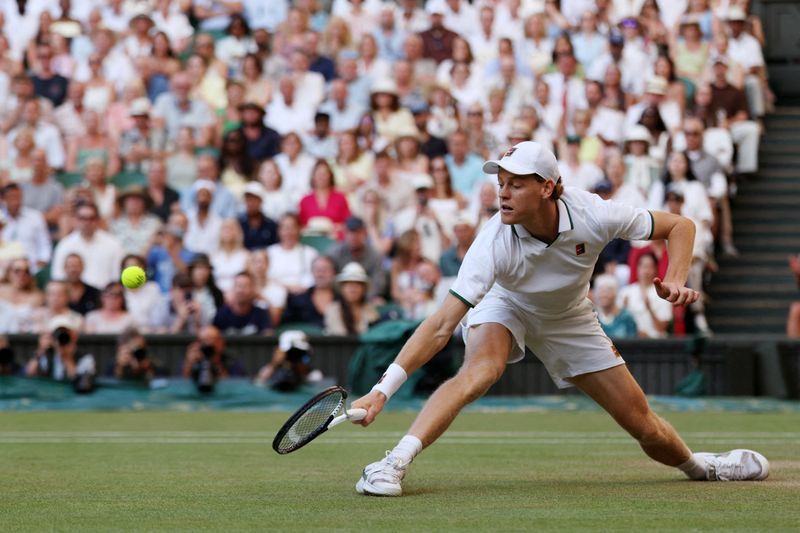
The tennis world faces a significant reshuffle at the year's final Grand Slam after Jannik Sinner, the world's top-ranked player, announced his withdrawal from the US Open on Friday due to a stubborn right knee injury. The 24-year-old Italian's decision to sit out the tournament removes one of the season's most dominant forces from contention, fundamentally altering the competitive balance at Flushing Meadows as the event prepares to commence on August 23.
Sinner's timing could hardly be worse, arriving just weeks after he demonstrated his prowess by capturing his fifth major championship at Wimbledon last month. The injury, which surfaced earlier this August, has proven more troublesome than initially anticipated, forcing the world number one into a period of enforced rest precisely when his confidence and form were at their zenith. His absence from competitive play since sustaining the injury underscores the severity of the setback and the cautious approach his medical team has adopted.
The Italian's withdrawal followed his inability to participate in two crucial preparation tournaments on the North American hard courts. His decision to skip the Cincinnati Open and Canadian Open—both traditional warm-up events that prepare players for the hard-court demands of New York—signalled the seriousness of his condition. Sinner's statement, posted on social media, conveyed the reluctance with which he reached this decision. Despite intensive work with his support team and medical personnel, ongoing assessment during training sessions in Monte Carlo revealed that adequate recovery remained out of reach for the tournament's August 23 start date.
The announcement carries profound implications for the tournament's composition and narrative. Sinner's absence creates an unexpected void among the event's elite contenders, potentially opening pathways for other players to advance further than they otherwise might have anticipated. For a Grand Slam tournament—the sport's most prestigious events—losing the world number one significantly diminishes the competitive prestige and championship value, though it does provide other players with more favourable circumstances.
The primary beneficiary of Sinner's withdrawal appears to be Carlos Alcaraz, who ascended to world number two and now becomes the highest-ranked competitor heading to New York. The Spanish star, fresh from confirming his participation following a four-month absence from competitive tennis, arrives as the new favourite for the title. Alcaraz's recent injury troubles, which necessitated his extended break from competition, are mitigated considerably by the removal of his most formidable rival from the tournament bracket.
Alcaraz's credentials as a strong contender carry historical weight. The Spaniard defeated Sinner in last year's US Open final, demonstrating his capacity to perform at the highest level in this particular venue and on these specific courts. That victory was particularly significant as it contributed to his pursuit of multiple Grand Slam titles. With Sinner absent, Alcaraz's path toward claiming his eighth Grand Slam crown appears considerably more navigable, though he will still face other world-class competitors throughout the draw.
For Malaysian and Southeast Asian tennis enthusiasts, this development holds regional significance. While neither Sinner nor Alcaraz represents the region, the US Open's competitive landscape directly influences younger Asian players' opportunities for advancement and media attention. The tournament's quality and prestige depend substantially on featuring the world's best players at full strength. The absence of the world number one, particularly at such a crucial juncture in the season, necessarily affects the tournament's overall calibre and the narratives that will unfold across the fortnight.
Sinner's injury situation also highlights the demanding physical toll that professional tennis exacts on elite athletes. The gruelling schedule of Grand Slam tournaments, combined with the relentless preparation cycles required to maintain peak competitive condition, creates injury vulnerabilities that even the world's best players cannot always overcome. His decision to prioritise recovery over attempting to compete represents a strategic acknowledgment that chronic knee injuries require serious attention to prevent long-term damage.
The timing of the announcement—on Friday, just two days before the tournament's opening—provided teams and broadcasters minimal time to adjust coverage plans and spectator expectations. For fans who had anticipated witnessing the year's top player in action, the news necessitated a recalibration of viewing priorities and alternative matchups worthy of attention.
Looking forward, Sinner's recovery timeline becomes critical not only for the US Open's aftermath but for the remainder of the autumn tennis calendar. The knee injury, if not properly rehabilitated, could potentially affect his participation in other significant tournaments heading toward the season's conclusion. His team's cautious approach suggests they recognise that rushing recovery could compromise his capacity to compete effectively across multiple events.
The US Open, running through September 13, will proceed with a modified competitive landscape. While Alcaraz emerges as the favourite, other established contenders now inherit enhanced opportunities to make deeper tournament runs than they anticipated. The event's ultimate champion will face the distinction of winning without overcoming the world number one's challenge—a qualification that will inevitably colour the tournament's historical significance and the winner's legacy.
For Sinner personally, the immediate focus shifts entirely toward comprehensive rehabilitation and gradual return to competitive readiness. The Italian will monitor his progress through the remainder of the season, timing his comeback to ensure both his physical recovery and his psychological readiness to challenge for future Grand Slam titles. His absence from New York represents a temporary setback in what has been an extraordinarily successful campaign, but one that reflects the professional wisdom of prioritising long-term health over short-term competitive ambitions.

