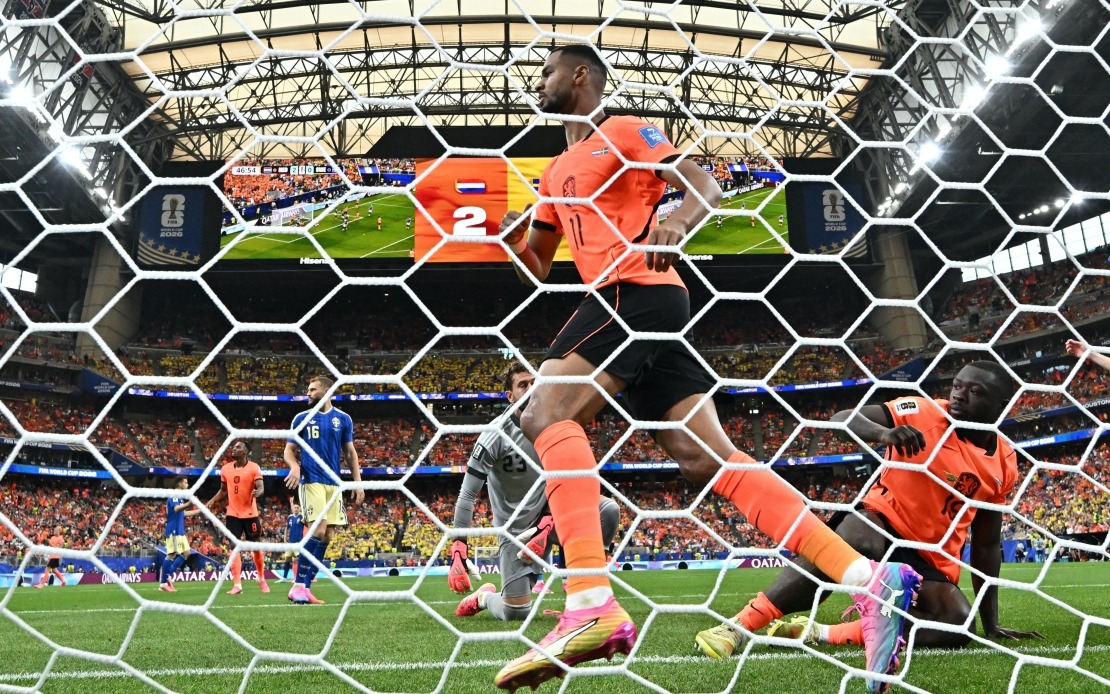
The 2024 World Cup has established itself as an exceptionally high-scoring tournament, reaching the symbolic 100-goal mark during the Netherlands' commanding 5-1 victory over Sweden on Saturday. Cody Gakpo's strike, which sealed the milestone in the tournament's 33rd match, represents the fastest pace at which a modern World Cup has reached this significant threshold. The tournament has recorded an average of 3.03 goals per match, a statistical indicator that has reignited debate among football analysts about the factors driving this unprecedented scoring surge in international competition.
The historical context underscores just how remarkable this achievement is. The 1954 World Cup in Switzerland previously held the record for reaching 100 goals most swiftly, accomplishing this in 20 matches during an era when fewer teams participated and defensive tactics differed substantially from contemporary football. However, recent tournaments have generally maintained lower scoring rates. The 2014 World Cup in Brazil required 36 matches to reach the century mark, while Spain 1982 needed an identical number of matches. The 1978 tournament in Argentina and the 1994 World Cup in the United States both required 38 matches, suggesting that sustained high-scoring tournaments have become increasingly uncommon at this level of competition.
Several interconnected factors have been identified by observers and officials as contributors to this explosive scoring environment. The official match ball, manufactured as the Trionda, has drawn particular attention from goalkeeping analysts who suggest its aerodynamic properties create difficulties for custodians when confronted with long-range strikes. This technical specification has allegedly facilitated approximately ten goals from outside the penalty area, a statistic that would normally represent a relatively modest proportion of total scoring but indicates measurable differences in ball behaviour compared to previous tournaments. The manufacturing specifications and flight characteristics of modern footballs have become increasingly relevant to understanding how equipment innovations influence match outcomes at the elite level.
The physical demands imposed by tournament conditions have simultaneously shaped defensive performance throughout the competition. The heat characteristic of the host nation has reportedly contributed to fatigue-related lapses in concentration and positioning among defending players, a phenomenon commonly observed in football tournaments conducted in warm climates. Tournament organisers introduced mandatory three-minute cooling breaks specifically designed to mitigate heat-related stress, yet these intervals paradoxically provide coaching staff with expanded opportunities to implement tactical modifications and make substitutions, potentially disrupting defensive cohesion and creating additional vulnerability during the resumption of play.
The structural expansion of the tournament itself represents a fundamental shift in World Cup architecture that cannot be overlooked. The increase from the traditional 32-team format to 48 participating nations creates additional opportunities for matches between significantly disparate competitive levels. Germany's overwhelming 7-1 demolition of Curaçao, Canada's 6-0 crushing of Qatar, and Tunisia's successive defeats to Sweden and Japan by identical 5-1 and 4-0 scorelines exemplify the potential for lopsided contests when superior teams encounter less-experienced opponents. These results would appear to validate concerns that expansion necessarily produces one-sided spectacles lacking competitive equilibrium.
However, the tournament's narrative resists such straightforward interpretation. Curaçao's impressive goalless draw against Ecuador, widely regarded as a more accomplished regional competitor, demonstrated capacity for defensive organisation and resilience. Cabo Verde's stalemate with Spain represented another surprising defensive achievement, as did Qatar's competitive performance in their Canada defeat, despite the Gulf nation competing for extended periods with only nine players following dismissals. These results indicate that smaller nations can successfully employ compact defensive approaches and capitalise on traditional football principles despite lacking comparative squad depth.
The competitive positioning of traditional underdog nations further complicates the narrative of tournament imbalance. Jordan's 3-1 defeat to Austria and Uzbekistan's 3-1 loss to Colombia, while resulting in defeats, demonstrated sufficiently competitive performances to suggest these teams remained engaged participants rather than hapless victims. The relatively narrow margins of these results, combined with goalscoring achievements from lower-ranked nations, suggest that tournament expansion has not automatically produced a cascade of humiliating defeats, but rather a more complex competitive landscape.
For Malaysian football enthusiasts and regional observers, this tournament's scoring characteristics offer instructive lessons about competitive football at the international level. The emphasis on high-pressing tactics, aggressive attacking approaches, and reduced emphasis on defensive solidity appears increasingly dominant at global tournament level. Southeast Asian national team coaching staffs closely monitoring World Cup trends frequently adapt tactical frameworks based on successful tournament innovations, making the prevalence of attacking football particularly relevant to regional coaching evolution. The tournament effectively demonstrates that modern elite football increasingly rewards aggressive, expansive approaches when technical quality permits such tactics.
The scoring acceleration also reflects broader changes in how football is coached and understood at the professional apex. The influence of club football philosophies, where attacking football generates commercial interest and entertainment value, has permeated international competition. Coaches increasingly view World Cup participation as a platform for demonstrating attacking prowess rather than emphasising defensive caution and tournament longevity. This philosophical shift, combined with technical, environmental, and structural factors, has created an environment where scoring frequency reaches unprecedented levels, establishing patterns that will likely influence how tournament football is approached for years beyond this competition's conclusion.

%22%2F%3E%3C%2Fpattern%3E%3C%2Fdefs%3E%3Crect%20width%3D%22100%25%22%20height%3D%22100%25%22%20fill%3D%22url(%23ph46wn1g)%22%2F%3E%3Crect%20width%3D%22100%25%22%20height%3D%22100%25%22%20fill%3D%22url(%23ph46wn1p)%22%2F%3E%3Ctext%20x%3D%2250%25%22%20y%3D%2250%25%22%20text-anchor%3D%22middle%22%20dominant-baseline%3D%22central%22%20fill%3D%22rgba(255%2C255%2C255%2C0.95)%22%20font-family%3D%22Georgia%2C%20'Times%20New%20Roman'%2C%20serif%22%20font-weight%3D%22700%22%20font-size%3D%22226%22%20letter-spacing%3D%22-0.02em%22%3EHamzah%3C%2Ftext%3E%3C%2Fsvg%3E)
%22%2F%3E%3C%2Fpattern%3E%3C%2Fdefs%3E%3Crect%20width%3D%22100%25%22%20height%3D%22100%25%22%20fill%3D%22url(%23ph14kuwg)%22%2F%3E%3Crect%20width%3D%22100%25%22%20height%3D%22100%25%22%20fill%3D%22url(%23ph14kuwp)%22%2F%3E%3Ctext%20x%3D%2250%25%22%20y%3D%2250%25%22%20text-anchor%3D%22middle%22%20dominant-baseline%3D%22central%22%20fill%3D%22rgba(255%2C255%2C255%2C0.95)%22%20font-family%3D%22Georgia%2C%20'Times%20New%20Roman'%2C%20serif%22%20font-weight%3D%22700%22%20font-size%3D%22170%22%20letter-spacing%3D%22-0.02em%22%3ETambirat%3C%2Ftext%3E%3C%2Fsvg%3E)