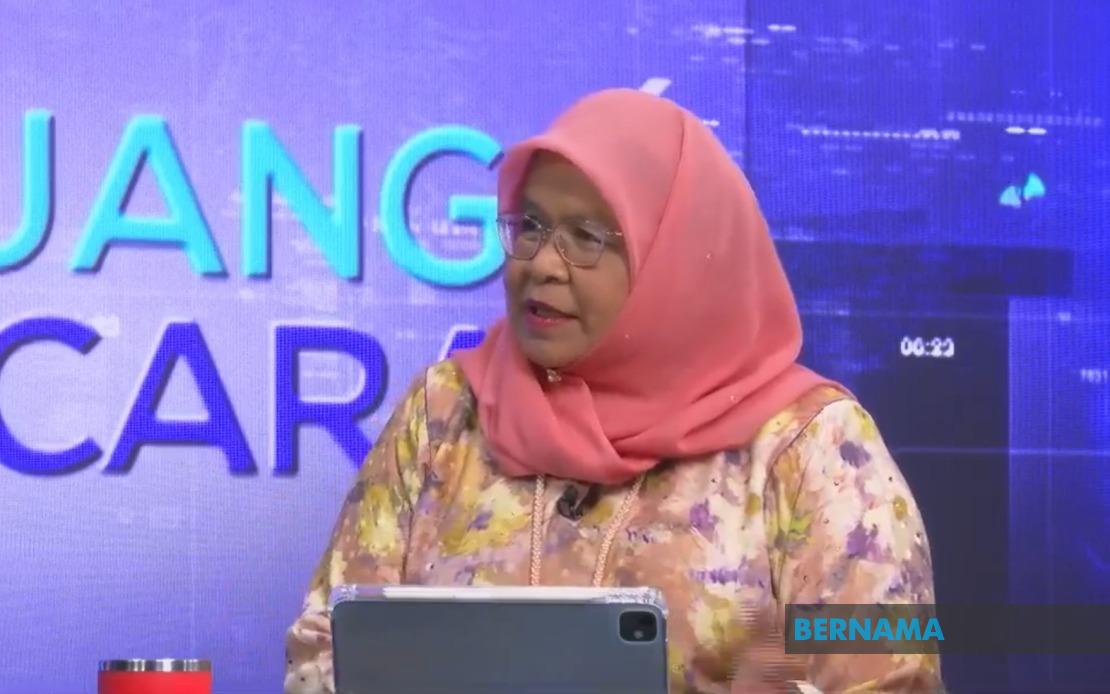
The advancement of women into leadership and decision-making roles must be underpinned by robust support mechanisms, comprehensive training, and institutional trust in female capabilities, according to Datuk Seri Dr Maimunah Mohd Sharif, the Government's Sustainable Urban Development advisor and former mayor of Kuala Lumpur. Her remarks highlight a critical gap in Malaysia's governance landscape, where despite significant educational achievements by women, their representation in senior positions remains markedly limited across both public and private sectors.
Maimunah emphasised that placing women in positions where they influence policy development is essential for ensuring that female perspectives and needs are adequately represented in governance frameworks. When women occupy seats at the decision-making table, the policies that emerge tend to reflect a broader understanding of societal challenges and opportunities. This is particularly significant in urban development and governance, where decisions affect the wellbeing of entire communities, including families, children, and vulnerable populations whose concerns may otherwise be overlooked.
The disparity between women's educational participation and their presence in management positions reveals a persistent structural challenge within Malaysia's professional landscape. Current data indicates that women comprise 56.4 per cent of participants in higher education as of 2025, demonstrating their strong commitment to acquiring qualifications and expertise. However, this educational advantage has not translated proportionally into senior management roles, where women hold only 27 per cent of positions. This gap suggests that barriers beyond education prevent qualified women from ascending to leadership levels, whether through workplace culture, unconscious bias, or systemic obstacles in promotion pathways.
At the political level, representation remains even more constrained. Women Members of Parliament currently make up 13.5 per cent of the legislative body, while female Cabinet ministers constitute 16.1 per cent of ministerial positions. These figures underscore how underrepresented women remain in Malaysia's highest echelons of political power, despite comprising roughly half the population and electoral base. The incremental nature of these percentages suggests that meaningful change requires sustained, deliberate action rather than reliance on gradual organic progression.
Maimunah's exhortation to women to seize opportunities when they arise carries both empowerment and pragmatic wisdom. She encouraged women to actively pursue knowledge and position themselves competitively for leadership roles, recognising that individual agency and aspiration are essential components of career advancement. Her call for parity or near-parity representation reflects contemporary standards in many developed democracies, where achieving gender balance in leadership has become a benchmark for equitable governance.
Datuk Mona Suraya Kamarudin, non-executive independent director at Nomura Asset Management, provided insights from the financial services sector, where meritocracy theoretically operates with particular rigour. She observed that women in finance possess strong technical competencies and substantial experience, yet their career trajectories typically peak at mid-management levels rather than progressing to apex positions. Her observation that the financial sector focuses on capability rather than gender identity suggests that when structural barriers are sufficiently dismantled, women's advancement depends primarily on demonstrated skill and performance.
The financial sector's approach offers a potential model for other industries, though Kamarudin's experience indicates that even in theoretically gender-blind professional environments, advancement patterns reveal stubborn gender imbalances. This suggests that meritocratic systems alone are insufficient; additional mechanisms such as mentorship programmes, transparent promotion criteria, and accountability measures may be necessary to ensure that capability translates into opportunity across all career levels.
Kamarudin underscored the importance of training and leadership development as accompaniments to career advancement opportunities. Professional development programmes designed specifically to prepare women for senior roles can address confidence gaps, build networks, and provide strategic skills that distinguish leaders from managers. Organisations that invest in such programmes report higher retention rates among high-performing women and more successful transitions to executive positions, creating a virtuous cycle of advancement and organisational benefit.
Beyond the workplace, Kamarudin highlighted the crucial enabling role of family support systems in facilitating women's professional success. The ability to balance career responsibilities with family commitments remains a distinctive challenge for many working women, particularly in Asian cultural contexts where family obligations carry significant weight. When family structures actively support professional ambitions, women can dedicate the necessary focus and energy to career development without experiencing debilitating role conflict. This reality suggests that advancing women's leadership requires not only workplace policy changes but also societal shifts in how domestic responsibilities are distributed and valued.
The intersectionality of these challenges—structural workplace barriers, limited developmental opportunities, family responsibility imbalances, and cultural expectations—means that piecemeal solutions will likely prove insufficient. Malaysia's development as a nation depends on maximising the talents and capabilities of its entire population. The current underutilisation of female leadership capacity represents both an equity issue and an economic inefficiency that constrains national progress.
For Malaysia and the broader Southeast Asian region, the conversation around women's empowerment is increasingly recognised as integral to economic competitiveness and social stability. Countries and organisations that successfully integrate women into leadership positions report enhanced innovation, better decision-making outcomes, and stronger community trust. Conversely, systems that fail to leverage female talent risk perpetuating inefficiencies and missing perspectives essential for solving complex contemporary challenges.
Moving forward, the pathway to meaningful gender parity in leadership requires simultaneous action across multiple domains: policy frameworks establishing accountability for representation targets, corporate and institutional cultures that actively combat bias, training and mentorship programmes that prepare women for advancement, and social support systems that enable women to pursue ambitions without abandoning family responsibilities. The voices of leaders like Maimunah and Kamarudin, articulating both the necessity and feasibility of women's advancement, are essential for building the political and social consensus required to sustain meaningful change. Without such comprehensive approaches, the statistics will likely remain stubbornly static, and Malaysia will continue to underutilise the capabilities of half its population.

