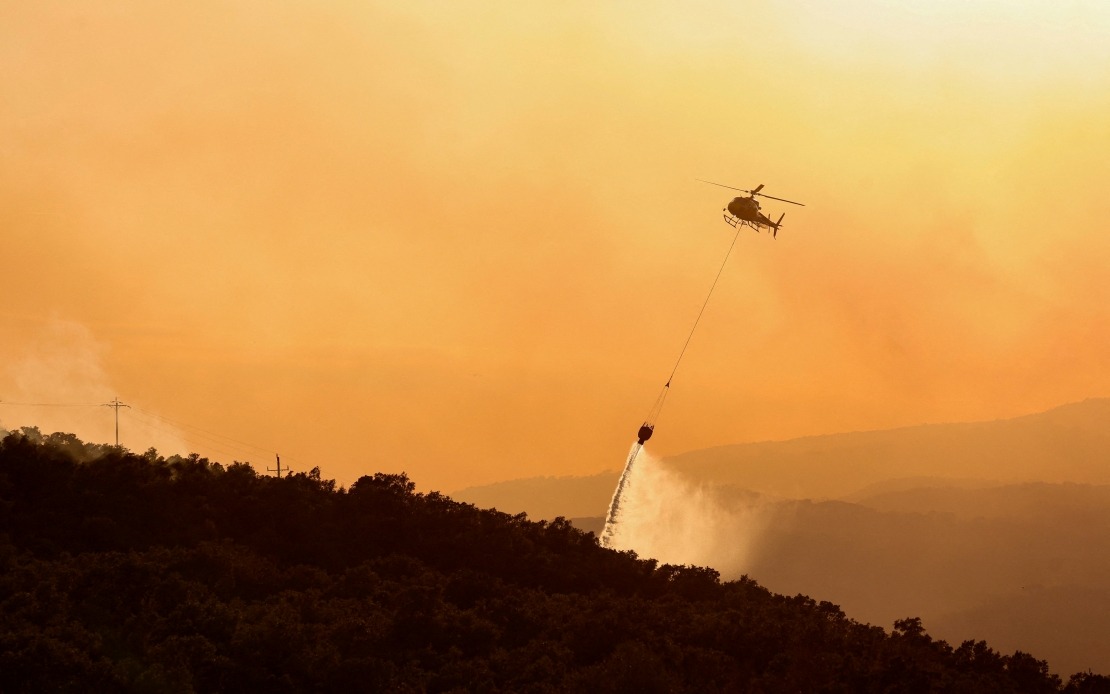
Communities throughout the western United States are scrapping their Fourth of July fireworks celebrations as an unprecedented wildfire crisis sweeps across the region during the country's 250th founding anniversary. The convergence of severe drought, active large-scale fires, and treacherous fire-weather forecasts has prompted dozens of local authorities to restrict or eliminate public fireworks displays, fundamentally altering holiday celebrations that typically anchor summer festivities in the American West. The situation underscores the escalating impact of climate-driven environmental hazards on everyday life and public safety across the region, a pattern increasingly relevant to Southeast Asian nations facing their own growing wildfire and drought challenges.
The scale of the current wildfire emergency is striking. On July 4, national incident reports documented 41 uncontained large fires burning across the United States, placing the nation at its second-highest wildfire preparedness level. This metric reveals the extraordinary strain on fire-suppression resources and the widespread geographic distribution of the threat. Utah exemplifies the severity: State Forester Jamie Barnes characterised the wildfire conditions as unprecedented in recent memory, with fires spreading with velocity and intensity that have no recent parallel. Utah has already burned more acreage in 2024 than during the entirety of the previous four years combined, a stark illustration of how dramatically fire seasons are intensifying.
Drought conditions have created the tinderbox conditions enabling this surge in fire activity. Data from Utah state agencies show that 94 per cent of the state is experiencing severe or extreme drought, essentially rendering the landscape combustible across nearly the entire state. Utah Governor Spencer Cox responded by issuing a temporary statewide restriction on fireworks, a drastic measure that reflects the urgency officials perceive. Under the order, local governments retain discretion to permit limited fireworks use in specifically designated zones through July 5, but the default position is prohibition rather than permission.
Colorado has experienced similarly alarming wildfire proliferation. The state's Division of Fire Prevention and Control reported more than a dozen significant wildfires burning simultaneously during the Fourth of July week, prompting multiple jurisdictions to eliminate their holiday celebrations. Durango, Vail, and Pueblo all cancelled their fireworks displays. Colorado Springs, the state's second-largest city, took the extraordinary step of cancelling all Fourth of July fireworks shows, citing extreme fire danger that city officials likened to conditions immediately preceding the devastating 2012 fire that destroyed over 300 residences. Colorado Springs Mayor Yemi Mobolade acknowledged the disappointment of cancellations during the landmark 250th anniversary year, yet prioritised public safety over tradition.
The pattern extends across the entire region. Wyoming, Nebraska, and New Mexico have all imposed limits on fireworks owing to either drought or active wildfire danger. Most professional fireworks displays—typically involving trained operators and fire-prevention protocols—are still proceeding as scheduled, but consumer fireworks have been broadly curtailed. This distinction highlights how wildfire risk assessment differs by context and mitigation capacity. The national weather service warned that southwestern regions faced extremely dangerous conditions through the weekend, with strong winds and exceptionally low humidity forecast to elevate fire danger. Meanwhile, the eastern and central United States confronted a separate but equally severe threat: dangerously elevated temperatures, with heat indices exceeding 46 degrees Celsius in certain areas.
The relationship between fireworks and wildfire ignition is well-established in scientific literature. Philip Higuera, a fire ecology professor at the University of Montana, notes that Fourth of July celebrations generate a massive spike in fire ignitions across the landscape during a single 24-hour period. Research compiled by Lauren Lowman, an associate professor at Wake Forest University, indicates that nearly half of all acreage burned in the western United States since 2001 has occurred during or immediately following heat waves, suggesting that the combination of pyrotechnic activity and atmospheric conditions creates a particularly volatile scenario. Historical data reveals that approximately 15,000 wildfires were recorded specifically on July 4 across the United States between 1992 and 2020, while fireworks caused an estimated 32,000 fires nationwide in 2023 alone.
For Malaysian and Southeast Asian observers, the western US wildfire crisis offers instructive parallels and cautionary insights. Southeast Asia has confronted its own severe transboundary haze events, particularly during El Niño-driven drought years when agricultural burning combines with natural dryness to create regional air quality catastrophes. While the US crisis involves wildfires in primarily unpopulated or sparsely populated regions, the underlying climate dynamics—intensified heat waves, extended droughts, and the interaction between human activities and extreme environmental conditions—mirror challenges facing the region. The US response, including restricting public fireworks during high-risk periods, demonstrates how even wealthy nations with substantial fire-suppression resources must fundamentally alter cultural practices when environmental conditions become hazardous.
The cancellations during the 250th anniversary celebration represent not merely a postponement of festivities but a recognition that climate change is reshaping the feasibility of established traditions. When Governor Cox issues statewide fireworks restrictions and when Colorado Springs cancels celebrations for the first time since 2021, these decisions reflect the new normal of western US summers. Vail, for example, has now cancelled its Fourth of July display six times since 1998, with this year's event joining the growing roster of cancellations driven by extreme conditions. The increasing frequency of these cancellations suggests that what were once exceptional circumstances are becoming routine occurrences.
The broader implications concern resource allocation and long-term planning. Fire departments across the region are stretched thin managing uncontained large fires while simultaneously preparing for holiday-season fire risks that would historically have been manageable. The decision to allow some professional fireworks displays to proceed while restricting consumer fireworks reflects pragmatic risk-stratification—acknowledging that trained operators with proper safety equipment and fire-suppression teams present can execute displays more safely than dispersed individual consumers operating in their backyards. Nonetheless, even professional displays are cancelled in the most extreme circumstances, as demonstrated in Colorado Springs.
Meteorology and climate patterns offer limited relief in the immediate term. The forecast for the remainder of July anticipates continued elevated fire danger across southwestern regions, with strong winds and critically low humidity levels persisting. Heat waves affecting the eastern and central United States present a different but equally concerning threat, potentially straining electrical systems and healthcare infrastructure. For communities accustomed to celebrating Fourth of July with fireworks, the cancellations represent a tangible manifestation of climate disruption.
The human dimension of these cancellations warrants consideration alongside the meteorological and ecological data. Fourth of July fireworks represent deeply embedded cultural traditions, particularly in smaller communities where the display anchors summer social calendars. Cancellations disappoint residents and alter family plans that may have been in place for months. Yet the alternative—permitting fireworks under extreme fire conditions and risking lives and property destruction—proves untenable. Officials have determined that no celebration, regardless of tradition or historical significance, justifies elevated wildfire risk.
Looking forward, the pattern of Fourth of July wildfire threats and subsequent display cancellations may persist indefinitely unless underlying climate and drought conditions reverse. Water-management strategies, land-use planning, and forest-management practices will continue shaping wildfire vulnerability across the western United States. In the interim, communities facing cancelled celebrations during the 250th anniversary year are contending with the reality that environmental constraints increasingly dictate what public activities remain permissible, a dynamic Southeast Asian nations understand acutely whenever transboundary haze forces school closures and activity restrictions.

