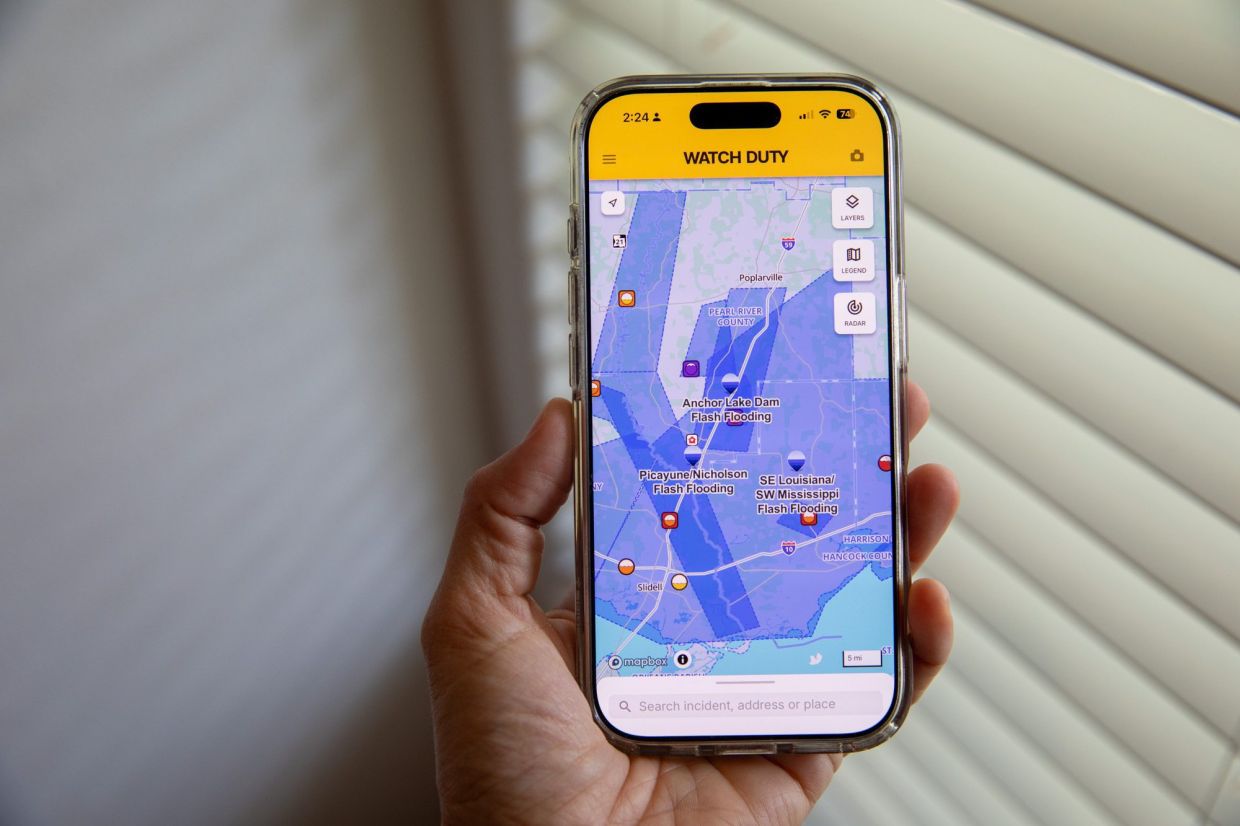
When the Eaton Fire threatened his Altadena neighbourhood in early January 2025, Matt Blea faced an agonising choice: remain or flee. A friend's suggestion to download Watch Duty, a free emergency tracking application, proved decisive. Through the app's interface showing the fire's boundaries, evacuation directives and real-time emergency updates, Blea found the confidence to leave immediately with his family. His decision likely saved their lives; their home was subsequently destroyed by the blaze. That single household decision exemplifies why 2.5 million people turned to Watch Duty during the week of catastrophic Los Angeles County fires, making the volunteer-run service a lifeline when official channels proved inadequate.
The Watch Duty operation that week reflected a remarkable mobilisation of resources. Roughly two dozen paid staff coordinated with more than 100 volunteers who combed through emergency radio frequencies, aircraft communications and official agency bulletins to compile, verify and distribute information across multiple platforms. David Hertz, captain of the Malibu community fire brigade and a resident of the affected area, emphasised the democratising effect of this model. By aggregating fragmented data sources and presenting them accessibly, Watch Duty empowered residents with knowledge that official channels had failed to communicate effectively, particularly in the days preceding the Eaton and Palisades fires that ultimately claimed 31 lives.
The app's recent pivot toward flood tracking reflects a sobering recognition of climate change's accelerating impact on American communities. Beginning in June 2025, Watch Duty began layering flood monitoring capabilities onto its existing infrastructure. This expansion arrives as the nation enters its most dangerous flood season, building upon hard lessons from the Texas floods of July 2024 that killed over 130 people and sparked widespread criticism of official communication failures. John Mills, the nonprofit's chief executive and co-founder, frames the addition as an urgent imperative. "This is painful that this keeps happening," Mills stated, acknowledging the frustration of witnessing preventable deaths resulting from inadequate information distribution across communication channels.
Mills' personal experience created the conditions for Watch Duty's existence. In 2021, when a fire approached his Northern California property, Mills received neither official alerts nor evacuation instructions despite living in obvious danger. This gap between available information and public access to it became his central concern. He observed that emergency data often exists within government systems and scanner networks but remains inaccessible to ordinary people making life-and-death decisions under time pressure. Social media offered potential solutions but introduced new problems: misinformation, unrelated content and algorithmic noise that could obscure critical safety updates. As a software engineer with entrepreneurial experience, Mills recognised an opportunity to engineer a better intermediary.
Watch Duty's growth reflects a deliberate institutional design. By structuring the organisation as a donor-supported nonprofit rather than a commercial venture, Mills built credibility with users now numbering over 20 million. The fiscal year 2025 brought nearly six million dollars in grants and donations, reflecting confidence from institutional funders who recognised the service's public value. The current operational model deploys approximately 300 trained volunteer reporters who systematically monitor radio scanners, camera feeds, satellite imagery, crowd-sourced content and official announcements. This distributed workforce applies consistent verification protocols before information reaches the public through maps, text feeds and push notifications designed to penetrate through phone silencing settings.
The technical architecture reflects hard-won lessons from firefighting and meteorology professionals. Pete Curran, a Watch Duty meteorologist and retired firefighter, emphasises the structural advantage of specialised focus. Traditional emergency management agencies necessarily juggle multiple responsibilities: coordinating responses, managing resources, making command decisions. Watch Duty's reporters possess singular purpose: gathering and curating information. This narrower mandate enables faster dissemination because the organisation can push out verified data without navigating the bureaucratic layers that typically slow official agencies. Curran notes that consolidating information into a single accessible platform with plain-language explanations and proactive notifications addresses a fundamental communication failure: residents often don't know where to seek authoritative information during emergencies.
The expansion into flood monitoring responds to an observable shift in precipitation patterns. Dr Lori Moore-Merrell, who served as US Fire Administrator under President Joe Biden and now sits on Watch Duty's board, explains that extreme rainfall increasingly occurs in regions historically spared from such events. Communities without established flooding protocols face unprecedented vulnerability. Watch Duty's flood module integrates data from the National Weather Service, the National Oceanic and Atmospheric Administration and the US Geological Survey, displaying flood warnings, river gauge readings and notices of potential dam or levee failures. Users can also assess their personal risk profiles by identifying whether their addresses fall within FEMA flood zones and by setting customised alerts tied to specific gauge thresholds.
Yet technology alone cannot resolve the fundamental challenge of emergency communication. Chad Berginnis, executive director of the Association of State Floodplain Managers, articulated a crucial constraint: warnings prove ineffective without corresponding knowledge about how to respond. Surveys of Texas flood survivors revealed that many residents didn't understand how to reach designated evacuation zones or simply lacked evacuation plans entirely. The ASFPM advocates for not merely developing plans but regularly practicing them, transforming abstract procedures into embodied habits. This gap between information and actionable response represents a domain where no mobile application can substitute for community-level preparation and coordination.
Infrastructural vulnerabilities compound these challenges. The national systems monitoring weather and distributing alerts face genuine financial jeopardy from past budget cuts and proposed reductions to federal agencies and local emergency services. Berginnis emphasised that maintaining eyes and ears across American landscapes requires sustained funding; surveillance and communication infrastructure cannot operate without resources. This fiscal pressure occurs precisely when climate change demands enhanced rather than diminished monitoring capacity. The contradiction between rising disaster frequency and declining resources for response coordination underscores why Watch Duty's volunteer model, despite its impressive reach, cannot entirely substitute for robust government infrastructure.
Mills consciously resists framing Watch Duty as a replacement for official systems. He emphasises that meteorological agencies, fire services and emergency management infrastructure remain indispensable. Watch Duty functions as an aggregating intermediary, not as an alternative to foundational government services. Mills accordingly urges all users to maintain enrollment in official local alerting systems, ensuring redundancy across multiple channels. This stance reflects recognition that technological solutions address information accessibility but cannot resolve underlying resource allocation problems or substitute for direct government capability. The recommendation implicitly acknowledges that Watch Duty reaches only users who have downloaded the app and maintain cellular coverage during emergencies, creating inherent limitations.
Berginnis advocates for precisely this redundancy approach, noting that low-technology solutions often prove more reliable than sophisticated applications during catastrophic events. NOAA weather radios, inexpensive devices requiring no internet connectivity and no downloads, continue functioning when cellular networks fail or devices lose power. The irony of contemporary emergency management lies in how technological enthusiasm sometimes eclipses older, simpler systems that provide genuine resilience. A comprehensive disaster communication strategy therefore requires layering multiple technologies and methods: official alerts, NOAA radios, community sirens, social media, dedicated apps and neighborhood communication networks. No single channel suffices; redundancy across fundamentally different transmission mechanisms ensures some information reaches residents regardless of infrastructure failures.
For Malaysian and Southeast Asian observers, Watch Duty's expansion offers instructive lessons about adaptive governance during climate change. The region experiences intense seasonal flooding, and communities increasingly confront extreme precipitation events that challenge existing response systems. Watch Duty demonstrates how structured volunteer networks, technological platforms and nonprofit models can fill genuine gaps in official emergency communication. Malaysia's existing Meteorological Department and civil defence structures provide valuable foundations, yet potential exists for supplementary services that aggregate and localise disaster information. The Watch Duty model suggests that communities need not wait for top-down reforms; organised networks of volunteers can begin immediately addressing communication failures while advocating for necessary government infrastructure investment. The organisation's emphasis on simplicity, accessibility and redundancy provides relevant principles for disaster communication systems across the region.

