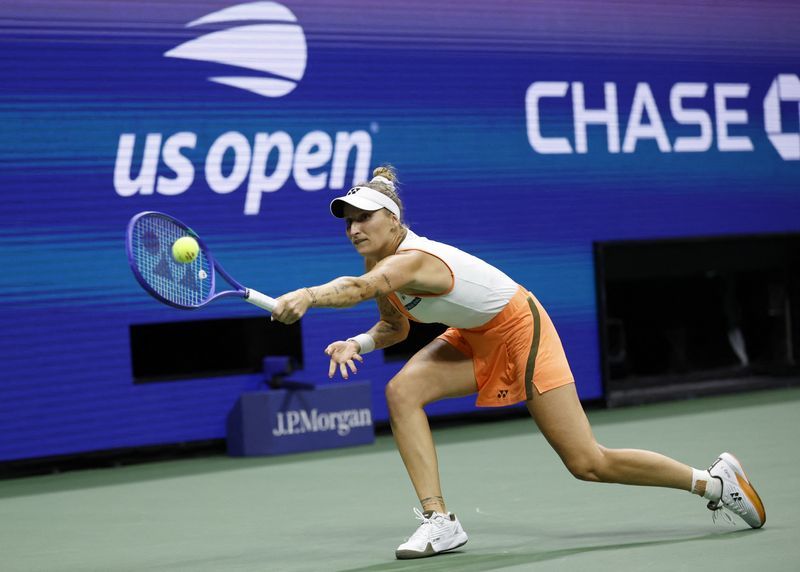
Former Wimbledon champion Marketa Vondrousova has taken her battle against a four-year doping suspension to the Court of Arbitration for Sport, the highest judicial authority in global athletics. The Czech player's decision to appeal the ban, handed down in June following a missed drug test, marks a significant turning point in a case that has reverberated through professional tennis and raised broader questions about player autonomy and testing protocols.
The underlying incident occurred in December when an International Tennis Integrity Agency official arrived at Vondrousova's residence requesting an out-of-competition doping sample. According to the initial ruling, the athlete failed to comply with the testing officer's request, resulting in the lengthy suspension that would sideline her until June 21, 2030, when she turns 30. The timing of the ban represents a career-defining moment for a player who has already achieved remarkable success despite her youth and relative newcomer status at the elite level.
Vondrousova's defence has centred on arguments that extend beyond typical anti-doping disputes. In her public statement released in April, she described reaching a "breaking point after months of physical and mental stress," framing the December testing scenario as an egregious invasion of privacy rather than deliberate rule-breaking. She specifically highlighted that the officer's 8:15 p.m. arrival and demand for immediate testing represented an unreasonable incursion into her personal space and family life, suggesting that the rigid application of testing protocols failed to account for human circumstances and dignitary concerns.
Crucially for Vondrousova's case, she has consistently maintained complete innocence regarding any doping allegations. A voluntary test conducted merely three days after the December 3 incident returned a negative result, providing empirical support to her assertions that no prohibited substances were present in her system. This detail distinguishes her situation from cases involving actual substance violations and raises legitimate questions about whether the punishment mechanism—designed primarily to deter and punish doping—remains proportionate when applied to procedural violations by demonstrably clean athletes.
The CAS confirmation that it has received the appeal signals the formal commencement of the arbitration process, though officials have indicated that a hearing date remains unscheduled. This bureaucratic pause creates uncertainty for Vondrousova, who faces an extended period without clarity regarding her competitive future. The appeal will likely explore arguments around the proportionality of the ban, the reasonableness of testing protocols during unsociable hours, and whether procedural violations warrant sanctions equivalent to substantive doping offences.
Vondrousova's career trajectory has already suffered considerably from the suspension. Once ranked sixth globally and a genuine contender at major tournaments, she has plummeted to 153rd in the world rankings following her withdrawal from the Adelaide International in January due to a shoulder injury. The combination of physical setback and the legal controversy has effectively removed one of tennis's most promising talents from competitive action for an extended period, with no certainty about her eventual return even if the appeal succeeds.
Her earlier accomplishments underscore what is at stake. At just 27 years old, Vondrousova achieved what many professionals never do by winning Wimbledon in 2023, cementing her status among the sport's elite. Her prior appearance in the 2019 French Open final and her silver medal from the Tokyo Olympics in 2021 demonstrated consistent capability at the highest levels of international competition. The suspension threatens to erase what could have been her peak competitive years at an age when most players are producing their best performances.
The case has broader implications for how sports governing bodies balance anti-doping imperatives with athlete welfare and fairness considerations. While doping control remains essential for preserving competitive integrity, Vondrousova's situation highlights potential tensions between rigid enforcement mechanisms and individualized circumstances. For Malaysian and Southeast Asian readers, the case is particularly relevant given the region's growing prominence in tennis and increasing participation from regional players in international circuits who operate within the same regulatory frameworks.
The appeal also reflects evolving attitudes within professional sports toward questioning institutional authority. Where athletes once accepted sanctions with little recourse, contemporary players increasingly challenge decisions perceived as unjust or disproportionate, leveraging specialized arbitration systems designed to provide independent review. Vondrousova's decision to pursue this path, despite the protracted uncertainty it entails, suggests a conviction that the ban cannot withstand rigorous legal scrutiny.
As the CAS process unfolds, the outcome will reverberate beyond Vondrousova's individual circumstances. A decision upholding the ban would reinforce strict compliance regimes regardless of circumstantial factors, whereas a reduction or reversal would signal that procedural flexibility and proportionality considerations should constrain application of maximum penalties. For international tennis and the athletes governed by its systems, the precedent established will shape how testing protocols and enforcement mechanisms function in years to come.

