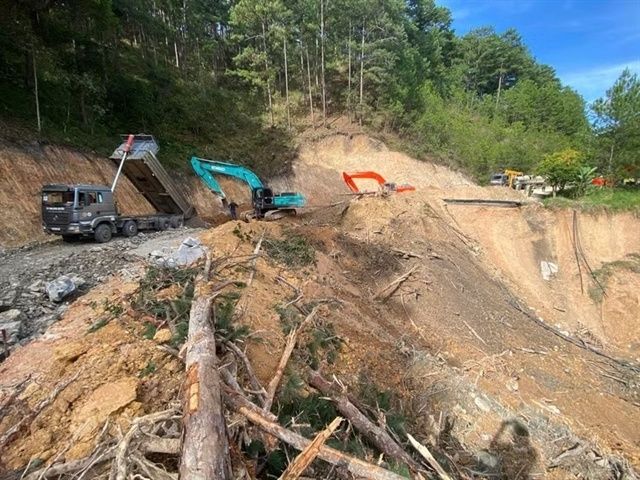
Vietnam's Ministry of Construction has activated an emergency declaration for a critically damaged section of Ho Chi Minh Road in Tuyen Quang Province, responding to infrastructure deterioration triggered by intense weather patterns that swept through the region during June. The emergency declaration targets the area at Km115+000, where Ho Chi Minh Road intersects with National Highway 2C, placing the affected zone under the operational jurisdiction of Road Management Zone I. This administrative action reflects official concern that continued use of the severely compromised roadway poses unacceptable risks to the travelling public and their vehicles.
The infrastructure damage resulted from a pattern of successive heavy rainfall events occurring between June 1 and June 30, according to meteorological data compiled by both the Tuyen Quang Provincial Hydrometeorological Station and the National Centre for Hydrometeorological Forecasting. The cumulative effect of repeated precipitation episodes created conditions severe enough to cause pronounced deformation across the road surface and underlying structures. Authorities determined that the degree of physical degradation warranted immediate intervention beyond routine maintenance protocols, triggering the formal emergency classification.
In response to the declaration, the Ministry of Construction has mobilised relevant governmental bodies to initiate corrective action aligned with their respective operational mandates. The Department for Roads of Vietnam, working in coordination with Road Management Zone I, now bears primary responsibility for conducting comprehensive assessments of the structural damage and formulating viable restoration strategies. These organisations must issue an Emergency Construction Order that satisfies legal requirements governing disaster response, establishing the procedural foundation for rapid repair commencement.
The magnitude of this infrastructure crisis extends beyond the primary damage zone. An additional flooded section spanning Km124+600 to Km128, where Ho Chi Minh Road overlaps with National Highway 2, requires parallel attention to prevent traffic congestion and maintain transportation connectivity. Officials have been explicitly tasked with managing this secondary affected area to ensure vehicle movement continues despite localized water hazards. This dual-zone problem underscores how concentrated rainfall impacts can affect multiple points along a single corridor, complicating emergency response logistics.
For Malaysian and regional observers, this situation illuminates the vulnerability of Southeast Asian transport networks to climate-driven extreme weather. The monsoon systems affecting Vietnam regularly influence weather patterns throughout the region, including Malaysia's own rainfall-prone periods. The rapid intensification of precipitation events witnessed in Tuyen Quang mirrors challenges that Malaysian road authorities face during their northeast monsoon season from November through March. Vietnam's decision to implement formal emergency protocols offers a relevant case study in crisis management for critical infrastructure.
The accountability framework established by the Ministry of Construction clarifies responsibility structures during the emergency phase. The Director General of the Department for Roads of Vietnam and the Director of Road Management Zone I have been designated as personally accountable to the Minister of Construction for overseeing both damage assessment and remedial execution. This hierarchical responsibility ensures that decisions cannot be diffused across anonymous bureaucracies, concentrating authority in identified officials who answer directly to senior leadership.
The Transport and Road Safety Division within the Ministry of Construction assumes oversight capacity, empowered to coordinate action across multiple agencies and enforce implementation of damage mitigation measures. This coordination role reflects recognition that road infrastructure challenges rarely remain isolated problems; congestion management, vehicle safety, and emergency access all intersect within the broader transportation system. The division's authority to direct relevant agencies underscores the centralised approach Vietnam is adopting to contain what could otherwise cascade into broader traffic disruption across the region.
From a practical standpoint, the emergency declaration establishes legal pathways for accelerated procurement and construction work that would normally face lengthy bureaucratic review. By formally recognising natural disaster circumstances, Vietnamese authorities can bypass standard tendering procedures and advance emergency repairs without the delays typical of peacetime project management. This expedited framework becomes particularly consequential given that Ho Chi Minh Road carries substantial freight and passenger traffic, and prolonged closures or restrictions directly impact regional commerce and mobility.
The sequence outlined for resolution establishes that emergency construction must be completed before authorities can declare the crisis concluded. The Department for Roads of Vietnam will subsequently report completion status to the Ministry of Construction, which will then determine whether to formally rescind the emergency declaration. This staged process prevents premature relaxation of heightened alert status and ensures repairs meet technical standards before normal operational protocols resume.
For Southeast Asian governments confronting similar infrastructure vulnerabilities, Vietnam's response framework demonstrates how administrative structures can be activated to address climate-related infrastructure crises. The explicit assignment of responsibility, coordination across multiple agencies, and legal mechanisms enabling rapid response represent organisational solutions that Malaysia and neighbouring countries might study and adapt to their own emergency preparedness systems. As climate variability intensifies across the region, such protocols become increasingly valuable for maintaining critical transportation networks that underpin economic activity and regional integration.

