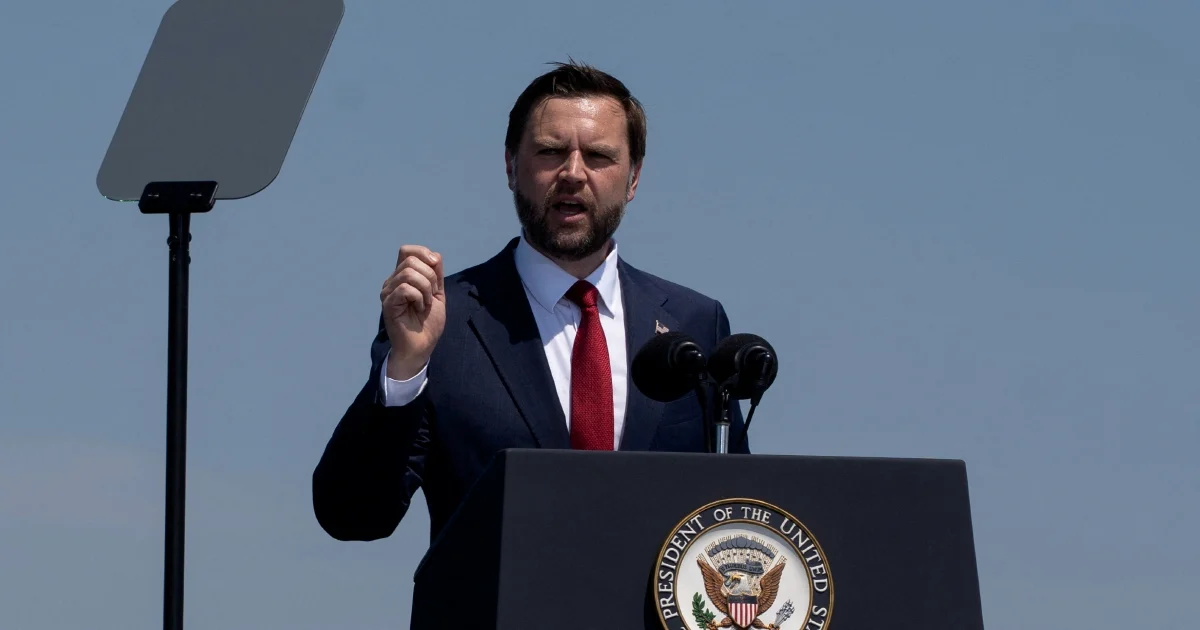
US Vice President JD Vance has delivered a pointed critique of Britain's political establishment during remarks made in London, asserting that the country has endured prolonged misgovernance at the highest levels. His comments reflect growing international scrutiny of the United Kingdom's ability to navigate persistent economic and political challenges that have characterised recent years.
Vance's assessment suggests that the incoming British prime minister faces significant expectations from both domestic constituencies and key international partners. The American vice president's willingness to publicly address Britain's governance challenges underscores how closely Washington is monitoring developments in London, particularly as the two nations maintain their traditionally close relationship across diplomatic, military, and economic domains.
Britain has witnessed considerable political turbulence over the past several years, marked by contested elections, rapid leadership transitions, and ongoing disputes over fundamental policy directions. Voters have repeatedly expressed dissatisfaction with the trajectory of their nation, and successive governments have struggled to implement coherent agendas or rebuild public confidence in institutions. This accumulated frustration with the political class has created an environment where meaningful structural reform has become a central demand from the electorate.
Vance's remarks carry particular weight given the strategic importance of the US-UK relationship in an era of geopolitical flux. The United States has a vested interest in Britain's stability and effectiveness as a governing entity, as British policy decisions reverberate across NATO, trade relationships, and broader Western strategy towards rivals including Russia and China. When American leadership voices criticism of British governance, it signals that concerns about Britain's institutional health have reached the highest echelons of the incoming Trump administration.
The structural changes Vance appears to be referencing likely encompass economic policy reform, immigration controls, and the restoration of state capacity to deliver public services effectively. These have been recurring themes in recent British electoral campaigns and public discourse. The notion that Britain requires not merely new personnel but fundamental institutional renewal suggests that incremental policy adjustments will be insufficient to address the depth of public dissatisfaction.
For Malaysian observers of international affairs, Britain's governance challenges serve as a cautionary reminder of how loss of institutional confidence can accumulate across multiple parliaments and administrations. The Malaysian context differs significantly, yet the principle that sustained public frustration with governance quality demands serious structural responses remains universally relevant. Britain's experience illustrates how even long-established democratic systems can experience credibility crises when successive governments fail to deliver tangible improvements in citizens' quality of life.
The incoming British prime minister will inherit expectations not only from domestic voters but from key international partners that the country will restore effective governance and reassert its role in global affairs. Vance's comments suggest that the American administration is prepared to evaluate Britain's performance based on concrete delivery rather than rhetorical promises. This represents a more transactional approach to the special relationship than has sometimes characterised American diplomacy towards London.
Structural reform in the British context likely involves constitutional or parliamentary modifications aimed at improving governmental efficiency and responsiveness. The current system has been criticised by analysts and politicians across the political spectrum as insufficiently agile in responding to contemporary challenges. Whether any incoming government possesses the political capital and parliamentary support to implement genuinely transformative institutional change remains uncertain, however.
Vance's intervention also reflects the Trump administration's broader approach to transatlantic relationships, which tends to emphasise mutual strategic interests and reciprocal obligations rather than sentimental bonds or shared values rhetoric. The American vice president's framing of Britain's governance failures as a matter relevant to US strategic calculations suggests that Washington expects substantive performance improvements, not merely symbolic change or personnel reshuffles.
For Southeast Asian nations evaluating their relationships with both Britain and the United States, Vance's comments underscore how Washington increasingly applies pragmatic scrutiny to allies' governance capacity and institutional performance. This approach may gradually reshape how major powers assess and engage with regional partners, with greater emphasis on effective state capacity rather than formal alliance status alone.
The challenge ahead for British leadership involves demonstrating that meaningful structural reform is achievable within the democratic constraints that characterise liberal governance. Vance's remarks set a high bar for the next prime minister, who will need to move beyond symbolic gestures and rhetoric to deliver tangible improvements that restore public confidence and reassert Britain's capacity to govern effectively in an increasingly complex global environment.

