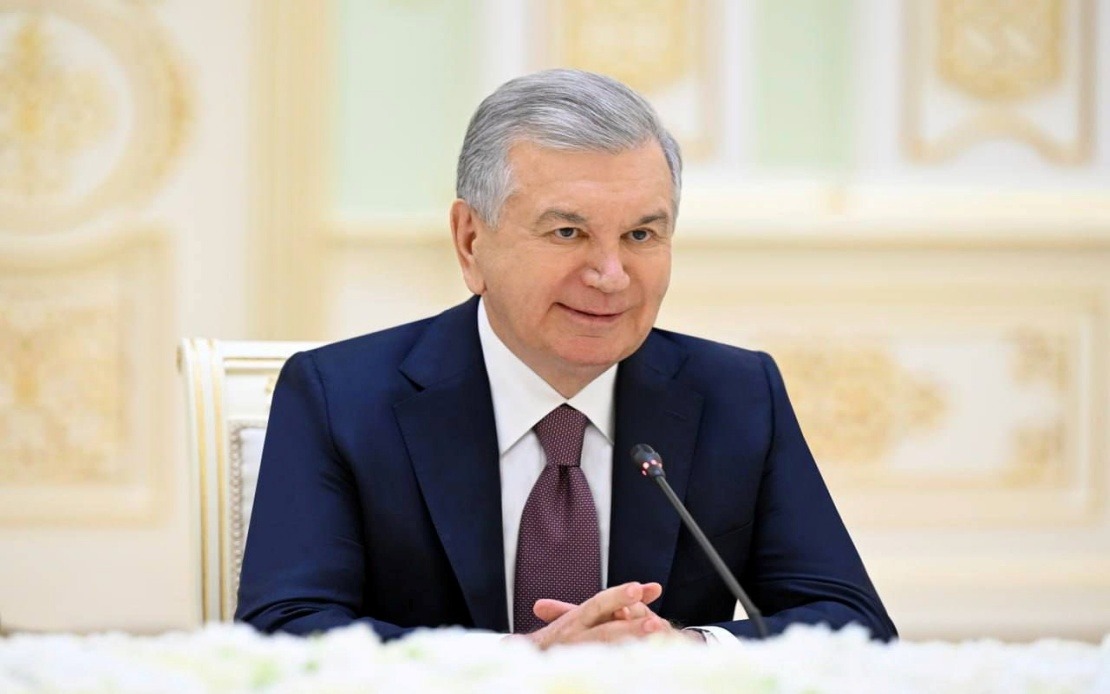
Uzbekistan's President Shavkat Mirziyoyev has issued a sweeping call for the international community to strengthen cooperation in advancing global peace, tolerance and enlightenment by drawing upon the scientific, educational and cultural resources of Islamic civilisation. Speaking at the First International Islamic Civilisation Forum in Tashkent, the Central Asian leader highlighted the urgency of such collaboration as the world grapples with escalating conflicts, rising mistrust between communities and deliberate attempts to fragment relations along cultural and religious lines.
The five-day forum, themed "The Path of Peace, Tolerance and Enlightenment", convenes approximately 300 scholars, religious leaders, government officials and cultural experts from more than 50 nations across Tashkent, Samarkand and Termez. Organised by Uzbekistan's Islamic Civilisation Centre in partnership with the Islamic World Educational, Scientific and Cultural Organisation, the gathering represents an effort to reposition Islamic heritage not as a source of division but as a unifying intellectual tradition capable of addressing contemporary global challenges.
Mirziyoyev articulated a vision in which Islamic values serve as foundational principles for sustainable development and harmony among societies. He argued that throughout history, these principles have catalysed scientific breakthroughs, cultural flourishing and spiritual growth—contributions that have become woven into humanity's collective intellectual inheritance. In his address, delivered by presidential adviser Khayriddin Sultanov, he stressed that amid contemporary upheaval, returning to these enduring ideals offers pathways toward mutual understanding and social cohesion.
Central to Uzbekistan's diplomatic positioning is its "Enlightenment Against Ignorance" initiative, introduced at the United Nations in 2017. This framework emphasises science, education, cultural preservation and ethical values as mechanisms for fostering peace and sustainable development. By framing these pursuits as rooted in Islamic civilisation, Uzbekistan positions itself as custodian and promoter of a heritage that transcends national boundaries—a claim with significant implications for regional diplomacy in Central Asia and the broader Muslim-majority world.
The forum showcases the historical scientific achievements of Central Asia, a region that produced transformative scholars whose legacies continue shaping global intellectual discourse. Muhammad al-Khwarizmi, whose name gave rise to the mathematical term "algorithm", Abu Rayhan Biruni, Abu Ali ibn Sina, Mirzo Ulugh Beg and Islamic jurists including Imam al-Bukhari and Imam al-Tirmidhi are presented as exemplars of the region's intellectual contributions. By emphasising these figures, Mirziyoyev connects contemporary Central Asian aspirations to a distinguished past, potentially strengthening regional identity and international standing.
Mirziyoyev envisions Uzbekistan as a driver of what he terms a "Third Renaissance"—an era anchored in scientific innovation, modern education, spiritual development and reverence for historical legacies. This ambitious conceptual framework positions the nation as bridging historical depth with contemporary advancement, enabling citizens to channel creativity toward sustainable progress. The Islamic Civilisation Centre emerges as the institutional embodiment of this vision, functioning as what Mirziyoyev describes as an "intellectual bridge" connecting past and future, East and West.
The forum's substantive programming reflects this comprehensive approach. Eleven plenary sessions, four international scientific conferences, exhibitions of rare manuscripts and cultural artefacts, alongside digital heritage initiatives and artificial intelligence applications for manuscript preservation, demonstrate efforts to merge traditional scholarship with technological innovation. This integration carries particular significance for Southeast Asian readers, as it illustrates how Islamic-majority nations are leveraging digital tools and international collaboration to preserve cultural assets—a model relevant as countries throughout the region navigate heritage preservation amid technological change.
For Malaysia and other Southeast Asian nations with Islamic majorities, Uzbekistan's initiative offers both diplomatic and intellectual dimensions. The forum provides platforms for cross-regional scholarly exchange and demonstrates how Islamic heritage can be mobilised as a positive diplomatic force. The participation of delegates from over 50 countries suggests expanding networks of intellectual cooperation that could benefit regional knowledge-sharing and cultural preservation efforts across Southeast Asia.
Mirziyoyev explicitly positioned science and education as "the greatest unifying forces of our time", a formulation that counters narratives portraying Islam as incompatible with scientific modernisation. This emphasis resonates across Muslim-majority societies grappling with perceptions of civilisational conflict and has implications for how Southeast Asian nations frame their own development narratives. By anchoring development in Islamic intellectual traditions, Uzbekistan offers an alternative model to frameworks that position modernisation as inherently secular or Western-derived.
The forum's concluding sessions are expected to produce the Tashkent Declaration, approval of the Islamic Civilisation Centre's 2027-2030 strategic roadmap, and multiple bilateral cooperation agreements among international organisations, research institutions and cultural bodies. These institutional outcomes suggest intention to embed the forum's principles within formal structures capable of sustained implementation beyond the initial gathering. For Malaysia, which hosts its own Islamic institutions and research centres, such arrangements offer templates for deepening international scholarly partnerships.
Uzbekistan's diplomatic emphasis on Islamic civilisation's contributions to science and culture arrives amid global polarisation around religious and cultural identity. The forum provides counternarrative to Islamophobic narratives by emphasising Islam's historical intellectual dynamism and contemporary potential for advancing shared human flourishing. This positioning carries strategic weight in Central Asia, where Uzbekistan seeks to strengthen regional stability while maintaining international engagement.
The convergence of religious scholarship, scientific advancement and diplomatic engagement at this forum reflects how contemporary statecraft increasingly incorporates cultural and civilisational dimensions. For Southeast Asian observers, Uzbekistan's approach illustrates how nations can leverage historical Islamic heritage to advance development agendas while building international consensus around shared values. As regional governments confront questions about cultural identity and modernisation, the Uzbek model demonstrates one pathway for reconciling traditional intellectual resources with contemporary innovation imperatives.

