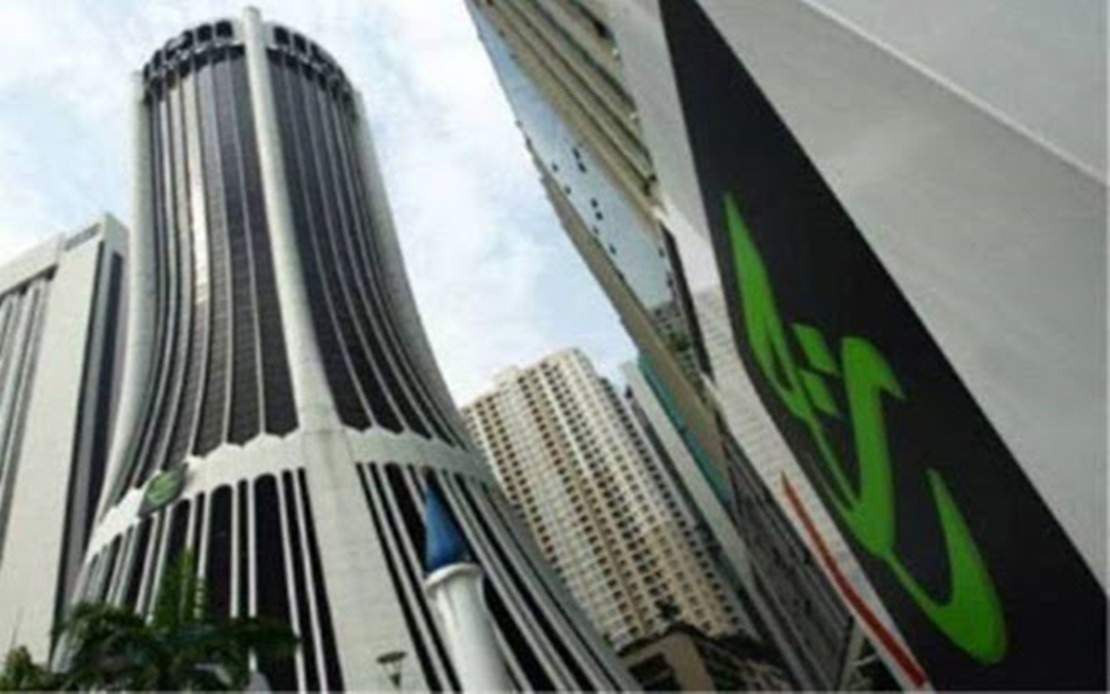
The Royal Commission of Inquiry's investigation into Tabung Haji's operations has uncovered a troubling practice: the vast majority of the institution's property asset valuations relied on management estimates rather than independent professional assessments. Out of RM4.6 billion in total property valuations for 2017, only RM556 million was actually supported by qualified valuers' reports, with the remaining RM4.044 billion determined solely through internal management calculations. This heavy dependence on internal estimates raises critical questions about the reliability of figures used to determine the institution's financial health and its capacity to distribute hibah, or dividends, to depositors who have entrusted their savings for the Islamic pilgrimage.
The governance implications are particularly concerning because Tabung Haji operates under the Tabung Haji Act 1995, which prescribes specific requirements for financial management and dividend distributions. When management controls the valuation process for such significant asset pools, inherent conflicts of interest emerge. Managers naturally tend towards presenting a rosier picture of institutional finances, especially when their performance evaluations and reputational standing depend on demonstrating strong financial positions. Prof Emeritus Dr Barjoyai Bardai of Malaysia University of Science and Technology emphasised that while this does not necessarily indicate deliberate fraud has occurred, the absence of independent professional oversight creates vulnerability to what he termed "overly optimistic" asset valuations that may not reflect true market values or realistic sale prospects.
The distinction between estimated and professionally validated asset values carries concrete implications for depositors. When the Realisable Asset Value—the figure supposedly reflecting what assets could actually fetch in the market—becomes inflated through reliance on management estimates, the institution's apparent financial capacity expands artificially. This inflated capacity can then justify larger hibah distributions than prudent financial management would support. If the underlying asset values cannot actually be realised at their estimated levels when tested against genuine market transactions, depositors effectively receive distributions funded by capital erosion rather than genuine returns, unknowingly consuming their own savings.
Dr Barjoyai advocated for a fundamental restructuring of how Tabung Haji values its substantial property holdings. High-value properties, he argued, should undergo independent professional valuations using consistent methodologies grounded in verifiable market evidence. More importantly, the calculation of Realisable Asset Value itself should be governed by transparent, standardised approaches rather than discretionary management judgement. An independent oversight mechanism—comprising investment professionals and qualified accountants operating as a special verification committee—should independently audit and verify these critical calculations before they inform decisions affecting hundreds of thousands of depositors.
Prof Dr Ahmed Razman Abdul Latiff from Putra Business School raised parallel concerns about the governance responsibilities of Tabung Haji's board and audit committee. When facing material estimates with substantial implications for institutional solvency and dividend policy, multiple layers of rigorous review should operate before those figures receive approval. The board and audit committee bear fiduciary duties to scrutinise management assumptions and demand sufficient evidentiary support. However, the RCI's findings suggest this scrutiny was inadequate during the 2014 to 2020 period under examination, allowing assumptions to drive policy without sufficient challenge or verification.
The role of external auditors in this governance failure warrants particular examination. PricewaterhouseCoopers' audit reports, referenced in the RCI findings, documented that Realisable Asset Value calculations relied on management estimates rather than market prices or professional valuations. Yet these audit findings apparently did not trigger sufficiently elevated concerns or audit adjustments, nor did they prompt auditors to escalate governance concerns to the institution's regulators or oversight bodies with the urgency such systematic issues warrant. Prof Ahmed Razman questioned whether previous audits adequately scrutinised the foundation upon which hibah distributions were calculated, particularly given that Section 22 of the Tabung Haji Act 1995 directly tied compliance assessments to these potentially unreliable figures.
A particularly striking aspect of Tabung Haji's valuation methodology involved its treatment of TH Plantations Berhad, where RM2.294 billion of the total Realisable Asset Value derived from inclusion of this subsidiary using the management-estimate based property valuations. Furthermore, the institution did not adjust investment valuations downward when market prices collapsed to very low levels, instead maintaining inflated book values in the Realisable Asset Value calculation. This selective treatment—preserving high estimates for certain assets while declining to mark investments down to realistic prices—further distorted the accuracy of financial reporting and the true capacity for sustainable dividend distributions.
Tabung Haji's management attempted to justify this approach by arguing that Section 22 of the Tabung Haji Act did not explicitly define which assets should be included in Realisable Asset Value calculations, thereby granting them discretionary authority over valuation methodology. This interpretation, while perhaps technically defensible under strict statutory language, represents precisely the kind of governance gap that enables financial risks to accumulate. Legislation written several decades ago may not contemplate modern complexities of large institutional asset portfolios. The existence of statutory ambiguity should have prompted Tabung Haji's leadership to voluntarily adopt more conservative, transparent methodologies, not to exploit gaps as justification for discretionary valuation practices.
The fundamental principle underlying financial governance in institutions holding public trust is that figures informing major policy decisions should be conservative rather than optimistic, verifiable rather than dependent on internal estimates, and subject to independent scrutiny rather than management discretion. When RM4.044 billion—nearly 88 percent of a RM4.6 billion asset base—rests on management estimates unsupported by professional valuation, that principle has been violated on a massive scale. For Malaysian depositors who have contributed savings to Tabung Haji expecting prudent stewardship, discovering that dividend distributions were calculated using potentially inflated figures raises fundamental questions about whether their money was managed with appropriate caution.
The broader implications extend beyond Tabung Haji itself. The institution's governance failures reveal potential vulnerabilities across Malaysia's institutional landscape, where large asset pools may similarly rest on assumptions rather than market evidence. Regulators and audit firms must examine whether similar practices exist elsewhere, and whether current audit standards adequately challenge management valuations in other contexts. The RCI's recommendations should catalyse systemic improvements requiring independent valuations, transparent asset accounting, and multi-layered verification before major financial decisions affecting public stakeholders receive final approval.
Reforming Tabung Haji's asset valuation and governance frameworks will require statutory clarification defining precisely which assets qualify for inclusion in Realisable Asset Value calculations, professional valuation requirements for material properties, and formal verification processes before hibah decisions proceed. Beyond regulatory changes, however, institutional culture must shift toward genuinely independent board oversight rather than rubber-stamping management proposals. Until Tabung Haji adopts conservative, independently verified asset valuations and demonstrates that hibah distributions reflect sustainable returns rather than capital depletion, public confidence in the institution's stewardship of pilgrim savings will remain justifiably impaired.

