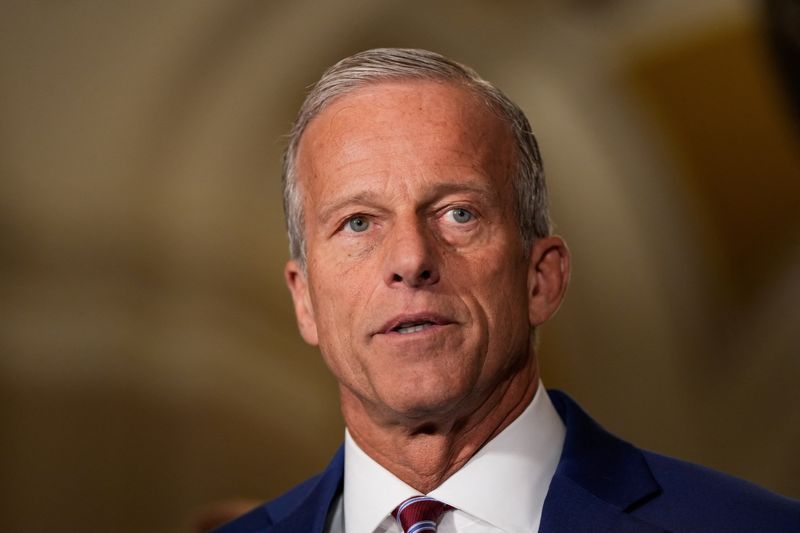
The US Senate took a decisive procedural step on Saturday to shepherd forward the Clarity Act, a sweeping piece of legislation designed to establish the first comprehensive federal regulatory framework for cryptocurrencies. Senate Majority Leader John Thune, a Republican, filed early in the day to schedule a key procedural vote for mid-September when the chamber returns from its August recess, effectively signalling the measure's pathway toward a full floor vote. The manoeuvre reflects Republican leadership's confidence that they can assemble the 60 votes required to overcome a filibuster and pass the bill, notwithstanding sustained Democratic opposition.
The Clarity Act represents an attempt to resolve years of legal ambiguity surrounding digital assets by establishing clear definitions and regulatory jurisdictions. Under the bill's provisions, cryptocurrencies would be classified as either securities or commodities, with oversight responsibilities allocated to appropriate federal agencies based on that classification. This demarcation is crucial because it would determine which regulators—the Securities and Exchange Commission, the Commodity Futures Trading Commission, or others—exercise authority over different tokens and platforms. Crypto industry advocates have long contended that such legal certainty is essential for companies to operate with confidence and for broader adoption of digital currencies to accelerate.
Currently, the bill faces a mathematical challenge in the closely divided Senate. Republicans hold a slight majority, but the Clarity Act requires bipartisan support to reach the 60-vote threshold. This means Senate leaders must secure cooperation from at least eight Democratic senators alongside all voting Republicans—a tall order given the Democratic caucus's general wariness toward deregulation in the crypto space. The pursuit of cross-party support underscores how contentious crypto policy has become, split largely along partisan lines despite the economic stakes involved.
The Trump administration has made cryptocurrency policy a high-profile priority during the President's second term, viewing favourable legislation as part of a broader deregulatory agenda. The White House has actively lobbied for the Clarity Act's passage, according to reporting from the period. This enthusiasm reflects Trump's own substantial financial interests in the sector—he disclosed more than $1.4 billion in income derived from his family's cryptocurrency ventures during the previous year. That financial connection, however, has become a focal point for Democratic concerns about potential conflicts of interest, with party members arguing that government officials should face stricter limitations on their own crypto holdings and transactions before voting to reshape the regulatory environment.
The Clarity Act would represent a second major crypto policy achievement for the Trump administration in the current legislative cycle. The President previously signed into law a bill supporting stablecoins, which are cryptocurrencies designed to maintain a stable value pegged to the US dollar. Stablecoins have emerged as particularly important infrastructure within the crypto ecosystem, serving as a medium of exchange and store of value within blockchain networks. The combination of stablecoin legislation and the Clarity Act would substantially reshape the legal and operational landscape for digital assets in America, potentially positioning the country as a more hospitable jurisdiction for crypto development relative to other major economies.
The crypto industry itself has considerable financial motivation to see the Clarity Act passed. During the 2024 election cycle, cryptocurrency-focused donors and organizations spent more than $119 million backing candidates perceived as friendly to crypto policy objectives. This level of investment reflects the sector's conviction that regulatory clarity would unlock significant growth opportunities. Industry advocates argue that legal certainty would enable crypto companies to expand their operations, develop new financial products, and compete more effectively in the broader financial services landscape. They contend that ambiguity creates inefficiency and pushes American crypto innovation offshore to more permissive jurisdictions.
Banking interests, however, view the Clarity Act with considerable apprehension. The financial services sector has actively lobbied against certain provisions in the bill, particularly language that would permit crypto companies to offer rewards and incentive programs on customer holdings of stablecoins. Banks fear this could enable crypto platforms to function as de facto financial institutions, attracting deposits and offering yield in ways that circumvent traditional banking regulations. The competitive threat posed by crypto companies offering attractive returns on stablecoin holdings represents a direct challenge to the business model of conventional banks, which explains the intensity of banking sector opposition.
Democratic resistance to the Clarity Act extends beyond general ideological scepticism toward deregulation. Party members have sought to incorporate additional safeguards protecting government officials from conflicts of interest related to crypto holdings. These negotiations on ethics and transparency requirements have remained fluid as the bill moves toward its crucial procedural votes. Democrats worry that absent strict disclosure and divestiture requirements, elected officials could legislate in ways that advantage their own crypto investments rather than serve the public interest. This has become a particularly resonant concern given Trump's substantial personal stake in crypto assets.
The passage of the Clarity Act would substantially reshape the investment landscape for digital currencies and blockchain technologies. Currently, the absence of a unified federal framework creates significant legal risk for participants, many of whom operate under state-level regulations or in regulatory grey zones. A clear national framework would eliminate much of this uncertainty, potentially attracting institutional capital that has been reluctant to enter the space. The bill would signal that cryptocurrency has transitioned from speculative fringe asset to recognised component of the mainstream financial system meriting formal regulatory treatment.
The timing of the procedural motion suggests that Republican leaders believe they can deliver the necessary votes before the end of the current legislative session. If successful, passage would represent a watershed moment for the American crypto industry and would likely influence regulatory approaches in other major economies, including potentially within Southeast Asia where regulatory uncertainty similarly constrains digital asset development. Malaysia and other regional economies have watched American crypto policy evolution closely, recognizing that US regulatory decisions often set de facto global standards that shape international capital flows and business practices.

