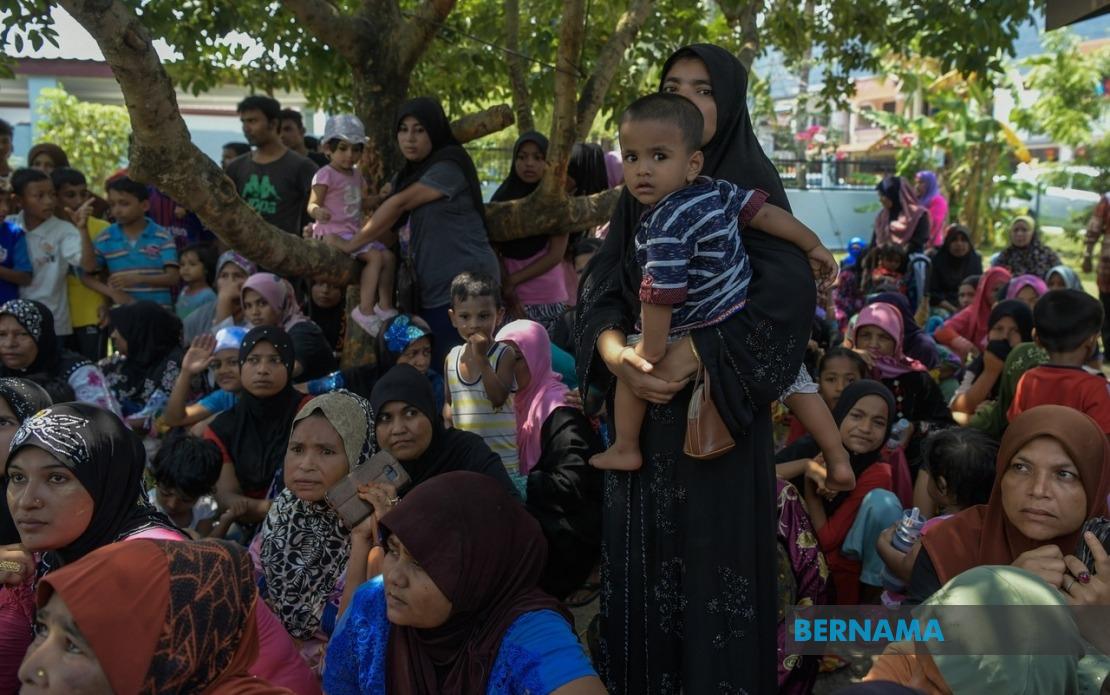
The Malaysian government has moved to dispel public misconceptions about the status and legal protections afforded by United Nations High Commissioner for Refugees (UNHCR) documentation, with Economy Minister Datuk Akmal Nasrullah Mohd Nasir emphasising that such cards confer no immunity from domestic laws. Speaking during the Global Supply Crisis Briefing on July 13, Akmal clarified that regardless of UNHCR card status, individuals who breach Malaysian law remain subject to investigation and prosecution under the country's existing legal framework. This clarification comes amid growing public concern about refugee management practices and their implications for community safety across the nation.
The minister's statement was prompted by the Home Ministry's presentation to the National Economic Action Council (MTEN) meeting, which examined how refugee documentation and associated security concerns intersect with broader national economic and safety priorities. The Home Ministry, through its Immigration Department, has undertaken responsibility for implementing the Refugee Registration Document (DPP) Programme as a comprehensive approach to managing the displaced population residing in Malaysia. This initiative combines biometric data collection with multi-layered screening procedures designed to establish individual identity and assess potential security risks before formal registration is granted.
According to Akmal, the government recognises that uncontrolled refugee populations create vulnerabilities that criminal networks exploit. He specifically highlighted human trafficking operations, document fraud schemes, and unauthorised border crossings as areas of particular concern where integrated enforcement operations will be substantially expanded. The emphasis on tackling smuggling networks and human trafficking syndicates reflects Malaysia's position as a transit point for regional migration flows, where vulnerable refugees frequently fall prey to organised criminal groups who profit from their desperation.
The DPP Programme represents a shift towards technologically sophisticated refugee management. Beyond basic registration, the system incorporates screening procedures and ongoing control measures intended to ensure that refugee populations remain properly monitored. Enforcement capabilities have been designated as a core component, suggesting that the registration process serves dual purposes: administrative documentation and security intelligence gathering. The deployment of data analytics and monitoring technology signals the government's intention to leverage digital tools for identifying potential security risks and supporting law enforcement operations in real time.
Significant financial investment underpins these enforcement and border security initiatives. The government has allocated RM1.2 billion across multiple agencies for projects spanning border control infrastructure, security operations, and related administrative capacity. This substantial budget reflects the complexity and resource-intensive nature of managing refugee populations effectively while maintaining border integrity. The Malaysian Border Control and Protection Agency's operational expansion, which is being accelerated, will consolidate border management and enforcement functions to eliminate gaps that smuggling networks and human traffickers currently exploit.
The clarification regarding UNHCR card immunity addresses a critical gap in public understanding that may have contributed to anxiety about refugee-related security issues. Many Malaysians appear to harbour concerns that refugees enjoy legal protections preventing authorities from taking action against those who commit crimes. By explicitly stating that UNHCR documentation carries no legal shield, the government signals its commitment to maintaining law and order regardless of a person's immigration or refugee status. This messaging becomes particularly important in a multicultural society where public confidence in the rule of law and equitable enforcement depends on transparent communication about legal principles.
The broader context of the MTEN meeting, which was chaired by Prime Minister Datuk Seri Anwar Ibrahim at Parliament, reflects how refugee management has become integrated into wider national security and economic governance frameworks. Beyond refugee administration, the council addressed food security resilience and the manufacturing sector's capacity to navigate global supply chain disruptions. This holistic approach acknowledges that refugee management cannot be isolated from other pressing policy concerns affecting Malaysia's stability and economic performance.
For Southeast Asian nations, Malaysia's experience with refugee populations carries instructive lessons. The region hosts millions of displaced persons, and Malaysia's approach—combining registration technology with explicit legal accountability—represents one model for managing this challenge. However, the emphasis on enforcement and border control must be balanced against humanitarian obligations and the protection of vulnerable populations from exploitation. Malaysia's approach increasingly prioritises security and documentation verification, reflecting regional trends toward more restrictive refugee policies.
The government's messaging also addresses potential political sensitivities around refugee policies in Malaysia. Public concerns about refugee populations and their integration have featured prominently in recent political discourse. By emphasising that no special legal status attaches to UNHCR cards, the government aims to reassure citizens that refugee presence does not create administrative exemptions from Malaysian law. This distinction matters for political acceptability of refugee populations, particularly among communities expressing concerns about security, employment competition, or cultural integration.
Moving forward, the effectiveness of these initiatives will depend on successful implementation across multiple agencies. The Home Ministry, Immigration Department, border control authorities, and law enforcement agencies must coordinate seamlessly to execute the DPP Programme while conducting enforcement operations. The allocation of RM1.2 billion provides financial resources, but translating these into effective refugee management requires institutional capacity, personnel training, and sustained political commitment beyond the initial announcement phase.
For Malaysia's refugee populations, these developments present a more stringent operating environment characterised by enhanced surveillance, biometric documentation, and constant monitoring. While the government frames these measures as necessary security precautions, displaced persons accustomed to greater informality in their status will face new administrative requirements and restrictions. The balance between security imperatives and humanitarian considerations will shape how effectively Malaysia manages its refugee responsibilities in coming years.

