The women's draw at this year's US Open presents an unusually competitive landscape, with the tournament's traditional powerhouses facing unexpected vulnerabilities just as the main draw begins on Sunday. The absence of dominant performances from the top two seeds has created genuine openings for past champions to reclaim the Flushing Meadows crown, fundamentally reshaping expectations for what was supposed to be a coronation ceremony for one of tennis's established elite.
Aryna Sabalenka arrives as the top seed carrying the distinction of having won the past two US Open titles, yet her recent form tells a troubling story that complicates any third consecutive triumph. The Belarusian star has endured a disappointing stretch in recent months, failing to reach a single final since completing the Sunshine Double earlier in 2024. Her difficulties have manifested in seemingly small but ultimately decisive moments—a pattern of struggling to convert crucial points and ceding significant leads in critical contests. These lapses suggest a fragility that observers had not previously associated with a player who has dominated the North American hard court season in prior years.
Elena Rybakina, seeded second, confronts an even more immediate obstacle in the form of a leg injury sustained during her Cincinnati campaign. The injury forced her early exit from that event, casting genuine uncertainty over her readiness for a fortnight-long tournament. Such physical concerns frequently linger, particularly on the demanding hard courts of New York, where the relentless pace and extended rallies can exacerbate any pre-existing vulnerabilities.
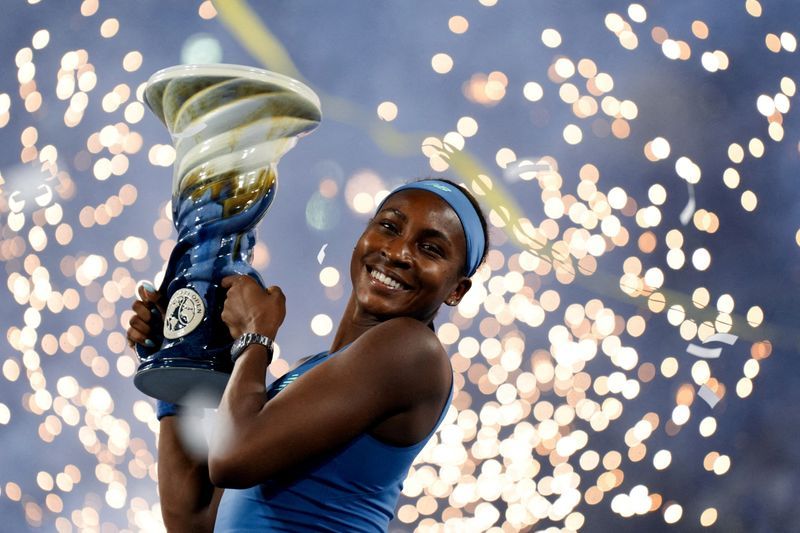
By contrast, Coco Gauff has arrived in New York riding genuine momentum. The 2023 champion recently claimed her first title of the season in Cincinnati, overcoming opponents with a comprehensive performance that reflected both technical refinement and mental composure. Earlier this month, she demonstrated similar form in Toronto, where her trajectory through the draw proved her capacity to sustain excellence across multiple matches. The American's often-criticized serve has transformed into an asset rather than a liability, providing a reliable foundation for her baseline game.
Gauff benefits from playing in her home country, where American audiences traditionally generate an electric atmosphere at Flushing Meadows. The New York crowd's enthusiastic support for homegrown talents has historically influenced tournament narratives, and Gauff's popularity among American fans translates into genuine psychological advantage. Former world number four Mary Joe Fernandez, now an ESPN commentator, has observed that Gauff currently plays the highest quality tennis among the field's elite competitors, a judgment based on her recent performances across multiple tournaments.
Iga Swiatek, Poland's six-time major champion, has engineered a remarkable turnaround after absorbing significant criticism at home over her mid-season struggles. By capturing the Toronto title earlier this month, she demonstrated that her recent form decline need not define her trajectory for the remainder of the year. The timing of her resurgence carries particular significance—a player reaching peak performance precisely when the sport's most important tournaments arrive. Swiatek acknowledged the season's emotional toll, describing her journey as bumpy and admitting to occasional impatience, yet she has visibly overcome these obstacles to recapture the form that established her among tennis's elite.
Swiatek's path through the majors this year had been circuitous, with no quarterfinalist appearance at any of the first three Grand Slam events. Rather than allowing this pattern to persist, she recognized that her game required development time and deployed the North American hard court swing as preparation grounds. The eighth-ranked Pole vindicated this approach by disposing of the previously daunting Rybakina to claim Toronto's trophy, a victory that reshaped her psychological positioning heading into New York.
Beyond the traditional contenders, the women's draw features an unusually deep talent pool. Mirra Andreeva, a Russian teenager, claimed her maiden major title at Roland Garros, establishing herself as an emerging force capable of performing under Grand Slam pressure. Linda Noskova of the Czech Republic recently showcased her credentials by winning the Wimbledon title last month, demonstrating that her breakthrough represents genuine achievement rather than tournament-specific success. Alexandra Eala from the Philippines has emerged as an unexpected threat, recently defeating four-time major winner Naomi Osaka and American Jessica Pegula to capture the Washington DC WTA 500 title—results that cannot be dismissed as flukes.
Naomi Osaka, the 2018 and 2020 US Open champion, occupies an interesting narrative position heading into this tournament. Though she has not captured a title since her fourth major victory at the 2021 Australian Open, her trajectory since returning from maternity leave suggests a potential renaissance. She reached the semifinals at last year's US Open following her comeback year, demonstrating that her competitive instincts remain sharp. Her appearances in recent finals, including the Bad Homburg event in June, indicate that consistent form has returned.
The American contingent faces particular pressure this year, as the women's side has failed to produce a finalist at any of the first three majors, a drought that creates urgency for Gauff and fourth-ranked Jessica Pegula. The latter, seeded fourth herself, carries the weight of national expectations alongside Gauff, as both vie to restore American representation in Grand Slam finals.
Patrick McEnroe, another ESPN analyst, has described the women's tournament as narrower than completely wide open, yet he identifies six to eight legitimate contenders capable of winning the title. This assessment reflects the genuine competitive depth that characterizes this year's field, where no overwhelming favorite dominates the narrative as frequently occurs in women's tennis. The convergence of Gauff and Swiatek's excellent form, combined with the top seeds' vulnerabilities and an unusually strong supporting cast, suggests that Sunday's beginning of the main draw will unleash a tournament genuinely undecided heading into its opening rounds.

