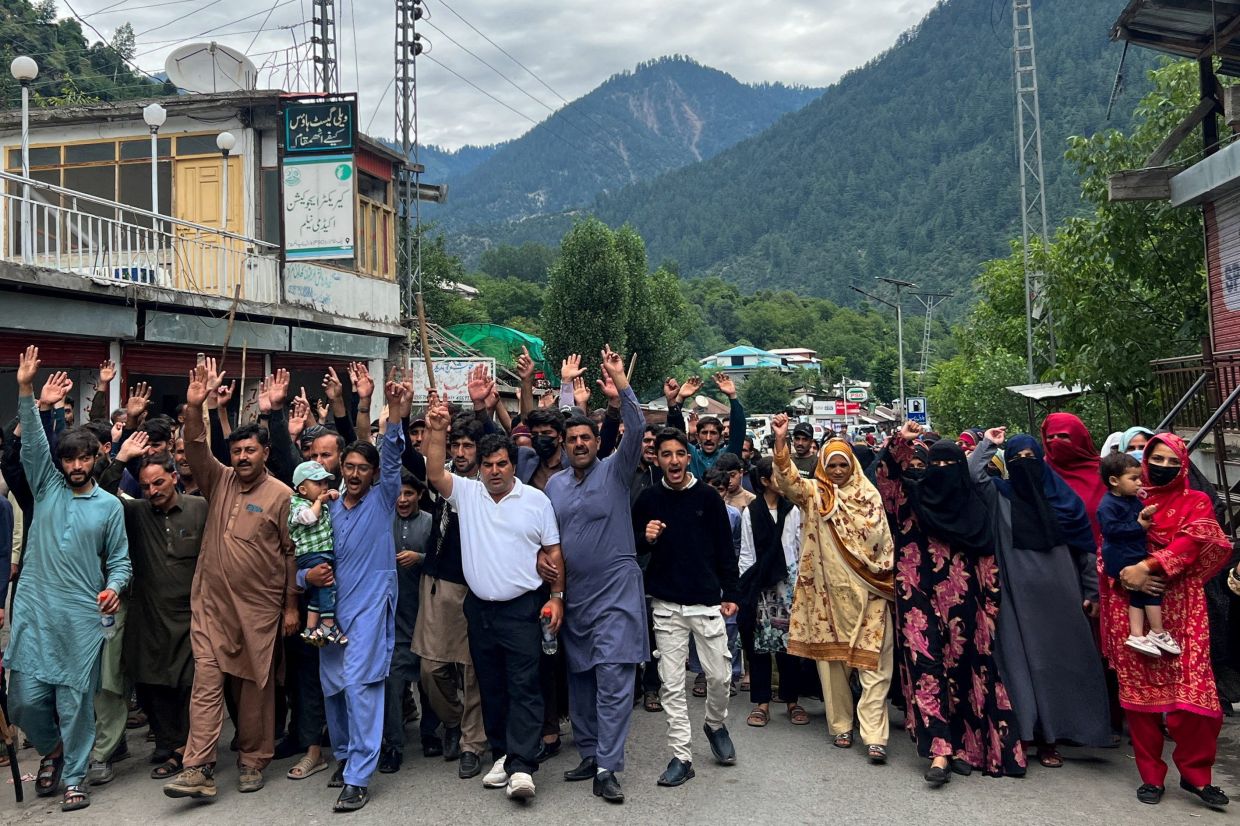
The United Nations issued a formal appeal on Friday for impartial investigations into a mounting death toll in Pakistani-administered Kashmir, where escalating civil unrest has coincided with preparations for a crucial legislative assembly election scheduled for July 27. UN High Commissioner for Human Rights Volker Turk, through his spokesman Jeremy Laurence, urged authorities to restore calm while simultaneously demanding transparency in examining the circumstances surrounding reported fatalities that have accumulated since June.
According to UN documentation, dozens of individuals—comprising predominantly protesters alongside a smaller number of law enforcement officers—have been killed during the recent period of instability. The timing of this violence, occurring in the weeks preceding the electoral vote, underscores the volatile political climate pervading the region and raises questions about the degree to which the election process can proceed smoothly amid such turmoil. The deaths represent a significant escalation from previous confrontations in the territory, indicating the intensity of underlying grievances driving public mobilisation.
Turk's intervention specifically calls for "prompt, thorough and impartial investigations into all deaths that have occurred due to the unrest, both amongst protesters and members of security forces," according to statements delivered at the Geneva press conference. This dual emphasis—examining casualties on both sides—reflects international standards for impartial human rights review, though such investigations remain rare in conflict-affected regions where state capacity or political will may be questioned. The UN's framing suggests concerns that official narratives from Pakistani authorities may not fully capture the circumstances of each death, particularly regarding alleged excessive use of force by security personnel.
The unrest centres on the Joint Awami Action Committee (JAAC), a broad-based anti-government coalition demanding structural governance improvements and economic reforms. Despite having been formally banned under national anti-terrorism legislation one month prior—a designation the Pakistani government justified on grounds of public order threats—JAAC supporters have maintained their mobilisation despite legal prohibitions. This defiance highlights the depth of discontent motivating the demonstrations and suggests that legal prohibitions alone have proven insufficient to quell public activism.
The security establishment's response to the ban illustrates the contested nature of protest rights in Pakistani-administered Kashmir. When authorities criminalise civil society organisations, international human rights bodies increasingly view such measures as potential infringements on fundamental freedoms. The UN rights office has expressed particular alarm at the detention of JAAC leadership figures, warning that "the criminalisation of a civil society organisation and imposition of strict limitations on gatherings raise serious concerns about infringements on the rights to freedom of expression, peaceful assembly and association." These concerns resonate throughout Southeast Asia, where similar tensions between security concerns and civil liberties regularly surface.
Historical context deepens understanding of Kashmir's volatile character. The region witnessed comparable civil disorder in September of the previous year, when violent confrontations between police and JAAC-led protesters resulted in nine confirmed deaths. That earlier episode illustrated the cyclical nature of unrest in the territory and suggested that underlying grievances remained unresolved despite passage of time. The recurrence of comparable violence within months underscores systemic tensions between governance structures and public expectations.
Kashmir's geopolitical significance cannot be overlooked when evaluating current developments. Claimed entirely by both India and Pakistan yet partitioned between them following independence from British colonial rule, the territory remains a perpetual flashpoint in South Asian relations. Pakistani military and political establishments view the region as inherently sensitive given decades of interstate friction and periodic armed conflict with India. This strategic sensitivity shapes government responses to internal dissent, often resulting in security-first approaches that potentially compromise civil liberties.
The UN has expressed particular alarm regarding internet restrictions imposed throughout the territory during the current crisis period. Communications blockades, while sometimes justified as security measures, fundamentally restrict citizens' capacity to communicate, organise, and access independent information during precisely those moments when transparency becomes most essential. The rights office cautioned that such restrictions "disproportionately restrict the enjoyment of the right to freedom of expression, including freedom to seek, receive and impart information at a time when tensions are running high." For international observers monitoring the election's integrity, internet disruptions raise concerns about transparent reporting and democratic participation.
Turk has advocated for comprehensive procedural protections for detained JAAC leaders, insisting that authorities guarantee "access to legal representation and their families" while ensuring "their rights to due process and fair trial must be fully guaranteed." These demands reflect international humanitarian law principles and suggest the UN views current detention practices as potentially violating established safeguards. Without such protections, detained activists face vulnerability to mistreatment or prolonged incarceration without clear legal justification.
Beyond immediate investigation demands, the UN has framed the broader crisis as requiring systemic political solutions. Turk's office called for "meaningful and inclusive political dialogue to address the underlying issues and grievances of the local population," signalling recognition that temporary security measures cannot resolve fundamental questions about governance, representation, and economic opportunity. This broader approach acknowledges that elections conducted amid unresolved tensions may fail to produce legitimate outcomes satisfactory to substantial population segments.
For Southeast Asian observers and policymakers, the Kashmir situation illustrates challenges faced by developing democracies balancing security imperatives against civil rights protections. Malaysia and other regional nations have grappled with comparable tensions between countering extremism and preserving space for legitimate dissent. The international community's response to Pakistani-administered Kashmir may establish precedents affecting how regional governments approach protest management and opposition monitoring during politically sensitive periods.

