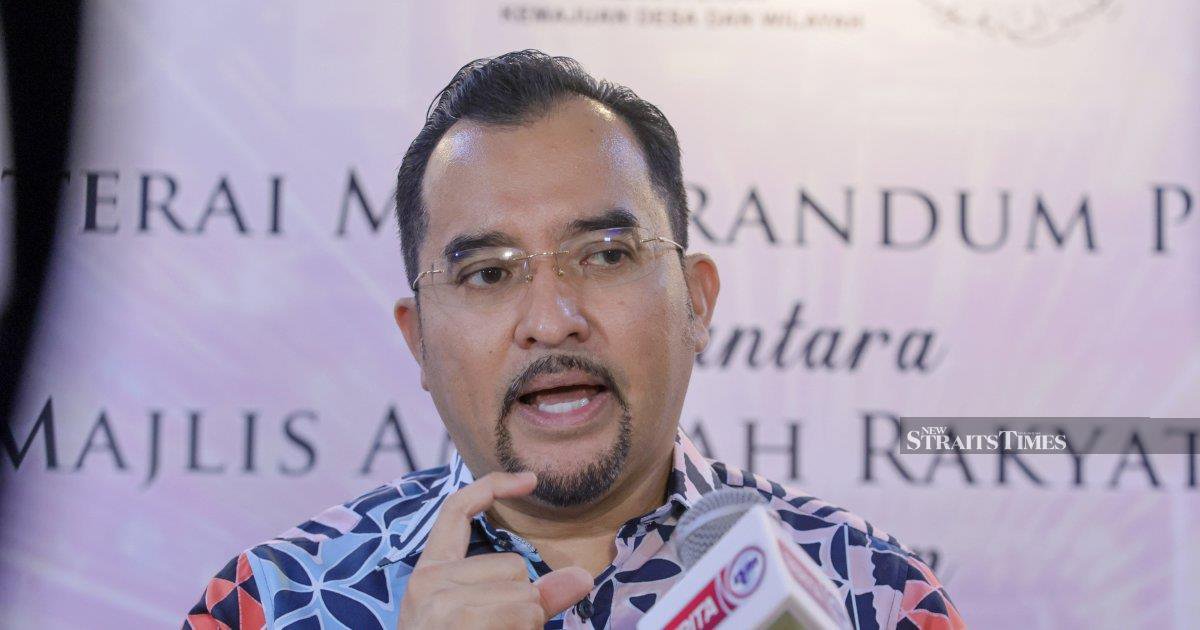
Umno secretary-general Datuk Dr Asyraf Wajdi Dusuki has moved to distance himself from the controversial Tabung Haji Al-Rawda transaction, asserting that he exercised no authority over or involvement in the pilgrimage fund's dealings during his period as deputy minister in the Prime Minister's Department. The statement represents a significant clarification amid ongoing scrutiny surrounding the transaction, which has drawn attention from various stakeholders concerned with governance and accountability at Malaysia's preeminent Islamic financial institution.
Datuk Dr Asyraf's denial underscores the complexity of determining responsibility within Malaysia's federal administration, particularly regarding matters that fall within the purview of multiple departments and agencies. The position held by the senior Umno politician during his tenure as deputy minister would ordinarily suggest some involvement in departmental affairs, yet his assertion signals a clear demarcation between his administrative responsibilities and Tabung Haji's independent operations. This distinction carries importance for understanding how oversight functions in practice across Malaysia's Islamic finance sector, which manages hundreds of billions of ringgit in pilgrim savings.
Tabung Haji, formally established as a financial intermediary to facilitate the performance of the hajj pilgrimage, operates with significant autonomy from direct political control, though ultimate accountability rests with parliament and the broader Islamic finance regulatory framework. The Al-Rawda transaction in question appears to have generated questions about decision-making processes and approvals within the institution's management structure. Datuk Dr Asyraf's clarification suggests that any involvement in approving or executing the transaction would have rested with Tabung Haji's board and senior executives rather than with the deputy minister's office.
The timing of this denial indicates heightened public and political interest in the transaction's details and the parties responsible for its execution. Malaysian citizens, particularly the millions who have entrusted their savings to Tabung Haji, have legitimate concerns about institutional governance and fiduciary responsibility. The pilgrimage fund has long been regarded as a sacred institution within Malaysia's Islamic ecosystem, making transparency regarding major transactions essential for maintaining public confidence. Any perception of political interference or undue influence could undermine the institution's credibility and the trust that savers place in its management.
Umno's position on the matter, as articulated through Datuk Dr Asyraf's statement, reflects the party's effort to separate itself from potential criticism connected to the transaction. Given Umno's long association with governmental authority and Islamic affairs in Malaysia, the party maintains keen interest in avoiding association with any financial irregularities or governance lapses. The secretary-general's explicit denial serves both to clarify his personal position and to signal the party's commitment to institutional integrity within Malaysia's Islamic finance architecture.
The broader context of Tabung Haji governance has witnessed significant changes and reforms in recent years. The institution has faced various operational and financial challenges that prompted government intervention and restructuring efforts. These developments have intensified scrutiny of major transactions and decision-making processes within the organization. Against this backdrop, questions surrounding the Al-Rawda deal represent part of a wider conversation about strengthening oversight mechanisms and ensuring that Tabung Haji operates with complete transparency and accountability to its depositors and the Malaysian public.
For Malaysian investors and pilgrims who depend on Tabung Haji for their financial planning, clarity regarding governance and transaction approval processes remains paramount. The fund manages assets belonging to ordinary Malaysians saving for the hajj, one of Islam's five pillars, making the institution's credibility inseparable from its financial integrity. Any transaction that raises governance questions necessarily demands thorough explanation and, where appropriate, transparent disclosure of decision-making rationales and approvals. Datuk Dr Asyraf's statement contributes to this clarification by establishing clear boundaries regarding his own involvement.
The distinction between ministerial oversight and institutional autonomy carries particular significance in Malaysia's Islamic finance sector, which has expanded substantially over the past two decades. Regulatory frameworks have evolved to establish clearer boundaries between political authority and professional management within Islamic financial institutions. These developments aim to protect institutions from political interference while maintaining appropriate parliamentary accountability. The deputy minister's role, by this understanding, would focus on policy matters and general oversight rather than specific transaction approval or execution.
Looking forward, the Al-Rawda transaction controversy may prompt further review of Tabung Haji's internal governance structures and approval processes for major deals. Such examination could yield valuable improvements in institutional procedures and oversight mechanisms. Malaysian regulators, including Bank Negara Malaysia, maintain responsibility for supervising Islamic financial institutions and ensuring compliance with established standards. The transaction's scrutiny may ultimately strengthen these supervisory functions and enhance confidence in Malaysia's Islamic finance ecosystem.
Datuk Dr Asyraf's clarification also highlights the importance of institutional memory and documentation within government and quasi-government organizations. Clear records of decision-making processes, approvals, and responsible parties protect both individuals and institutions from unfounded allegations while enabling legitimate accountability inquiries. For Tabung Haji specifically, the transaction provides occasion to review whether its documentation and approval procedures meet contemporary standards for corporate governance and institutional transparency. These improvements would benefit both the organization and the millions of Malaysians who have entrusted their savings to its care.

