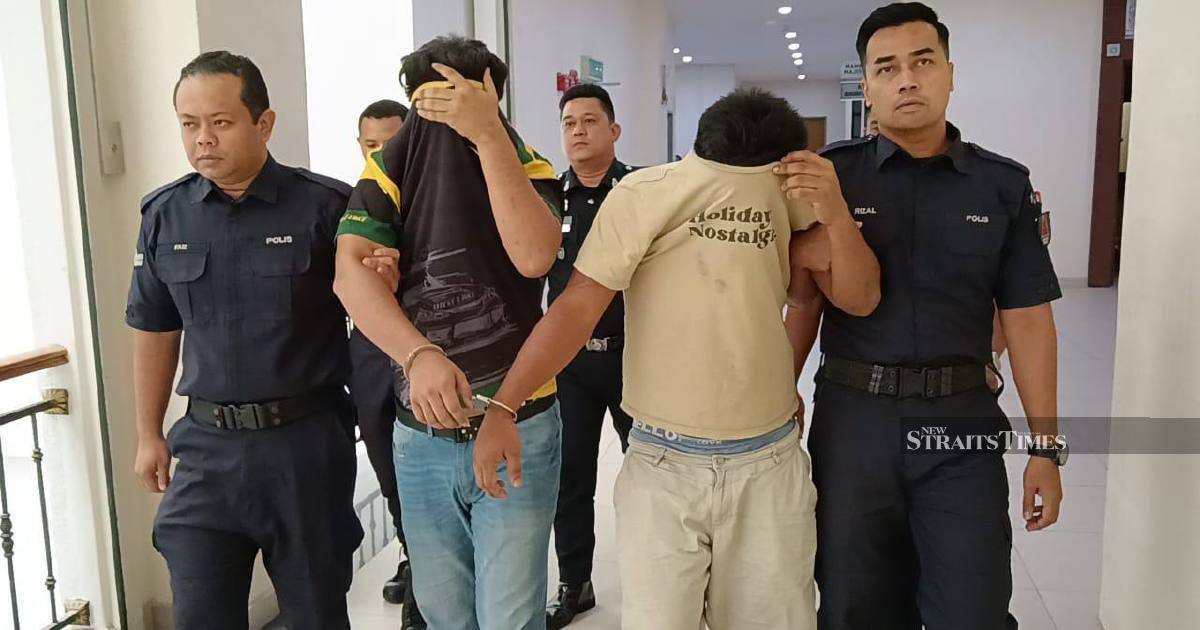
A pair of Rohingya men carrying valid UNHCR identification cards appeared in Muar Magistrate's Court to answer charges stemming from a wave of burglaries that have plagued the Johor district in recent months. The case highlights the delicate intersection of humanitarian refugee protection frameworks and criminal accountability within Malaysia's broader law-and-order landscape.
The charges against both men represent a significant development in local policing efforts, following what authorities have characterised as an escalating pattern of residential intrusions across the Muar jurisdiction. While the Rohingya population in Malaysia has historically faced systemic vulnerabilities and marginalization, the alleged commission of crimes by individuals within refugee communities presents a complex challenge for both enforcement agencies and humanitarian organisations seeking to balance victim protection with equitable treatment of displaced populations.
UNHCR documentation, typically issued to persons in transit or temporary protection situations awaiting durable solutions, serves as a form of identification rather than legal immigration status in Malaysia, which is not a signatory to the 1951 Refugee Convention. The presence of such cards among individuals charged with criminal offences raises broader questions about integration, oversight mechanisms, and the socioeconomic pressures that may drive vulnerability to criminal activity within displaced communities.
Muar, situated in the Johore region and serving as an important commercial and residential hub, has experienced property crime incidents that ripple through neighbourhood safety concerns. The district's socioeconomic composition encompasses both established residential zones and areas characterised by transient populations, creating vulnerable points where organised or opportunistic burglary operations may take root. Community confidence in local safety infrastructure becomes undermined when such incidents accumulate without visible resolution.
The alleged break-ins represent a category of crime that directly harms civilian populations and erodes public confidence in personal security. Each residential intrusion carries not only material loss but psychological impact on families whose sense of home security has been violated. In the context of an increasingly cost-of-living pressured Malaysian public, such property crimes acquire heightened community visibility and concern.
The court proceedings will determine whether the prosecution establishes sufficient evidence linking these individuals to the specific break-ins. Legal protections and evidentiary standards apply equally regardless of immigration or protection status, reflecting Malaysia's commitment to due process and fair trial principles. The judicial process must navigate carefully to ensure both accountability for genuine criminal conduct and protection against scapegoating of marginalised populations.
For the UNHCR and allied humanitarian organisations operating in Malaysia, cases involving documented refugees or persons under their mandate in criminal matters create operational complications. While such organisations cannot shield individuals from legitimate law enforcement, they also bear responsibility for ensuring that broader refugee communities do not face collective suspicion or discriminatory treatment based on individual transgressions. The reputational implications extend beyond the specific case to affect how receiving communities perceive humanitarian populations more broadly.
The Rohingya diaspora within Malaysia, numbering in the hundreds of thousands across the country, remains largely vulnerable to exploitation, irregular employment, and economic desperation. When individuals within these communities resort to criminal activity, the pathway typically involves confluence of factors including absence of formal economic opportunity, inadequate social safety nets, and limited access to sustainable livelihoods. Addressing the root conditions that generate vulnerability to criminalisation requires multifaceted policy responses extending beyond enforcement alone.
Malaysia's approach to refugee populations and persons of concern has historically emphasised containment through restricted freedom of movement and employment rather than integration into formal economic structures. This creates perverse incentives where certain individuals, facing impossible economic circumstances, gravitate toward illicit activities as survival mechanisms. The tension between immigration control imperatives and humanitarian obligations remains unresolved in Malaysian policy frameworks.
The charges bring into focus broader questions about how Malaysia manages humanitarian protection obligations whilst maintaining effective law enforcement. Neither objective should be sacrificed for the other, yet policy frameworks often present them as competing rather than complementary goals. Strategic investment in livelihood programming, social monitoring, and community-based crime prevention within refugee populations could address root drivers whilst strengthening overall district safety.
As these cases proceed through Muar's judicial system, outcomes will likely influence both public perceptions of refugee populations and policy considerations regarding security protocols around UNHCR card holders. The importance of transparent, fair adjudication becomes paramount to maintaining both rule of law credibility and legitimate refugee protection frameworks. How Malaysia handles this balance will carry implications for the broader Southeast Asian region grappling with similar humanitarian and security complexities.

