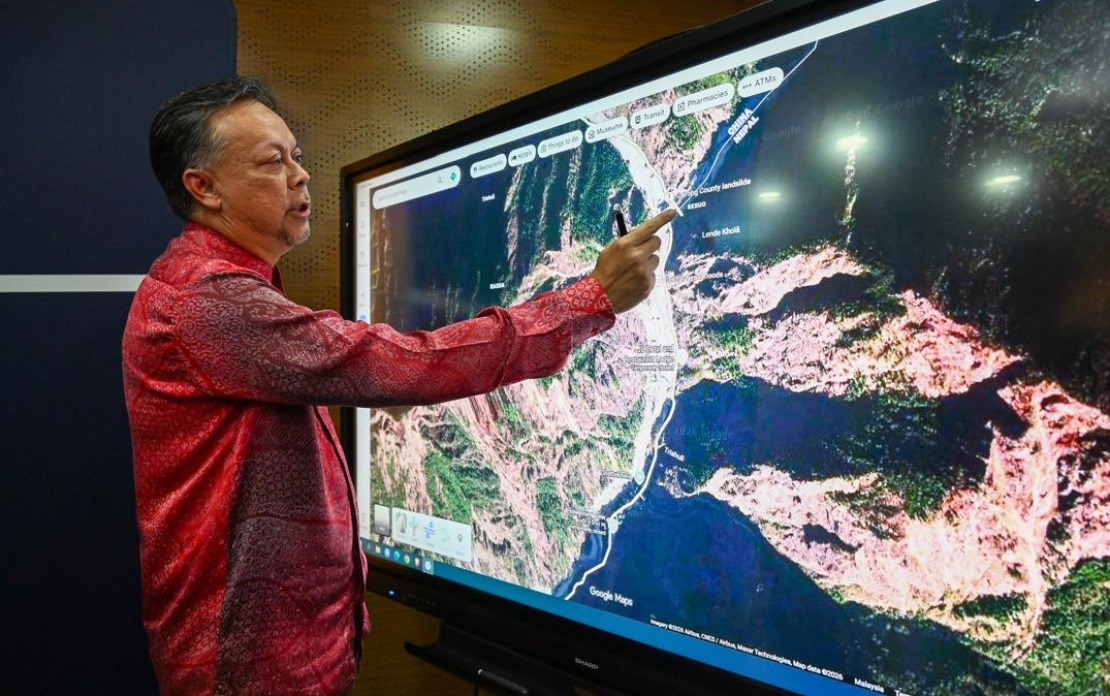
The Malaysian Foreign Ministry has announced a partial breakthrough in locating Malaysians caught in Nepal's devastating natural disaster, with two individuals confirmed safe following the catastrophic flooding and landslides that struck the Himalayan nation. The development, disclosed by Deputy Secretary-General Datuk Syed Mohamad Hasrin Tengku Hussin, offers cautious hope to anxious families back home, though the majority of those initially feared missing remain impossible to contact as of late Wednesday afternoon.
On August 26, the overflow of the Bote Koshi River in the Rasua district unleashed a torrent that destroyed critical infrastructure across the region, sweeping away roads and bridges while simultaneously severing power and telecommunications networks. This widespread destruction has created a communication blackout that complicates efforts to establish the precise status and whereabouts of Malaysian nationals in the affected zones. The geographical challenges posed by mountainous terrain, combined with the rapid deterioration of basic services, have transformed what might ordinarily be a coordinated search operation into a laborious process of piecing together fragmented information from multiple sources.
The two Malaysians who have been located are undergoing identity verification procedures, with officials emphasizing that comprehensive cross-checking remains necessary before their details can be publicly released. This methodical approach reflects the Foreign Ministry's determination to avoid duplicating names on casualty or missing persons lists, a particular concern when information flows from multiple government agencies, international relief organizations, tour operators, and worried relatives simultaneously. Such verification protocols, while potentially frustrating to families seeking confirmation, ultimately serve to provide accurate accounting rather than fuelling confusion through unconfirmed reports.
The figure of 55 remaining unreachable Malaysians represents a preliminary count that remains subject to further adjustment as communication gradually improves and verification processes continue. The discrepancy between initial reports and confirmed cases underscores the difficulty of establishing reliable data during immediate crisis periods, particularly in developing nations where institutional record-keeping and information-sharing mechanisms may lack the sophistication of more technologically advanced countries. Nepalese authorities have reported rescuing 528 people overall, predominantly Nepalese nationals, though notably no Malaysians have yet appeared among those officially documented as rescued.
Foreign Minister Datuk Seri Mohamad Hasan has directed the ministry to intensify its response, resulting in the deployment of an official from the Malaysian High Commission in Dhaka to Kathmandu to reinforce the embassy's stretched resources. This individual is working to coordinate information flows, monitor evolving conditions, and maintain liaison channels with Nepalese government agencies responsible for disaster response. The staffing reinforcement reflects recognition that Malaysian diplomatic capacity in Nepal may be temporarily overwhelmed by the scale of the emergency and the complexity of tracking dozens of nationals scattered across affected areas.
Collaborative efforts now involve the Malaysian Embassy in Kathmandu, Nepal's Foreign Ministry emergency response division, the Nepal Tourism Board, and local tourism operators who maintain detailed records of visiting groups. This multi-agency approach acknowledges that Malaysians in Nepal are typically tourism sector participants, and tour operators possess knowledge of group compositions, itineraries, and expected travel routes that government agencies alone may lack. The embassy's coordination of these various information streams represents an attempt to construct a comprehensive picture from what are currently highly fragmented and difficult-to-verify reports.
The communications crisis created by the natural disaster cannot be overstated as an impediment to swift resolution. Beyond the immediate damage to telephone and internet infrastructure, the security situation in affected areas has created legitimate safety concerns for rescue operations themselves. Nepalese authorities continue monitoring overflow risks from cross-border water systems, indicating that the disaster scenario remains dynamic and potentially capable of worsening before improving. These hazardous conditions have necessarily slowed search and rescue activities, with weather patterns and terrain damage significantly restricting operational capacity.
Malaysia's Foreign Ministry has established a round-the-clock operations centre in Putrajaya to serve as the central coordination hub for this crisis response. The facility processes incoming information through rigorous verification procedures, cross-referencing calls and reports against Nepalese official records and the ministry's internal databases. In the immediate aftermath of the operations centre's activation, staff fielded between twelve and fifteen calls hourly from Malaysian family members and friends desperately seeking information about loved ones believed present in Nepal at the time of the disaster.
The challenge of distinguishing genuine missing cases from false alarms or duplication has proven significant, necessitating systematic collection of detailed personal information from enquirers. The ministry is requesting full names, passport numbers, specific travel itineraries, last confirmed locations, and active phone numbers to enable proper cross-referencing. This intelligence-gathering approach, while appearing cumbersome during genuine emergencies, serves the essential function of preventing scarce rescue resources from being misallocated toward individuals already confirmed safe or those who were never in affected areas.
For Malaysian families with potentially relevant information about nationals in Nepal during the disaster period, the Foreign Ministry has established direct contact channels through its Putrajaya operations facility, accessible via telephone at +603 8887 4570 or electronic correspondence directed to [email protected]. The appeal for information reflects understanding that family networks often maintain awareness of travel plans and communications beyond what government agencies can readily access, and that initial reports frequently originate from personal contacts rather than official channels.
The incident highlights the vulnerability of Malaysians travelling abroad during natural disasters, particularly in regions where infrastructure resilience remains limited and communication systems lack redundancy. It also demonstrates the institutional challenges faced by developing nations in disaster response coordination, where multiple agencies must rapidly establish information-sharing protocols under emergency conditions. For Malaysian travellers and their families, the unfolding situation serves as reminder of the importance of registering travel plans with the Foreign Ministry's online system and maintaining reliable contact methods.
The coming days will prove critical in establishing the actual count of Malaysians requiring assistance and determining their current status. As Nepalese authorities gradually restore communications infrastructure and conduct systematic victim accounting, the picture should clarify considerably. Until then, Malaysia's diplomatic presence on the ground must balance its own operational constraints against the imperative to provide anxious families at home with whatever verified information becomes available, however incremental the progress may appear.

