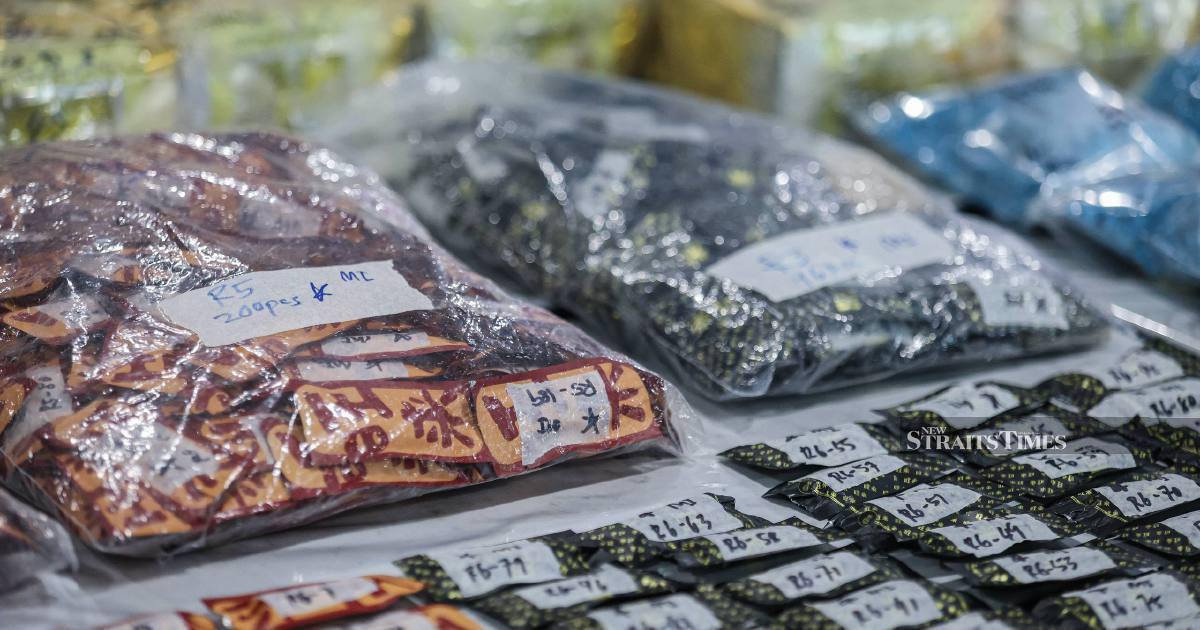
Two brothers have been apprehended by the Malaysian Maritime Enforcement Agency (MMEA) following a major drug interception operation in Johor waters on Sunday. The arrest represents a substantial blow against trafficking networks operating in the strategic Straits of Malacca region, with authorities seizing contraband valued at more than RM6.85 million. The suspected drugs, identified as 'Piu Piu', were destined for a neighbouring country, according to MMEA investigations.
The operation highlights the persistent challenge facing Malaysia's maritime security apparatus, which must contend with transnational drug trafficking syndicates exploiting sea routes between major ports and across maritime borders. Southeast Asia's geographic position between major drug-producing regions in the Golden Triangle and the Indian subcontinent makes it a critical transit zone for narcotics destined for Australia, New Zealand, and other markets. Malaysia's extensive coastline and numerous maritime entry points present particular vulnerabilities that criminal organisations continue to exploit with increasing sophistication.
The 'Piu Piu' designation suggests a synthetic or branded variant gaining traction in regional drug markets, reflecting the evolving nature of drug trafficking in Southeast Asia. Law enforcement agencies across the region have documented rapid innovation in drug production and rebranding strategies, with traffickers constantly adapting chemical compositions and marketing tactics to evade detection and regulatory controls. This particular seizure indicates organised crime groups are operating with the resources and market knowledge to move substantial quantities of high-value narcotics across international waters.
The MMEA's successful interception demonstrates the importance of maritime surveillance and intelligence gathering in combating transnational organised crime. The agency's capacity to intercept shipments before they reach their intended destinations provides valuable information about trafficking routes, operational methods, and the scale of drug movements through Malaysian waters. Each major seizure generates investigative leads that can help authorities dismantle broader trafficking networks and identify supply chain vulnerabilities.
Johor's strategic location as a gateway between the busy Strait of Johor and the broader Straits of Malacca makes it an inevitable focal point for drug smuggling operations. The state's proximity to Singapore and Indonesia creates multiple opportunities for transnational movement of contraband, with maritime routes offering advantages over land crossings in terms of concealment and the challenges they present to detection. The successful apprehension of these two individuals suggests that intelligence-sharing and coordinated enforcement efforts are yielding measurable results.
The arrest of the brothers follows an established pattern of MMEA enforcement activities targeting trafficking networks. The agency has increasingly prioritised maritime interdiction as a core function, recognising that controlling sea lanes is essential to national security and public health. Over recent years, MMEA operations have yielded consistent results, though the continued volume of attempted smuggling operations indicates that trafficking networks remain well-resourced and motivated by substantial profit margins.
The RM6.85 million valuation attached to this seizure reflects the substantial financial incentives driving trafficking operations. Drug trafficking remains one of the most lucrative forms of organised crime in the region, with profit margins sufficient to sustain complex supply chains, corrupt officials, and sophisticated evasion tactics. The economic analysis of drug seizures reveals the scale of underground markets and the limited effectiveness of supply-side enforcement alone in addressing fundamental demand drivers.
The investigation into the two brothers' operations will likely extend beyond the immediate arrest, with authorities examining communication records, financial transactions, and connections to wider trafficking networks. Understanding the organisational structure behind attempted smuggling operations provides law enforcement with strategic insights into how syndicates operate, how they source and market drugs, and how they maintain supply lines despite regular enforcement activity. This intelligence serves to inform broader counter-narcotics strategies at both the national and regional levels.
Regional cooperation remains essential in addressing maritime drug trafficking, given the transnational nature of these operations. The MMEA's actions must be complemented by similar enforcement efforts from Thailand, Indonesia, and Singapore, whose maritime forces collectively monitor one of the world's busiest and most strategically important shipping lanes. Information-sharing agreements and coordinated operations enhance the collective capacity of Southeast Asian nations to disrupt trafficking networks and raise the operational costs and risks associated with using regional waters for contraband movement.
The successful interception of this RM6.85 million shipment demonstrates both capability and determination within Malaysia's maritime enforcement framework. However, the persistence of major smuggling attempts indicates that deterrence remains incomplete and that the fundamental economic drivers of trafficking continue to incentivise risk-taking among criminal actors. Sustained investment in intelligence capabilities, maritime surveillance technology, and cross-border cooperation will be necessary to incrementally reduce the flow of narcotics through Malaysian waters and weaken the profitability of trafficking operations targeting the region.

