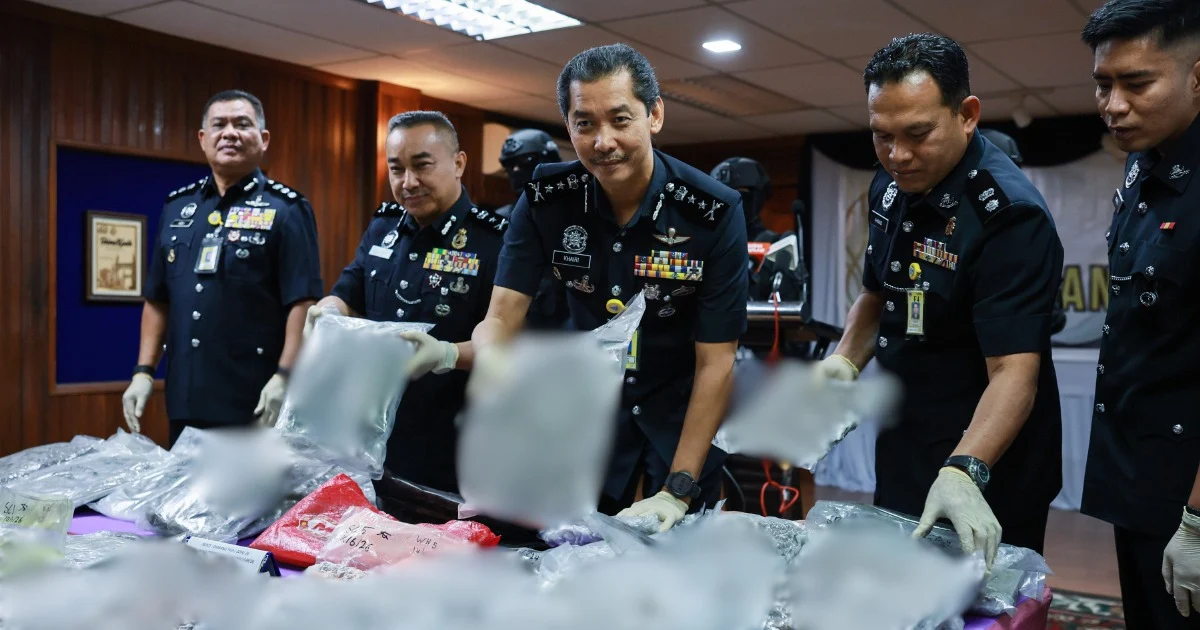
Law enforcement authorities in Kuala Terengganu have made a significant drugs seizure following the arrest of two brothers believed to have been stockpiling narcotics valued at RM1.76 million inside their residential property located in Kampung Duyong Besar. The breakthrough came as part of ongoing operations aimed at dismantling illicit drug distribution networks operating throughout the East Coast state.
The residential premises in the densely populated neighbourhood apparently served dual purposes—providing shelter for the suspects whilst functioning simultaneously as a clandestine storage depot for substantial quantities of controlled substances. This arrangement reflects a common modus operandi employed by mid-level distributors who seek to minimise detection by housing their operations within ordinary family homes rather than in industrial warehouses or remotely isolated locations that might attract official scrutiny.
Raid operations by police personnel targeting the address resulted in the recovery of drug consignments with a combined street value reaching RM1.76 million. The specific composition of seized materials has not been disclosed in detail, though authorities typically focus on high-value narcotics including methamphetamine derivatives, heroin, and cocaine during major enforcement sweeps across Malaysian jurisdictions. The estimated value represents a substantial blow to trafficking operations along the East Coast corridor.
Terengganu has emerged as a strategic distribution hub within Malaysia's broader narcotics landscape, positioning the state as a critical transit and storage point for drugs destined for peninsular markets and potentially beyond. Geographical proximity to major ports and transport networks facilitates rapid movement of contraband, whilst lower law enforcement resources relative to major urban centres create operational advantages for traffickers. The Kampung Duyong Besar seizure underscores persistent vulnerabilities within residential areas that criminal networks continue to exploit.
The two detained individuals currently face investigation under the Dangerous Drugs Act, an offence carrying severe criminal penalties under Malaysian legislation. Possession of narcotics with intent to distribute triggers mandatory sentencing provisions, with punishments ranging substantially based on drug type and quantity. The substantial value of seized materials suggests prosecutors will likely pursue trafficking charges rather than simple possession counts, elevating sentencing possibilities considerably.
Police operations in Terengganu have intensified notably throughout recent years as authorities recognise the state's role within regional drug trafficking networks. Intelligence-gathering efforts have yielded intelligence regarding distribution patterns and supplier networks, enabling targeted enforcement actions against key operational points. The residential warehouse bust represents tangible progress within this broader campaign, though officials acknowledge significant illicit activity continues operating despite ongoing interdiction efforts.
The arrest comes amid broader national efforts to combat drug proliferation across Malaysia, where consumption rates and trafficking activities have risen substantially despite enhanced enforcement frameworks. The Royal Malaysian Police have implemented technology-driven investigative approaches, intelligence sharing mechanisms with international counterparts, and community-based reporting systems designed to generate leads regarding suspicious activities. However, the persistence of large-scale operations such as the Kampung Duyong Besar case demonstrates that traffickers continue adapting strategies to circumvent detection measures.
Community awareness regarding narcotics operations remains crucial within enforcement architecture, as neighbours and residents frequently provide initial intelligence that launches formal investigations. Normalised suspicious behaviours—including unusual vehicular traffic, frequent visitor patterns, or deliveries at irregular hours—often constitute reliable indicators of illicit activity. Education campaigns throughout residential neighbourhoods emphasise the importance of reporting observations to authorities whilst maintaining personal safety and protecting informant anonymity.
The two brothers' detention reflects wider apprehension trends targeting mid-tier actors within trafficking hierarchies. Whilst street-level retailers and end-consumers dominate arrest statistics numerically, storage facility operators occupy crucial positions within distribution chains by managing inventory and controlling supply allocations to downstream dealers. Disrupting operations at this level creates temporary shortages and pricing fluctuations affecting retail availability, thereby theoretically reducing accessibility for vulnerable populations including young users.
Investigators will now focus on identifying supplier sources and downstream distribution networks connected to the detained individuals. Communication records, financial transactions, and logistical documentation typically provide evidentiary trails pointing toward accomplices and organisational structure. Building comprehensive cases demonstrating involvement across multiple individuals within trafficking enterprises strengthens prosecution prospects and potentially disrupts larger criminal networks rather than merely removing individual bad actors from circulation.
The Kuala Terengganu enforcement action demonstrates sustained police commitment to combating drug-related criminality affecting Malaysian communities. However, experts acknowledge that supply-side enforcement alone cannot resolve underlying demand factors driving narcotics markets. Complementary public health approaches addressing addiction treatment, rehabilitation services, and harm reduction remain essential components within holistic counter-narcotics strategies. Balancing law enforcement pressure with therapeutic interventions offers the most promising pathway toward reducing overall drug harms affecting Malaysian society.
%22%2F%3E%3C%2Fpattern%3E%3C%2Fdefs%3E%3Crect%20width%3D%22100%25%22%20height%3D%22100%25%22%20fill%3D%22url(%23ph28d0eg)%22%2F%3E%3Crect%20width%3D%22100%25%22%20height%3D%22100%25%22%20fill%3D%22url(%23ph28d0ep)%22%2F%3E%3Ctext%20x%3D%2250%25%22%20y%3D%2250%25%22%20text-anchor%3D%22middle%22%20dominant-baseline%3D%22central%22%20fill%3D%22rgba(255%2C255%2C255%2C0.95)%22%20font-family%3D%22Georgia%2C%20'Times%20New%20Roman'%2C%20serif%22%20font-weight%3D%22700%22%20font-size%3D%22151%22%20letter-spacing%3D%22-0.02em%22%3EStrategic%3C%2Ftext%3E%3C%2Fsvg%3E)
%22%2F%3E%3C%2Fpattern%3E%3C%2Fdefs%3E%3Crect%20width%3D%22100%25%22%20height%3D%22100%25%22%20fill%3D%22url(%23ph3284yg)%22%2F%3E%3Crect%20width%3D%22100%25%22%20height%3D%22100%25%22%20fill%3D%22url(%23ph3284yp)%22%2F%3E%3Ctext%20x%3D%2250%25%22%20y%3D%2250%25%22%20text-anchor%3D%22middle%22%20dominant-baseline%3D%22central%22%20fill%3D%22rgba(255%2C255%2C255%2C0.95)%22%20font-family%3D%22Georgia%2C%20'Times%20New%20Roman'%2C%20serif%22%20font-weight%3D%22700%22%20font-size%3D%22320%22%20letter-spacing%3D%22-0.02em%22%3EUS%3C%2Ftext%3E%3C%2Fsvg%3E)
%22%2F%3E%3C%2Fpattern%3E%3C%2Fdefs%3E%3Crect%20width%3D%22100%25%22%20height%3D%22100%25%22%20fill%3D%22url(%23ph31tp1g)%22%2F%3E%3Crect%20width%3D%22100%25%22%20height%3D%22100%25%22%20fill%3D%22url(%23ph31tp1p)%22%2F%3E%3Ctext%20x%3D%2250%25%22%20y%3D%2250%25%22%20text-anchor%3D%22middle%22%20dominant-baseline%3D%22central%22%20fill%3D%22rgba(255%2C255%2C255%2C0.95)%22%20font-family%3D%22Georgia%2C%20'Times%20New%20Roman'%2C%20serif%22%20font-weight%3D%22700%22%20font-size%3D%22226%22%20letter-spacing%3D%22-0.02em%22%3EHamzah%3C%2Ftext%3E%3C%2Fsvg%3E)