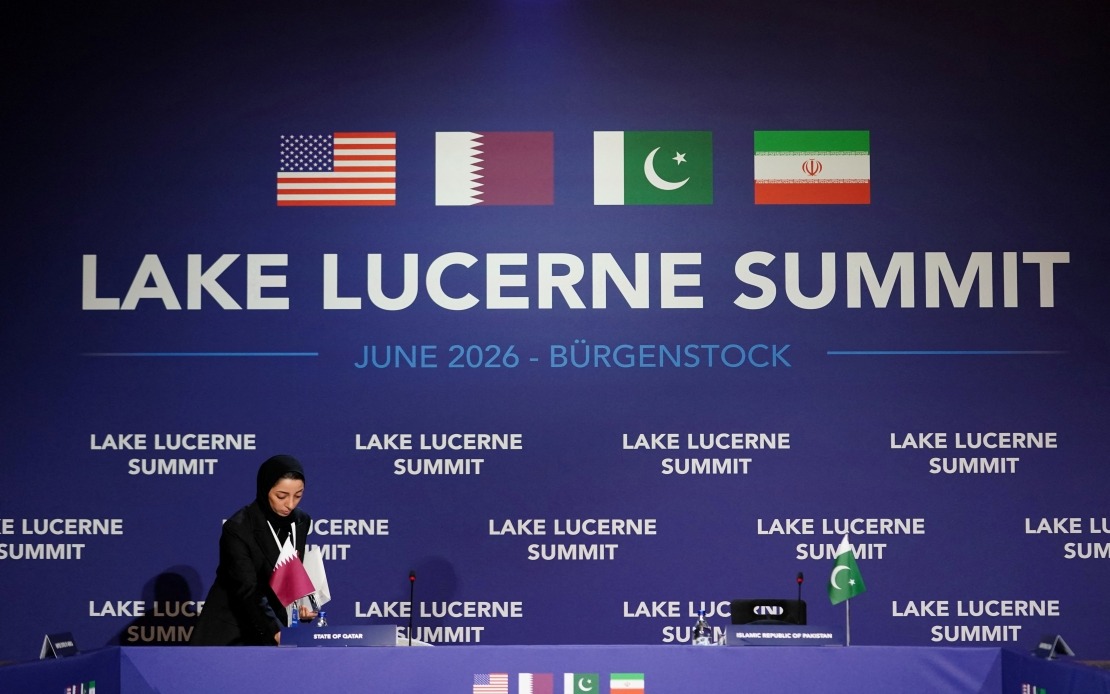
The foreign ministers of Türkiye, Egypt, Pakistan and Saudi Arabia have thrown their collective weight behind a newly signed memorandum between the United States and Iran, viewing the accord as a meaningful stride toward defusing escalating tensions across West Asia. The four nations released a joint statement after convening in Cairo on Sunday, signalling that regional powers view the Islamabad Memorandum of Understanding as a potentially transformative development in managing one of the world's most volatile geopolitical flashpoints.
The statement, issued through the Turkish Foreign Ministry, framed the agreement as far more than a bilateral arrangement between Washington and Tehran. Instead, the four nations characterised it as constructive progress toward ending a protracted conflict whose ripple effects extend well beyond diplomatic channels, threatening the stability of the entire region whilst simultaneously jeopardising critical global infrastructure. The ministers emphasised that the dispute had posed genuine hazards to energy markets worldwide, disrupted international maritime routes essential for global commerce, and created vulnerabilities in supply chains that reverberate through the international trading system.
This multilateral endorsement carries particular weight in Southeast Asian contexts, given the region's dependence on stable Middle Eastern energy supplies and unimpeded shipping through vital waterways. Malaysia and other ASEAN nations remain acutely sensitive to disruptions in West Asian stability, as geopolitical tensions there directly influence oil prices, shipping insurance costs, and the broader economic security framework upon which regional prosperity depends. The fact that Pakistan, Egypt, Türkiye and Saudi Arabia—nations with deep historical stakes in the region—have collectively validated this development suggests that dialogue-based approaches may be gaining traction among key regional actors.
The four diplomats specifically praised the diplomatic infrastructure that enabled negotiations to reach this point, acknowledging the catalytic role played by Pakistan in orchestrating the negotiation process and the behind-the-scenes facilitation provided by Qatar. Pakistan's central role proves significant, as the country's willingness to serve as an honest broker demonstrates that even nations with complex relationships to both the United States and Iran retain capacity for constructive mediation. Qatar's supporting role reflects its established position as a regional diplomatic hub, a function it has cultivated through careful neutrality and sustained investment in multilateral engagement channels.
However, the joint statement betrayed a certain guardedness about the path forward, with the ministers stressing the urgency of swift progress toward a comprehensive, long-term settlement addressing remaining differences. Their language suggested that the current memorandum, whilst welcome, represents merely an opening chapter rather than a definitive resolution. The statement's insistence that future negotiations must account for the security interests of Gulf Cooperation Council states and Levantine countries reflects the broader regional community's determination to ensure that any broader accommodation between Washington and Tehran cannot be achieved at the expense of other parties' legitimate security concerns.
The four nations articulated a sophisticated understanding that sustainable regional stability cannot rest solely upon US-Iran relations. Instead, they argued implicitly that a durable peace must address the interconnected security architecture of the broader Middle East, ensuring that no single bilateral arrangement creates new asymmetries or vulnerabilities for neighbouring states. This framing reveals how deeply embedded the US-Iran dispute has become within the region's overall security ecosystem, where adjustments at one point generate pressures and concerns elsewhere.
Palestinian statehood emerged as a central preoccupation in the statement, with the four ministers devoting special attention to the Israeli-Palestinian conflict and reaffirming their conviction that resolving this dispute remains foundational to achieving lasting peace and stability throughout West Asia. They reiterated support for the establishment of an independent Palestinian state within pre-1967 borders, with East Jerusalem designated as its capital, in accordance with relevant United Nations resolutions. This positioning underscores how Arab and Muslim-majority states increasingly view the Palestinian question not as a discrete diplomatic challenge but as an integral component of broader Middle Eastern stability.
The linkage between the US-Iran agreement and the Palestinian issue reveals the interconnected nature of West Asian diplomacy, where progress on one front frequently becomes conditional upon advances on others. For Malaysian policymakers and regional observers, this dynamic illustrates the complexity of Middle Eastern geopolitics, where bilateral accommodations cannot be achieved in isolation from the broader constellation of conflicts and grievances that define the region. The ministers' insistence on tying future US-Iran negotiations to Palestinian concerns suggests that any long-term settlement must address multiple layers of regional tension simultaneously.
For Southeast Asia more broadly, the endorsement by these four significant regional actors offers cautious grounds for optimism regarding West Asian stability. Pakistan's participation carries particular significance given its historical oscillations between competing Middle Eastern alignments, whilst Saudi Arabia's support matters enormously given its preponderant role in shaping Gulf security architecture. Türkiye and Egypt, bridging Europe, Africa and the Middle East, add geopolitical weight and suggest that this consensus transcends narrow factional divisions within the broader Muslim world.
Yet the carefully hedged language of the statement—emphasising the need for swift movement, comprehensive settlements, and attention to multiple parties' security interests—implies that substantive challenges remain. The four nations have effectively signalled that whilst they welcome this opening, they retain significant leverage and concerns that must be addressed as negotiations progress. Their collective statement functions simultaneously as endorsement, framework-setting document, and subtle warning that regional powers expect to be meaningfully consulted as the US-Iran relationship evolves.
The coming months will prove crucial in determining whether this memorandum genuinely inaugurates a period of de-escalation or merely represents a tactical pause in underlying regional competition. The four nations' willingness to stand together suggests that at least some Middle Eastern actors perceive mutual benefits in reduced tensions. However, their detailed enumeration of remaining concerns—security interests, maritime stability, Palestinian rights—indicates that achieving genuine, durable peace will require addressing far more than the bilateral US-Iran relationship. For Southeast Asian nations dependent on West Asian stability and energy security, these diplomatic developments warrant careful monitoring as indicators of broader regional trajectory.
%22%2F%3E%3C%2Fpattern%3E%3C%2Fdefs%3E%3Crect%20width%3D%22100%25%22%20height%3D%22100%25%22%20fill%3D%22url(%23ph2mp32g)%22%2F%3E%3Crect%20width%3D%22100%25%22%20height%3D%22100%25%22%20fill%3D%22url(%23ph2mp32p)%22%2F%3E%3Ctext%20x%3D%2250%25%22%20y%3D%2250%25%22%20text-anchor%3D%22middle%22%20dominant-baseline%3D%22central%22%20fill%3D%22rgba(255%2C255%2C255%2C0.95)%22%20font-family%3D%22Georgia%2C%20'Times%20New%20Roman'%2C%20serif%22%20font-weight%3D%22700%22%20font-size%3D%22226%22%20letter-spacing%3D%22-0.02em%22%3EPenang%3C%2Ftext%3E%3C%2Fsvg%3E)