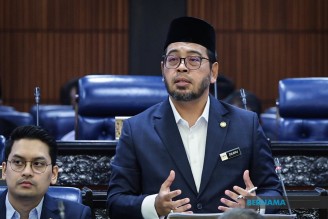
Tabung Haji's (TH) investment in Putrajaya Perdana Bhd proved to be a costly strategic misstep that entangled Malaysia's Islamic pilgrimage fund in the murky dealings surrounding 1Malaysia Development Bhd (1MDB), according to findings presented to Parliament on August 11. The dual appointment of TH's chairman to lead Putrajaya Perdana created a direct conduit through which the pilgrimage fund became exposed to 1MDB transactions, ultimately crystallising losses of RM145.3 million. Minister in the Prime Minister's Department (Religious Affairs) Dr Zulkifli Hasan highlighted these failures during his briefing on the Royal Commission of Inquiry (RCI) Report on TH, raising fundamental questions about governance and fiduciary responsibility that extend far beyond a single failed investment.
The interconnected nature of these transactions raises uncomfortable questions about institutional decision-making during a period of widespread financial misadventure. When TH's chief executive officer simultaneously held a board position at 1MDB, the separation of interests became theoretical rather than practical. Dr Zulkifli pointedly asked whether such investments genuinely served TH's interests or instead functioned as a mechanism to shore up 1MDB's deteriorating position. This overlapping governance structure exemplifies the concentrated power that enabled questionable capital allocation decisions throughout the mid-2010s. Putrajaya Perdana represented merely one node in a broader network of problematic investments linked to TH's financial decline during this era.
The scope of TH's investment troubles extended across at least 14 distinct problematic ventures, collectively responsible for losses totalling billions of ringgit as documented in the RCI report released in July. This diversification across multiple failing investments suggests systemic weaknesses in due diligence and risk assessment rather than isolated lapses in judgment. The establishment of an RCI in 2021 provided institutional space to examine how TH, a fund holding the retirement savings and pilgrimage aspirations of millions of Malaysian Muslims, could have deteriorated so severely. The formal process—RCI member appointments in January 2022, presentation to the Yang di-Pertuan Agong in August 2022, and public disclosure in July 2024—reflected the complexity and sensitivity of investigating an institution deeply woven into Malaysia's social fabric.
Among the most visible manifestations of TH's troubled investment trajectory was its substantial exposure to FGV Holdings, the agricultural conglomerate that achieved notable headlines through Malaysia's largest initial public offering (IPO) after 2008, raising over RM10 billion in capital. Rather than delivering anticipated returns, the investment ultimately inflicted losses exceeding RM1 billion when share valuations collapsed. The severity of the decline—share prices falling more than 80 per cent from peak levels—created precisely the moment when institutional discipline would demand either strategic repositioning or transparent accounting of losses. Instead, TH's leadership altered impairment policies to obscure the deteriorating asset values from public view. This obfuscation prevented beneficiaries from understanding the true financial position of their fund and postponed necessary corrective action.
TH's involvement with the Tun Razak Exchange (TRX) property transaction further illustrated the questionable investment decision-making that characterised the period. The fund purchased land from 1MDB when the development company faced intense scrutiny and financial pressures, effectively providing capital support to an entity requiring emergency liquidity. The 2018 decision to divest this asset for RM400 million reflected recognition that the investment had become problematic or was no longer strategically aligned. More recently, TH repurchased the same TRX land at RM270 million, representing both a substantial markdown from the original sale price and implicit acknowledgement that the original transaction had destroyed shareholder value. This buy-back at current market rates suggests TH's financial position has recovered sufficiently to reclaim strategic assets, though the multi-year detour through 1MDB ownership records a costly chapter in institutional mismanagement.
The acquisition and subsequent divestiture of oil palm plantation holdings through UJ Estates (Holdings) Sdn Bhd followed a similar trajectory. TH originally sold these assets for RM800 million, relinquishing control of tangible productive infrastructure. The 2024 reacquisition at approximately RM695 million—comprising RM115 million in cash and roughly RM580 million in enterprise value—again reflected a significant reduction from the original sale proceeds. The willingness to repurchase assets at discounted valuations signals management's assessment that current market conditions favour reintegration of these holdings into TH's portfolio. These sequential transactions, spanning nearly a decade, capture in microcosm the broader pattern of value destruction, subsequent recovery, and attempts to restore institutional balance sheets through opportunistic reacquisition.
The RCI's comprehensive examination produced a 211-page report detailing governance weaknesses across the 2014-2020 period, when TH's financial position deteriorated most sharply. The inquiry articulated 25 distinct recommendations for operational and management improvements, addressing identified deficiencies in institutional oversight and investment discipline. By late July 2024, TH had implemented 75 per cent of these recommendations, suggesting reasonably rapid institutional response to external scrutiny. This implementation rate, though respectable, leaves one-quarter of suggested reforms still pending, potentially indicating either resource constraints in executing remaining changes or disagreement about certain recommendations' necessity.
For Malaysian depositors and pilgrims relying upon TH's financial stability, the RCI findings and subsequent recovery efforts carry immediate practical significance. TH manages savings for millions of Malaysian Muslims with religious and personal aspirations tied to hajj pilgrimage. The multi-billion ringgit losses incurred through problematic investments, particularly those connected to 1MDB, threatened the fund's ability to honour its commitments. The apparent stabilisation of TH's financial position, evidenced by successful repurchase of sold assets and recovery of institutional governance standards, provides reassurance that the worst episodes have passed. However, the historical record of governance failures and interconnected board memberships that enabled questionable decision-making demands sustained vigilance and structural reforms preventing recurrence.
The regional implications of TH's experience extend beyond Malaysia's borders. Other nations managing sovereign wealth funds, pilgrimage institutions, or Islamic finance vehicles observe how governance failures in one major institution can propagate through broader financial networks. TH's entanglement with 1MDB during that entity's most controversial period illustrated how institutional oversight gaps and concentrated authority create vulnerability to systemic fraud and mismanagement. Malaysian policymakers' willingness to conduct a thorough public inquiry and subsequently implement substantial governance reforms, alongside transparent disclosure of findings, contrasts with patterns in some regional jurisdictions where institutional failures receive minimal public accounting.
Looking forward, TH's recovery trajectory will largely depend on sustained implementation of RCI recommendations and fundamental restructuring of investment governance processes. The fund's successful repurchase of divested assets at considerably lower prices reflects current market conditions but also demonstrates management confidence in medium-term asset valuations. Whether TH can rebuild stakeholder trust sufficiently to serve as a reliable savings vehicle and pilgrimage facilitator depends not merely on financial metrics but on demonstrable institutional reform. The 145.3 million ringgit loss associated with Putrajaya Perdana represents merely one accounting line item within a much larger narrative of institutional failure, recovery, and the ongoing challenge of rebuilding governance credibility.

