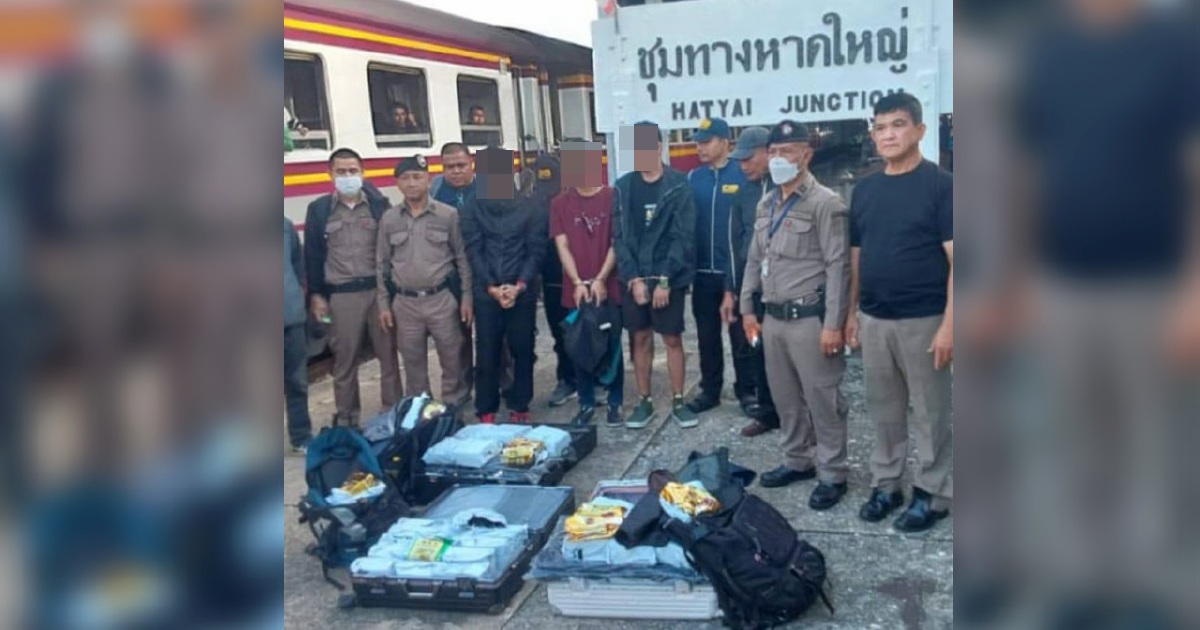
Thai law enforcement authorities have apprehended three Malaysian nationals in Hat Yai after uncovering a substantial methamphetamine consignment hidden in their baggage. The seizure, involving 87 kilograms of syabu with an estimated street value of RM4.3 million, represents a significant interdiction in the fight against transnational drug trafficking across Southeast Asia. Intelligence gathered during the investigation points strongly toward the involvement of the arrested individuals as couriers within a larger organised smuggling network rather than as independent operators.
The arrest underscores the persistent vulnerability of the Malaysia-Thailand border region as a transit corridor for illicit drugs. Hat Yai, situated in Songkhla province just kilometres from the Malaysian border, has long served as a strategic hub for cross-border narcotics movement. Criminal syndicates operating throughout the Golden Triangle and beyond continue to exploit geographic proximity and established logistics networks to move contraband southward toward Malaysian and Singapore markets, where methamphetamine commands premium prices amongst dealers and users.
The mule operation represents a common tactical approach employed by major trafficking organisations seeking to insulate their senior management from direct involvement in high-risk transportation activities. By recruiting individuals willing to carry physical contraband across international borders, these networks distribute risk and maintain operational security. When arrests occur at checkpoints or during interdiction operations, the captured couriers typically possess minimal knowledge regarding the broader conspiracy, limiting the intelligence value derived from interrogations and reducing the likelihood of prosecutions extending upstream to organisational leadership.
Malaysia's geographic position makes it particularly attractive for methamphetamine trafficking networks. The nation's role as both a consumption market and transshipment point creates demand-side pull that incentivises smuggling operations. The porous nature of several border areas, combined with the volume of legitimate cross-border movement for commerce and tourism, provides cover for illicit trafficking. Law enforcement agencies throughout the country remain engaged in intensive border monitoring and checkpoint operations, yet the scale of international drug manufacturing capacity in neighbouring jurisdictions ensures consistent pressure on Malaysian enforcement resources.
The circumstances of this particular seizure reflect patterns observed across multiple interdiction operations in recent years. Drug trafficking organisations frequently employ Malaysian nationals for cross-border runs, capitalising on shared language, cultural familiarity with both territories, and established personal networks that facilitate recruitment. Financial desperation, debt servitude relationships, or prior involvement in lower-level drug distribution often render such individuals vulnerable to coercion or inducement into courier roles that carry substantially elevated legal consequences.
Thai authorities' involvement highlights ongoing regional cooperation mechanisms between Southeast Asian law enforcement agencies. Cross-border intelligence sharing and coordinated interdiction efforts have intensified following commitments made under multilateral frameworks addressing transnational crime. Thailand's position as both source country for chemical precursors and trafficking route has motivated substantial investment in border security infrastructure and investigation capabilities. The apprehension of Malaysian nationals transporting contraband through Thai territory represents the type of collaborative success that regional authorities emphasise in public communications regarding drug enforcement effectiveness.
The RM4.3 million valuation reflects street-level retail prices prevailing in key consumption markets rather than wholesale acquisition costs incurred by trafficking organisations. Manufacturing costs for methamphetamine produced in clandestine facilities remain substantially lower than final selling prices, creating profit margins that justify the operational risks and investment in distribution networks. The disparity between production expenses and retail revenue generates the financial resources necessary for trafficking organisations to maintain courier recruitment pipelines, bribe enforcement officials, and finance subsequent smuggling operations.
Investigation into the arrested Malaysians will likely pursue multiple investigative angles. Thai prosecutors will seek to establish intent to distribute, quantity thresholds triggering enhanced penalties, and any identifiable connections to specific trafficking networks. Malaysian authorities liaising with their Thai counterparts may seek extradition of the individuals or alternatively coordinate prosecution domestically following transfer. The intelligence derived regarding operational methods, border crossing tactics, and communications protocols will inform ongoing efforts to disrupt trafficking infrastructure serving Malaysian markets.
The methamphetamine problem affecting Malaysia has grown substantially over the past two decades, with availability expanding beyond major urban centres into secondary cities and towns. Prices have declined as supply has increased, broadening accessibility amongst price-sensitive consumer populations. Treatment demand has surged correspondingly, straining rehabilitation facility capacity and outpatient counselling services. This seizure removes one consignment from circulation, but the structural factors driving trafficking—production capacity upstream and demand pressure domestically—remain fundamentally unchanged absent more comprehensive regional interventions addressing manufacturing sources and precursor chemical supply chains.

