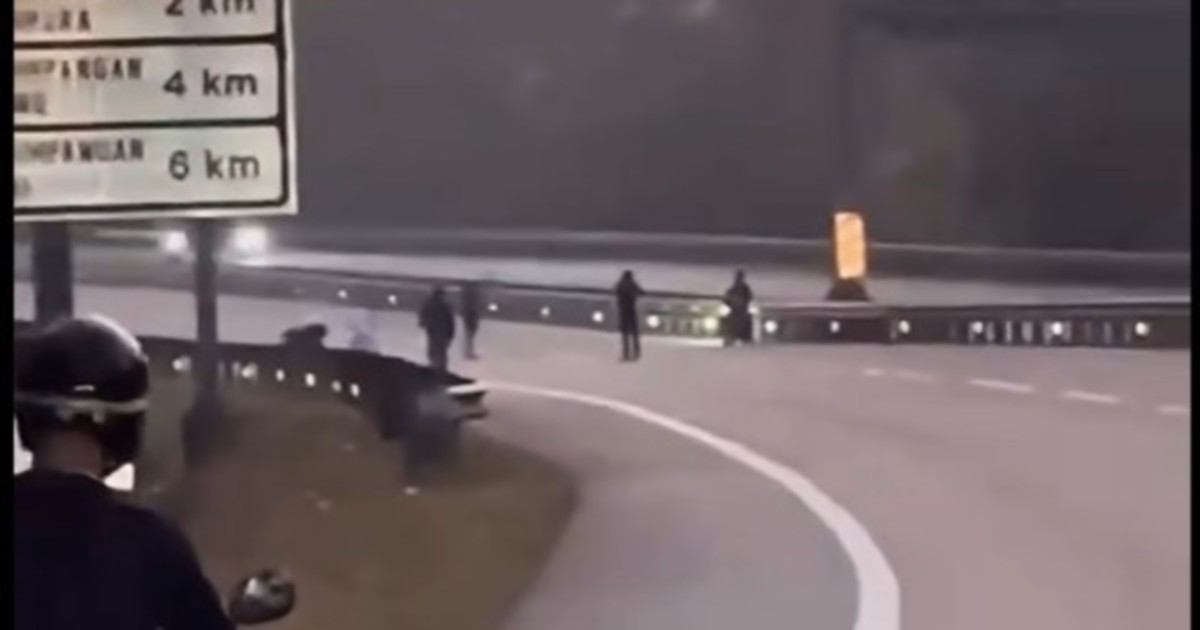
Police have detained three further men in connection with an illegal motorcycle race that occurred on the Second Link highway linking Johor to Singapore, pushing the overall number of individuals arrested in the operation to 11. The detainees, brought before the courts in Kulai, have been ordered remanded as the investigation into the dangerous street racing incident progresses. This escalating figure underscores the authorities' determination to dismantle what appears to be an organized network of illegal racers operating on one of Malaysia's busiest international corridors.
The Second Link, formally known as the Second Crossing, carries substantial traffic volume daily as it serves as a vital economic artery connecting the southern Malaysian state to Singapore and beyond. The decision to stage an illegal motorcycle race on this strategic route highlights a troubling disregard for public safety and traffic regulations. Such activities endanger not only the participants but also law-abiding motorists who traverse the highway for legitimate purposes, whether commuting for work, conducting business, or traveling with families.
The sequential arrests paint a picture of a wider organized operation rather than a spontaneous gathering. Police typically employ various investigative techniques when dismantling illegal racing networks, including surveillance, witness statements, and digital evidence analysis. The staged release of arrests, with multiple waves of detentions, often reflects investigators building cases methodically to establish patterns of organization, leadership hierarchies, and repeat participation among members of such underground racing communities.
Illegal street racing has emerged as a recurring concern across Malaysia's urban and semi-urban areas, particularly among younger demographics who view such activities as thrilling alternatives to lawful track racing or recreational motorsport. However, the consequences extend far beyond the adrenaline rush sought by participants. Fatalities and serious injuries stemming from unauthorized racing have prompted transport authorities and police departments nationwide to adopt increasingly stringent enforcement strategies, including vehicle impoundment, substantial fines, and imprisonment for serious violations.
The Second Link's exposure as a venue for such activities raises questions about monitoring and enforcement along this critical route. The highway typically experiences moderate to heavy traffic, and conducting an organized illegal race would have required either deliberate timing during off-peak hours or remarkable coordination to manage traffic flow. This suggests participants may have had advance planning capabilities or operational knowledge of traffic patterns, further supporting the organized network hypothesis.
Local communities and regular highway users have increasingly voiced frustration with street racing culture, which has proliferated despite regulatory efforts. Residents living near popular racing venues report noise pollution, property damage from modified vehicle exhausts, and the unsettling spectacle of dangerous maneuvers at excessive speeds. Parents have expressed particular concern about younger drivers engaging in these activities, viewing it as symptomatic of insufficient awareness regarding traffic safety and legal consequences.
The remand orders for these three suspects suggest that magistrates deemed the evidence sufficiently compelling to continue detention pending further investigation. Remand periods typically last several days initially and can be extended if investigators require additional time gathering evidence. The charges these men may face could potentially include participating in illegal racing, endangering road users, violating traffic laws, and possibly organizing or promoting such activities, depending on individual roles within the network.
Enforcement against illegal racing requires coordination across multiple agencies including the Royal Malaysia Police's Traffic Investigation and Enforcement Division, state traffic offices, and sometimes the Land Public Transport Agency. Intelligence gathering often involves community tip-offs, surveillance, and cooperation from highway toll operators or nearby businesses who observe suspicious patterns of behavior. The accumulation of 11 arrests suggests authorities have developed reliable intelligence sources and methodical investigative processes.
From a regional perspective, such enforcement actions reflect broader Southeast Asian challenges with underground motorsport culture. Countries including Thailand, Indonesia, and the Philippines have documented similar phenomena where illegal racing communities operate despite regulatory frameworks and penalties. Malaysia's approach, emphasizing arrest and prosecution of participants, represents one enforcement strategy, though some transport experts advocate complementary initiatives including legal recreational racing venues at affordable prices to channel enthusiasts away from dangerous public roads.
The implications for highway safety are significant. Second Link users, particularly those commuting during evening or early morning hours, deserve assurance that authorities actively monitor and suppress illegal activities that compromise traffic safety. The arrests demonstrate police capacity to respond to such incidents, though prevention through early detection and community engagement remains equally important. Ongoing investigation outcomes will likely inform police strategy regarding future illegal racing operations detected on major highways.
As remand proceedings continue, investigative officers will build comprehensive cases against the detained suspects, potentially establishing patterns of habitual participation, organizational roles, or connections to vehicle modifications and illegal betting networks sometimes associated with underground racing culture. The public outcome of these cases will provide important deterrent messaging to potential participants considering similar activities on Malaysian highways, emphasizing that enforcement agencies possess both investigative capability and prosecutorial determination.

