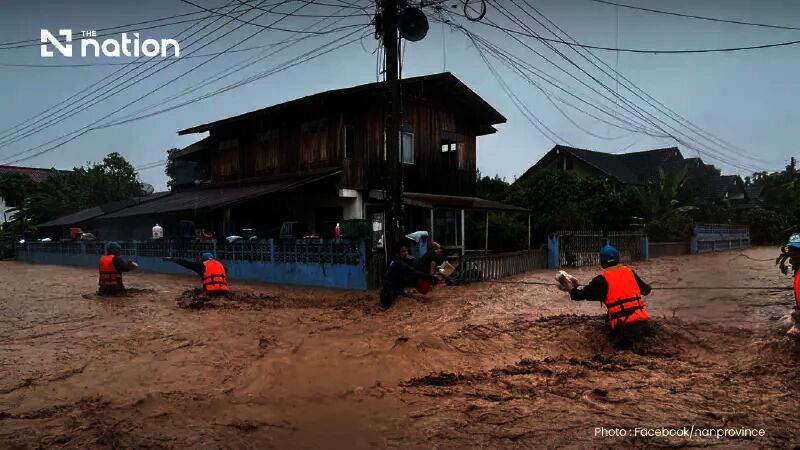
Thailand's government has officially designated Nan Province in the north as a disaster zone following destructive flooding triggered by persistent heavy rains, with authorities placing two neighbouring provinces on heightened alert as water levels continue to rise across the region. The declaration, announced on Wednesday, reflects the escalating severity of the natural disaster that has severed transportation links and prompted mandatory evacuations in multiple communities.
Prime Minister Anutin Charnvirakul, currently conducting an official visit to Australia, has maintained close oversight of the unfolding crisis through regular briefings and has issued comprehensive directives to mobilise the entire government machinery towards rescue and relief operations. According to government spokesperson Rachada Dhnadirek, the premier has explicitly ordered all relevant agencies, encompassing both civilian departments and the armed forces, to coordinate their efforts in responding to the emergency, underscoring the scale of the disaster management challenge facing Thailand.
The prime minister's strategic approach centres on proactive deployment of emergency response teams and heavy equipment to areas identified as most vulnerable to flooding, with the intention of intervening rapidly before situations deteriorate further. A particular emphasis has been placed on implementing water drainage operations in localities with established patterns of recurrent flooding, reflecting lessons learned from previous inundation events that have demonstrated the critical importance of swift hydraulic management.
Rachada emphasised that government policy has been structured to prioritise human life and personal safety above all other considerations, with special attention directed towards protecting the most vulnerable segments of the population. The elderly, immobilised patients requiring ongoing medical care, young children, and residents living in geographically or structurally vulnerable locations have been identified as priority groups warranting expedited assistance and enhanced monitoring protocols.
Coordinated assessment operations have been initiated across affected territories to gather comprehensive data on the extent of damage and the scope of humanitarian needs. Simultaneously, meteorological services have been tasked with continuous surveillance of atmospheric conditions and hydrological indicators, enabling authorities to issue timely public warnings should precipitation intensify or water accumulation reach critical thresholds that might trigger secondary disasters.
The geographic scope of the emergency extends across three distinct regions of Thailand, with disaster warnings now in effect across the northern, north-eastern, and central portions of the country. Authorities have cautioned the public to remain vigilant through the end of Friday, as weather forecasts indicate sustained risk of flash flooding, rapid surface water runoff, and potential landslides that could destabilise hillside communities and agricultural areas.
Deputy Prime Minister Yodchanan Wongsawat, who carries executive responsibility for disaster management operations in Thailand's northern zone, has issued formal emergency directives to provincial governors across Nan, Phayao, and Lamphun, mandating comprehensive preparation measures to defend against further flooding. These orders represent the activation of Thailand's hierarchical disaster response framework, wherein high-level political authority translates into coordinated action by subnational administrators accountable for implementation.
The Meteorological Department's seasonal forecast for August had previously predicted the likelihood of organised thunderstorm systems capable of producing localised intense precipitation, accompanied by potentially hazardous wind patterns. Such meteorological conditions create ideal circumstances for triggering the cascading hydrological failures that have materialised, including flash flooding in small waterways, excessive runoff from saturated terrain, and the breaching of river embankments where water volume exceeds capacity.
For Malaysia and the broader Southeast Asian region, Thailand's flooding crisis carries significant implications given the interconnected nature of the Mekong River system and shared weather patterns across the subregion. The episode underscores the vulnerability of mainland Southeast Asia to climate-driven extreme weather events and demonstrates the necessity of maintaining robust disaster preparedness infrastructure and cross-border coordination mechanisms in response to transnational natural hazards that do not respect political boundaries.
The Thai government's response strategy, emphasising rapid mobilisation of resources, public communication centred on vulnerable populations, and preventive water management interventions, reflects international best practices in disaster governance. However, the recurrence of severe flooding in northern Thailand highlights persistent challenges in long-term watershed management and climate adaptation that will require sustained investment and regional cooperation to address comprehensively.

