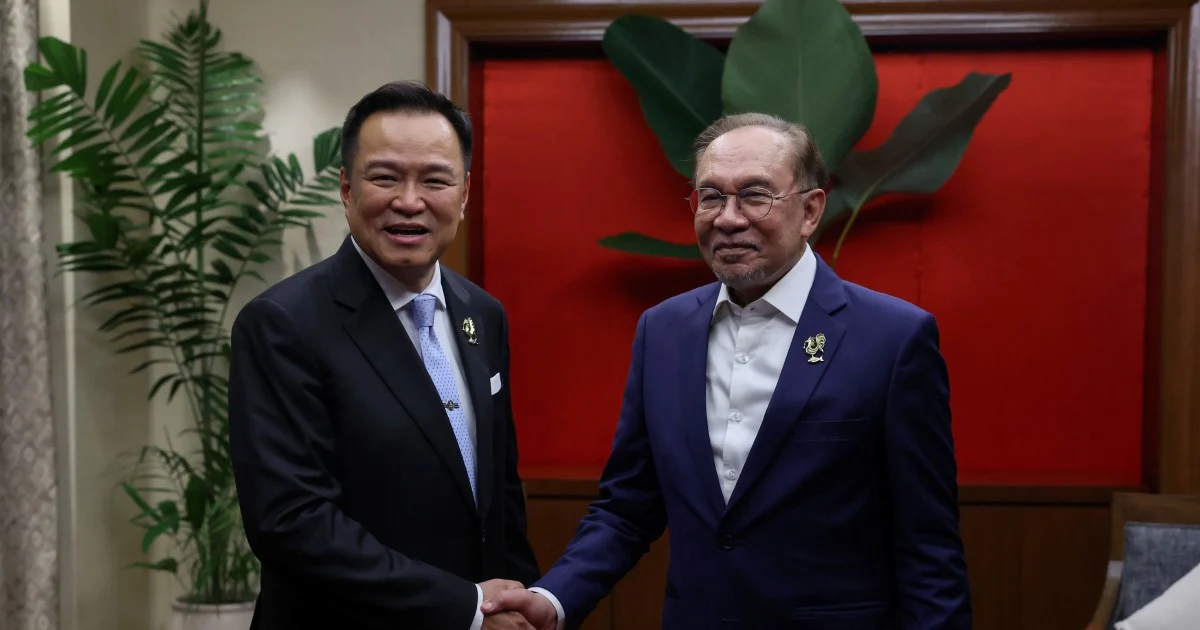
Thai Prime Minister Anutin Charnvirakul will arrive in Malaysia on July 9 for a two-day official visit that underscores the deepening engagement between Bangkok and Kuala Lumpur on matters critical to both nations' development and stability. The visit, which concludes on July 10, has been scheduled amid a period of significant regional activity and will bring together Anutin and Prime Minister Datuk Seri Anwar Ibrahim for what officials anticipate will be substantive negotiations addressing longstanding bilateral concerns.
The timing of this high-level engagement reflects the urgency with which both governments view their relationship. Thailand and Malaysia share an extensive land border and maritime zones, creating natural dependencies on security cooperation and joint resource management. The two countries have maintained diplomatic ties since Thailand's independence, yet the contemporary operating environment demands fresh approaches to shared challenges that have evolved significantly in recent years.
Border security considerations are expected to feature prominently in the bilateral agenda. The southern Thai provinces of Yala, Pattani, and Narathiwat have experienced prolonged instability tied to separatist movements and transnational criminal networks, challenges that inevitably ripple across into northern Malaysian territories. Coordinated intelligence-sharing, joint patrol operations, and harmonised law enforcement protocols represent areas where both nations can amplify their individual capacities through institutional cooperation. The porous nature of the border and the movement of contraband, illicit weapons, and persons of interest across it necessitates regular high-level dialogue to refresh operational frameworks.
Beyond immediate security preoccupations, economic cooperation stands as a strategic pillar of the relationship that both capitals are keen to strengthen. Thailand maintains significant manufacturing capabilities and agricultural output, while Malaysia serves as a crucial logistics hub and financial centre for the region. Complementarities in their economic structures suggest considerable scope for expanded trade and investment partnerships. Supply chain resilience, particularly following global disruptions, has incentivised both countries to explore deeper integration in sectors ranging from automotive components to food processing and electronics assembly.
The bilateral trade relationship, while substantial, remains susceptible to fluctuations driven by global commodity cycles and regional competitiveness dynamics. Malaysian companies operating in Thailand and Thai enterprises with operations in Malaysia represent a growing nexus of private-sector engagement that requires stable regulatory environments and clear frameworks. Prime Minister Anwar Ibrahim has previously emphasised the importance of intra-ASEAN economic integration as a counterweight to extraregional economic pressures, and enhanced Malaysia-Thailand collaboration aligns with this broader strategic vision.
Regional geopolitical developments provide additional context for the visit. Both countries occupy pivotal positions within the Association of Southeast Asian Nations and face comparable pressures regarding great power engagement, supply chain reconfiguration, and the management of traditional maritime security concerns. The Indian Ocean and the Andaman Sea, which border Thailand's western coast, carry strategic significance for regional maritime traffic and resource access. Coordinated positioning on regional issues, including discussions within ASEAN forums, benefits from regular top-level consultations that allow prime ministers to align on common interests and identify areas of potential friction before they escalate.
Previous interactions between Thai and Malaysian leadership have addressed labour migration, a perennial issue given the substantial numbers of Thai nationals employed in Malaysian construction, agriculture, and manufacturing sectors. Protecting worker welfare, preventing trafficking, and ensuring fair employment practices require continuous dialogue and occasional dispute resolution mechanisms. Prime Minister Anutin's government has made labour rights a priority concern, and alignment with Malaysian authorities on protecting Thai citizens abroad strengthens both nations' adherence to international labour standards.
Tourist flows between the two countries represent another economic dimension worth noting. Malaysia and Thailand are among Southeast Asia's premier tourist destinations, and facilitating travel, improving visa procedures, and promoting cross-border tourism packages generate substantial economic benefits for both. Enhanced coordination on tourism promotion and infrastructure development can amplify these mutual gains, particularly as regional travel rebounds following pandemic-related disruptions.
The visit also occurs within a broader context of Thailand's evolving political dynamics. Prime Minister Anutin, a veteran politician and deputy prime minister under previous administrations before assuming the premiership, brings considerable diplomatic experience and understanding of Malaysia's complexities. His counterpart, Prime Minister Anwar Ibrahim, similarly brings extensive exposure to Thai affairs through his long political career and previous engagements with Bangkok. This convergence of experienced leadership facilitates productive dialogue grounded in realistic assessments of shared interests and constraints.
Both governments are acutely aware that sustained regional stability depends upon the smooth functioning of bilateral relationships among major ASEAN members. Malaysia and Thailand, as regional anchors with substantial populations and economic weight, bear particular responsibility for modeling constructive engagement. The July visit provides an opportunity to demonstrate this commitment through concrete outcomes—whether in the form of joint initiatives, renewed memoranda of understanding, or revised operational protocols addressing emerging challenges.
Looking forward, the success of this visit may establish momentum for additional high-level exchanges and technical-level working groups to implement agreed priorities. The substantive engagement expected on border security and economic cooperation signals that both Bangkok and Kuala Lumpur recognise these as foundational issues requiring ongoing attention. Should the discussions yield tangible results and commitments, they would reinforce the diplomatic architecture supporting Malaysia-Thailand relations and contribute meaningfully to broader Southeast Asian stability and prosperity.

