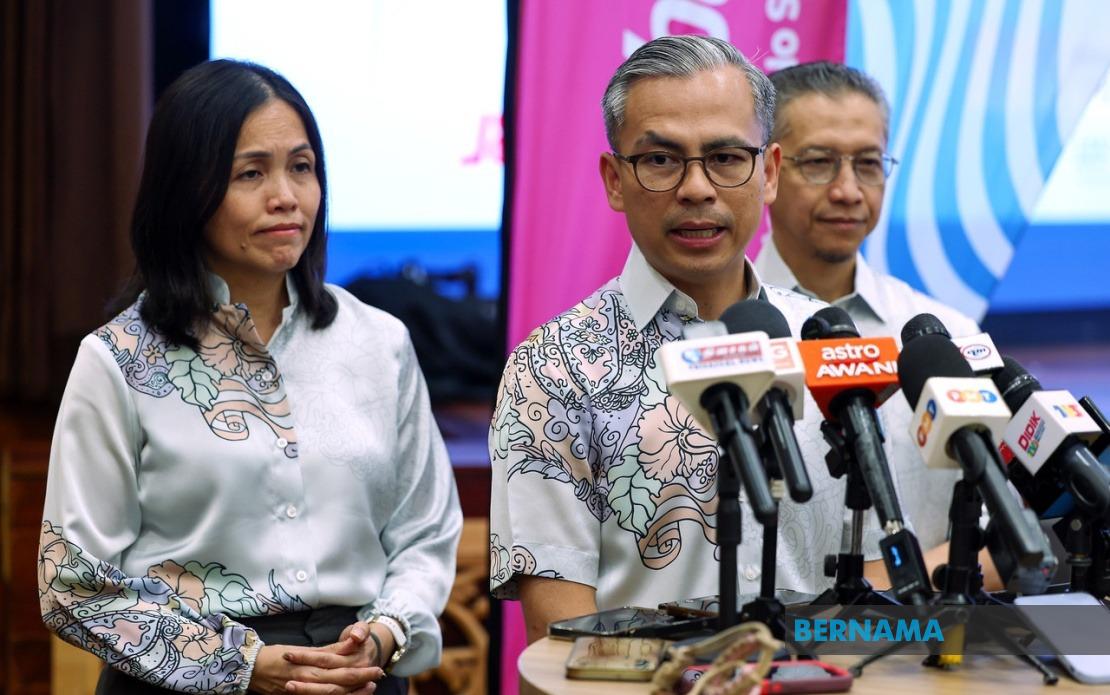
The Royal Commission of Inquiry report documenting governance failures at Lembaga Tabung Haji will move into formal criminal investigation following its handover to law enforcement and financial oversight bodies, Communications Minister Datuk Seri Fahmi Fadzil announced. The decision represents the government's transition from the public inquiry phase into active prosecution pathways, with the report now entering the hands of multiple agencies equipped with investigative and enforcement powers.
Fahmi confirmed that the Royal Malaysia Police, Malaysian Anti-Corruption Commission, Bank Negara Malaysia, and the Inland Revenue Board will each receive the RCI report to conduct independent investigations based on its comprehensive findings and the additional information presented during parliamentary debate. Agencies responsible for administering the Anti-Money Laundering, Anti-Terrorism Financing and Proceeds of Unlawful Activities Act will also participate in the investigation framework. This multi-agency approach reflects the complexity of the TH situation, which spans potential criminal conduct, financial irregularities, and regulatory breaches across multiple jurisdictions of authority.
The RCI report, made public on July 29, illuminated a decade of institutional dysfunction at the Islamic pilgrimage fund manager covering the 2014-2020 period. The inquiry identified management weaknesses and operational failures across the organization's structure and documented 25 specific recommendations for remedial action. As of the report's release, Tabung Haji had already implemented approximately 75 per cent of these recommendations, suggesting that internal corrective measures had begun before the formal investigation process commenced.
Parliamentary proceedings the day before Fahmi's announcement provided additional context for investigators. Finance Minister II Datuk Seri Amir Hamzah Azizan and Minister in the Prime Minister's Department (Religious Affairs) Dr Zulkifli Hasan both presented supplementary briefings during the special Dewan Rakyat session on the RCI findings, introducing material that investigators will now examine in conjunction with the main report. This additional parliamentary record becomes part of the investigative package, potentially including details that did not make their way into the public inquiry document.
Fahmi's comments came as some lawmakers from both governing Pakatan Harapan and opposition Barisan Nasional benches have called for establishing a second RCI to examine the period from 2021 onwards, suggesting that governance issues may have continued beyond the scope of the current inquiry. When asked about this proposal, Fahmi noted that any new RCI would require both Cabinet approval and the consent of Yang di-Pertuan Agong, establishing the high constitutional threshold required for such an undertaking. The question of whether additional institutional failures occurred in the subsequent five-year period remains unresolved, though authorities now possess the framework to investigate such matters through conventional law enforcement channels.
The announcement occurred against a backdrop of parliamentary theatre that underscored political divisions over the RCI process itself. Parti Pribumi Bersatu Malaysia MPs attended the special sitting and debate, which Fahmi characterized as demonstrating political maturity and responsibility. By contrast, several Perikatan Nasional opposition MPs boycotted the proceedings entirely, staging a walkout to protest Speaker Tan Sri Johari Abdul's decision to proceed with the briefing and debate despite the absence of Prime Minister Datuk Seri Anwar Ibrahim from the chamber. Fahmi seized on this absence to make a pointed observation about accountability.
The Communications Minister expressed particular frustration with opposition parties' non-participation, noting that PAS members and the current Leader of the Opposition Datuk Seri Hamzah Zainudin held Cabinet positions when the RCI was originally established in 2021. That original decision to commission the inquiry occurred under the previous administration when these politicians wielded executive authority. Fahmi questioned why they would subsequently refuse to engage with the inquiry's outcomes, characterizing their boycott as an evasion of accountability for their roles during the period under investigation. Thirty-nine MPs ultimately participated in the debate before the walkout occurred.
The transfer of the RCI report to law enforcement marks a significant threshold in addressing what has become a prominent symbol of institutional failure within Malaysia's Islamic finance sector. Tabung Haji serves millions of Muslim Malaysians saving for the hajj pilgrimage, making its governance a matter of religious trust and national economic concern. The documented weaknesses spanning six years under previous management raised questions about the adequacy of religious body oversight and prompted broader scrutiny of how pilgrimage funds are stewarded across Muslim-majority nations.
For Southeast Asian observers, the TH RCI process illuminates Malaysia's approach to investigating state-linked institutions and the enforcement mechanisms available when governance lapses occur. The decision to refer findings to multiple agencies simultaneously rather than concentrating authority in a single body reflects institutional checks intended to prevent political interference in investigation outcomes. However, the parliamentary divisions evident during the RCI debate discussion suggest that investigators will operate within a contested political environment where different factions interpret the findings through opposing lenses.
The investigation phase will determine whether documented institutional weaknesses constitute criminal conduct warranting prosecution or whether remedial measures and future oversight sufficiently address governance deficiencies. Bank Negara Malaysia's involvement suggests particular focus on financial regulation and prudential standards, while MACC participation indicates scrutiny of potential corruption or abuse of authority. The IRB's role may encompass tax compliance and financial reporting accuracy. Together, these agencies possess tools to pursue enforcement actions ranging from civil penalties to criminal prosecution depending on their findings.
The months ahead will reveal whether the investigation process uncovers individual accountability or concludes that institutional failures were systemic rather than attributable to specific misconduct. Malaysian observers have noted that institutional inquiries frequently identify structural problems without necessarily resulting in individual prosecutions, particularly when officials have already retired or assumed new positions. The RCI's scope limitation to 2014-2020 also means that any continuing problems in subsequent years fall outside its purview unless authorities initiate separate investigations.
For Malaysian Muslims and the broader public, the investigation transition represents movement toward concrete accountability rather than the investigatory ambiguity that characterized the RCI process itself. Whether that investigation yields meaningful consequences for identified failures will substantially shape public confidence in both the Islamic finance sector and government institutions' capacity to oversee state-linked bodies effectively. The coming months will test whether Malaysia's law enforcement infrastructure can translate documented institutional weakness into enforceable legal outcomes.

