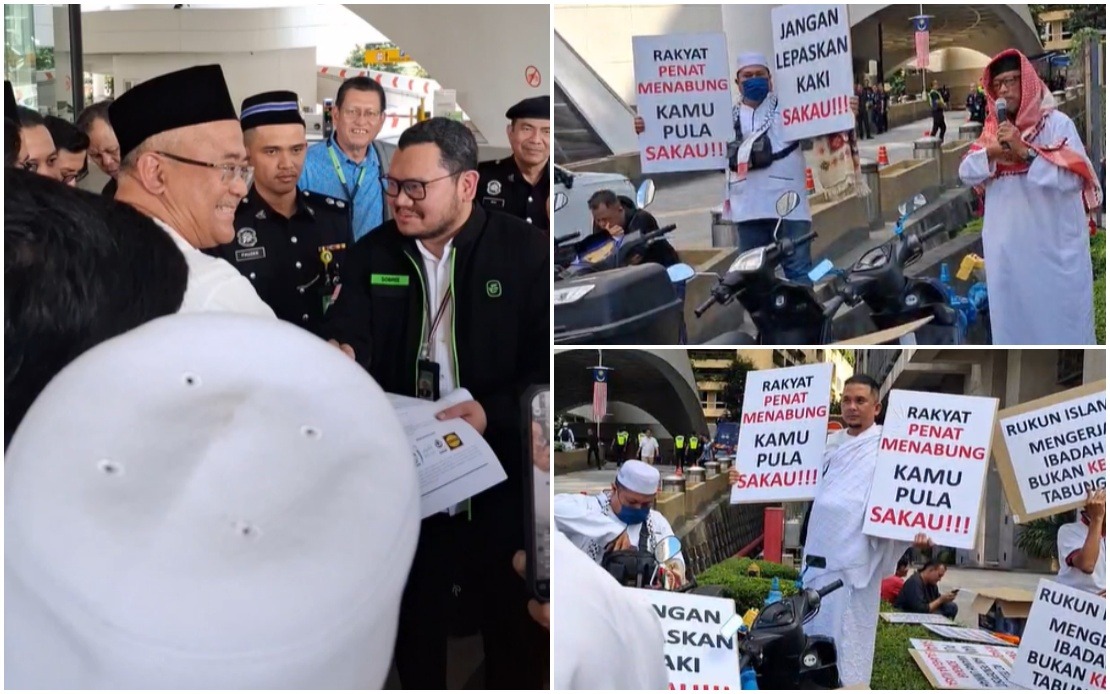
The chairman of MADANI has emphasized that investigations stemming from the Royal Commission of Inquiry into Lembaga Tabung Haji must proceed without any form of political obstruction or pressure from interested parties. Amir Zuhair Abdull Khalid made these remarks at a solidarity gathering held outside Menara TH in Kuala Lumpur, underscoring the critical importance of maintaining procedural integrity as authorities work through the RCI's extensive findings covering the period from 2014 to 2020.
The RCI report has brought to light numerous irregularities and governance concerns spanning nearly seven years of TH operations, a period marked by significant institutional and administrative challenges. Rather than allowing these matters to become entangled in partisan political disputes, Amir Zuhair stressed that the focus must remain on addressing substantive wrongdoing through established legal mechanisms. He called upon the Prime Minister to proceed with appropriate action while simultaneously ensuring that investigative bodies, particularly the Malaysian Anti-Corruption Commission, operate without external interference or pressure from any quarter.
The nature of the alleged violations extends beyond conventional administrative oversight concerns. Amir Zuhair highlighted that the RCI investigation has uncovered allegations suggesting political interference influenced governance decisions and the selection of board members during the period under review. This finding carries particular weight given that Tabung Haji manages the savings and pilgrimage funds of millions of Malaysian Muslims, making the integrity of its operations a matter of significant religious and social importance. The breach of trust extends directly to depositors who entrusted their resources to an institution operating under Islamic principles and governance standards.
Central to Amir Zuhair's position is the principle that culpability must be determined exclusively through the judicial process rather than through public pronouncements or political claims of innocence. He acknowledged that individuals implicated in the RCI's findings will likely deny wrongdoing, but emphasized that only the courts possess the authority and institutional capacity to reach conclusive determinations based on evidence presented during proper prosecution. This separation between investigative process and judicial determination represents a fundamental safeguard against politically motivated outcomes and ensures that any convictions rest on legally substantiated grounds.
The MADANI coalition chairman issued an explicit warning against external pressure or interference in the ongoing investigative efforts. This admonition carries particular weight given Malaysia's history of institutional independence challenges and perceptions that certain investigations have been subject to political manipulation. By firmly stating that those found culpable must face prosecution in court, Amir Zuhair attempted to establish a clear boundary between political commentary and the serious business of accountability. He framed the issue not as a matter of political point-scoring but as a fundamental question of institutional integrity and public trust.
Parallel to these statements, the Malaysian Islamic Movement Coalition, commonly known as HIKAM, alongside a broader coalition of Islamic non-governmental organisations, submitted a comprehensive ten-point agenda addressing multiple dimensions of the TH crisis. These demands encompassed immediate commencement of legal proceedings against implicated parties, aggressive asset recovery initiatives to restore losses incurred by depositors, and systematic implementation of the RCI's numerous recommendations designed to prevent future occurrences. The coalition's involvement reflects the deep concern within Malaysia's Islamic civil society regarding the management of funds entrusted to TH under faith-based principles.
HIKAM itself comprises four significant Islamic organisations: WADAH, IKRAM, HALUAN, and ABIM, collectively representing substantial constituencies within Malaysia's Muslim community. The participation of these organizations in demanding accountability underscores that the TH matter transcends partisan political boundaries and has generated genuine grassroots concern about institutional governance and fiduciary responsibility. Their submission of formal demands to authorities suggests that civil society actors are determined to maintain public pressure for concrete outcomes rather than allowing the matter to fade from public attention.
The submission also emphasized the continuation of governance reforms under the current MADANI government framework, reflecting an implicit acknowledgment that institutional restructuring must accompany individual accountability measures. Without systemic changes addressing the weaknesses that permitted irregularities during 2014 to 2020, merely prosecuting individuals would fail to address root causes. This comprehensive approach suggests that stakeholders recognize the need for both personnel accountability and institutional transformation to restore confidence in TH's management structures.
For Malaysian depositors and the broader Muslim community, these developments signal a critical juncture in determining whether accountability mechanisms will function effectively or whether institutional reform will be subordinated to political considerations. The RCI's findings have already documented systematic failures spanning seven years, involving substantial sums belonging to millions of individuals. The manner in which investigations proceed and the speed with which legal action materializes will substantially influence public confidence in institutions and government commitment to the rule of law.
The emphasis on transparency and freedom from interference also reflects broader concerns about institutional independence in Malaysia's governance ecosystem. When senior political figures feel compelled to explicitly warn against interference in investigations, it suggests historical concerns about politically selective enforcement and institutional autonomy remain relevant. By staking out this position publicly, MADANI leadership appears to be attempting to establish political cover for rigorous investigations, signaling to supporters that accountability will proceed regardless of political consequences.
The coming months will test whether this rhetorical commitment to independent investigation translates into concrete action. The complexity of examining transactions across seven years involving multiple institutional layers suggests investigations could extend considerably. Depositors who have already lost confidence in TH management will be watching closely for evidence that authorities are pursuing accountability with genuine vigor rather than engaging in performative gestures that ultimately shield powerful individuals from consequences.

