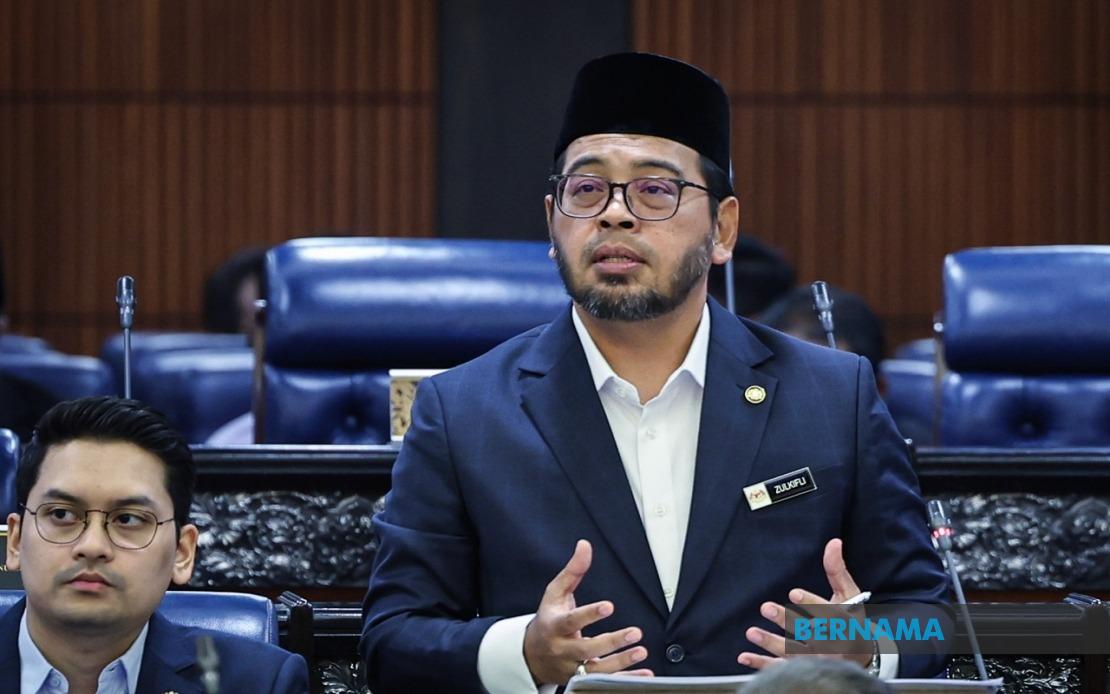
The financial collapse of Tabung Haji, Malaysia's pilgrimage savings institution, need never have reached crisis point had its leadership responded promptly to repeated regulatory alerts from Bank Negara Malaysia, according to Minister in the Prime Minister's Department (Religious Affairs) Dr. Zulkifli Hasan. Speaking during parliamentary debate on a Royal Commission of Inquiry report into the organisation, Zulkifli outlined how five formal warning letters dispatched between August 2014 and September 2016 flagged growing vulnerabilities in the fund's financial position, reserve adequacy, and liquidity framework—issues that went largely unaddressed at senior management level.
The cumulative effect of institutional negligence became stark when Tabung Haji's deficit ballooned to approximately RM10 billion by late 2018, ultimately forcing the government to mount a costly rescue operation. Zulkifli's assessment underscores a troubling pattern: regulatory oversight mechanisms, while functioning as intended, proved ineffective because the institution receiving the warnings failed to translate them into meaningful corrective action. Bank Negara Malaysia, in its capacity as supervisor of non-bank financial entities, had engaged directly with TH's leadership and board, discussing remedial steps. Yet despite these conversations, the structural problems identified in 2014 persisted and deepened over the following four years.
A particularly egregious form of mismanagement involved the declaration of dividend distributions—styled as hibah—when the institution's assets fell short of its liabilities, a practice that continued through 2017 and flagrantly violated Section 22 of the Tabung Haji Act. This meant the fund was effectively distributing money it did not possess to its depositors, masking the true extent of financial deterioration behind the facade of routine dividend payments. The Royal Commission's findings reinforced this assessment by concluding that Tabung Haji should never have received an unqualified audit certificate; instead, the auditors should have issued a qualified opinion flagging the serious governance lapses and accounting irregularities as matters of non-compliance rather than mere emphasis.
Zulkifli's remarks carry particular weight for Malaysian depositors, many of whom are middle-to-lower-income citizens saving for hajj pilgrimages through automatic salary deductions. The institution holds profound cultural and religious significance beyond its financial function, making the loss of trust especially damaging. Depositors who believed their savings were managed prudently and safely discovered instead that their contributions had been deployed in questionable investments while dividends were paid from an empty coffers. This betrayal of confidence has broader implications for public trust in government-linked financial institutions and raises questions about whether regulatory warnings alone can prevent institutional failure when governance cultures are fundamentally compromised.
The minister outlined a series of remedial commitments intended to restore the institution's stability and credibility. Amendments to the Tabung Haji Act 1995 will be expedited to strengthen governance frameworks and internal controls. Forensic auditing has already commenced on investments highlighted in the RCI report as potentially problematic. Additionally, the government is receptive to establishing a Multi-Agency Task Force that would systematically investigate each at-risk investment portfolio and pursue asset recovery where wrongdoing is identified. These measures represent a recognition that administrative reorganisation and tighter oversight are essential, yet they also implicitly acknowledge that the previous regulatory architecture proved insufficient to prevent misconduct.
The parliamentary debate itself—lasting more than ten hours with 39 MPs participating—reflected genuine concern across political constituencies about both the immediate crisis and the systemic vulnerabilities it exposed. Speaker Tan Sri Johari Abdul noted that a third parliamentary session dedicated to the matter would convene in October, signalling that legislators intend to maintain scrutiny beyond today's proceedings. This extended engagement suggests that the TH affair has transcended partisan considerations to become a matter of institutional accountability that commands cross-party attention.
For regional observers, the Tabung Haji episode offers sobering lessons about the limits of regulatory authority when boards and management lack sufficient accountability mechanisms or are captured by vested interests. Malaysia's supervisory agencies, including Bank Negara Malaysia, possess substantial technical capacity and legal instruments, yet early warnings proved impotent because they operated within a system where board-level resistance or indifference went unpunished. This dynamic is not unique to Malaysia but reflects broader governance challenges across Southeast Asia, where state-linked enterprises sometimes operate with insufficient board independence or external accountability.
The scale of the government bailout—necessary to prevent depositors from losing their savings entirely—ultimately fell on taxpayers, many of whom had no connection to Tabung Haji. This hidden cost of institutional mismanagement underscores why early intervention becomes crucial; delayed action transforms a containable problem into a fiscal emergency requiring emergency capital injection. Had Tabung Haji's leadership implemented the reforms urged by Bank Negara Malaysia in 2014 or 2015, the trajectory could have been fundamentally altered, potentially avoiding the need for government rescue altogether.
Minister Zulkifli's emphasis on enforcement action and asset recovery indicates that the government's response is moving beyond admission of failure toward attribution of responsibility. Forensic investigations are expected to identify individuals and entities whose decisions or misconduct contributed to the crisis, establishing a foundation for potential legal or disciplinary consequences. This forward-looking dimension matters significantly, as it signals to market participants and depositors that institutional failure will not simply be absorbed and forgotten but will trigger investigation and accountability.
The amendments to the Tabung Haji Act represent the regulatory and legislative dimension of recovery. Proposed changes will presumably enhance board independence, tighten dividend distribution rules, and strengthen the powers of oversight bodies to intervene earlier when warning indicators emerge. These legislative adjustments reflect hard-won lessons about the inadequacy of existing provisions, which permitted dividend distributions from an underwater balance sheet and allowed boards to disregard regulatory warnings without facing formal consequences.
Governance improvements already implemented by Tabung Haji will be completed through the legislative amendments. These include enhanced internal audit functions, clearer reporting lines to the board, and presumably revised investment governance protocols that prevent the concentration of decision-making authority that characterised the pre-crisis period. The cumulative package—forensic investigation, asset recovery efforts, institutional governance overhaul, and legislative reform—represents an attempt to extract systemic learning from a costly failure.
For Malaysian savers and the broader public, the key test will be whether these measures prevent recurrence. Trust in government-linked institutions depends not merely on their survival but on demonstrable improvement in management quality and regulatory responsiveness. The TH crisis revealed that formal warning letters, while necessary, are insufficient without institutional cultures capable of receiving them seriously and translating them into action. As parliament moves toward its third session on this matter in October, the implementation of promised reforms will determine whether Malaysia's regulatory and governance systems have genuinely learned from this episode or merely responded to political pressure with cosmetic adjustments.

