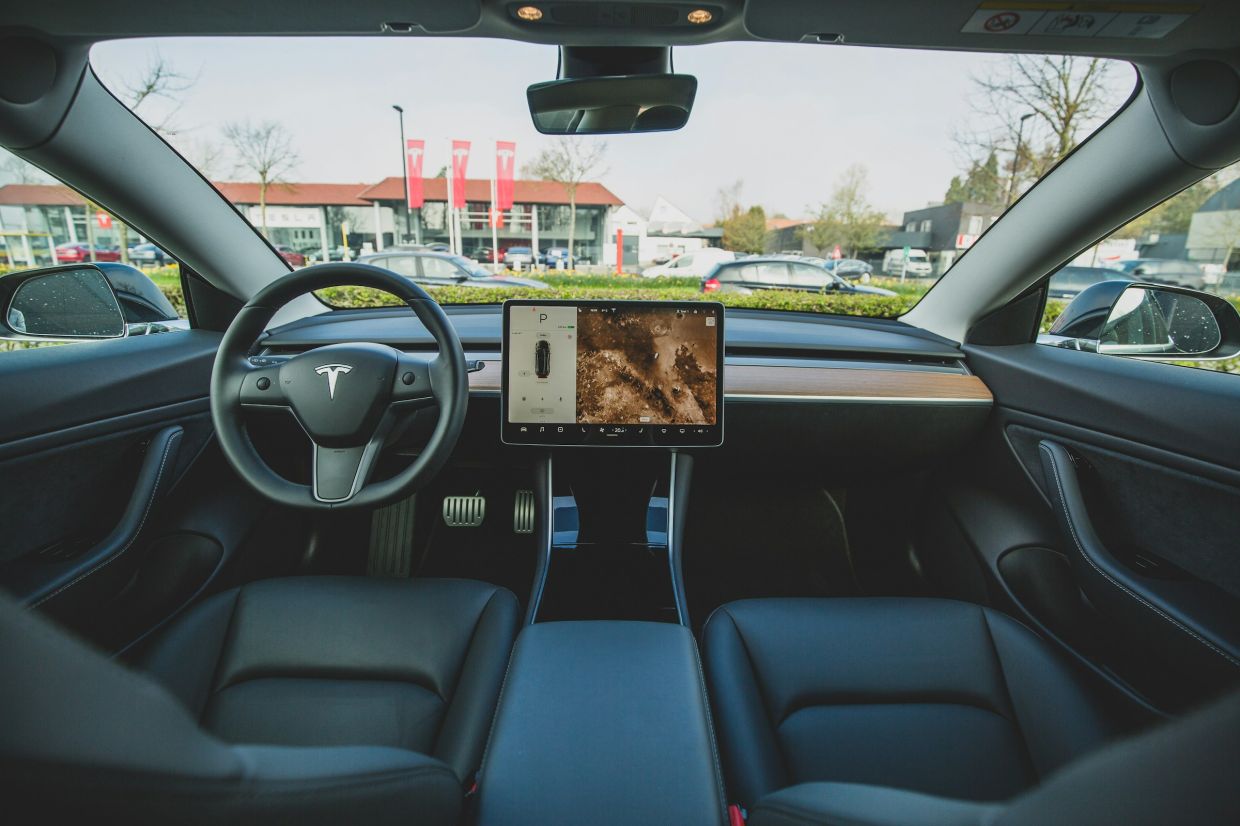
Tesla has quietly resolved a lawsuit stemming from a deadly 2023 crash that triggered a defect investigation into the company's autonomous-driving capabilities. The settlement marks a significant moment for the electric-vehicle maker as its chief executive officer Elon Musk increasingly stakes the company's future on driverless vehicles and robotaxi technology.
The collision that prompted the lawsuit occurred on an Arizona highway when 71-year-old Johna Story was struck by a Tesla Model Y SUV operating under the company's Full Self-Driving system. Story had exited her vehicle to help manage traffic around several cars that had already crashed due to intense sun glare reflecting off the road surface. The subsequent impact proved fatal, making her death the first publicly confirmed pedestrian fatality directly attributed to Tesla's automated-driving technology.
Story's daughter pursued legal action against both Tesla and the vehicle's operator following her mother's death, seeking accountability for what had occurred. Dustin Birch, the attorney representing Story's family, confirmed in recent communications that the case had settled, noting that his client was satisfied with being able to move past the incident. However, neither party disclosed the settlement terms, and Tesla declined to comment when approached by journalists about the resolution.
The crash itself assumed greater significance within the broader context of American road safety. While Story's death was tragic in its individual circumstances, it occurred within the backdrop of 40,901 total fatalities recorded on United States roads that year, underscoring the scale of vehicular accidents across the nation. What distinguished this particular incident was its direct connection to an emerging technology that millions of drivers were beginning to encounter on public roads.
The incident immediately drew the attention of federal regulators responsible for vehicle safety. The National Highway Traffic Safety Administration opened a formal investigation to determine whether the Full Self-Driving system posed an unacceptable risk to public safety. This inquiry expanded significantly in 2024, with NHTSA escalating its examination to what it termed an engineering analysis—a more intensive phase of investigation designed to identify specific technical deficiencies rather than merely establishing whether a problem exists.
Regulatory findings have revealed concerning patterns in how Tesla's cameras and detection systems perform under challenging visibility conditions. NHTSA has expressed particular alarm about the technology's apparent inability to reliably detect or alert drivers when facing degraded visibility from sun glare, dust storms, or fog. In multiple crash incidents that regulators reviewed, the Full Self-Driving system failed to identify ordinary roadway obstacles until moments before collision, leaving insufficient time for human intervention.
The breadth of the problem extends beyond the original fatal incident. NHTSA's detailed examination uncovered additional crashes occurring in similar environmental conditions where the system either failed to recognize that visibility was degraded or failed to issue timely alerts that would have given drivers adequate warning to respond. In each documented case, the Full Self-Driving technology also lost its ability to track or entirely failed to detect lead vehicles directly ahead in its path, suggesting fundamental limitations in how the system processes visual information under stress.
For Tesla and Musk, the Full Self-Driving system represents far more than an incremental product improvement. The company has positioned autonomous-driving technology as central to its long-term strategy, seeking regulatory approvals in multiple countries for various implementations of the system. Robotaxis, which would operate without human drivers, remain a stated priority for Tesla's commercial future. This means that regulatory findings questioning the technology's safety profile have implications that extend well beyond individual cases to Tesla's strategic vision and competitive positioning.
Response from Tesla executives has acknowledged some of the underlying issues while suggesting remedies are underway. During an earnings conference call in April, company leadership disclosed that older Tesla vehicles have been fitted with new camera systems to address the visibility and detection problems that NHTSA had identified. Tesla has stated that it maintains ongoing cooperation with federal regulators and continues to work toward resolving the agency's concerns.
The situation presents a complex challenge for both regulators and the company. NHTSA must determine whether current limitations in the Full Self-Driving system render it unsuitable for deployment on public roads, while Tesla seeks to advance autonomous capabilities despite documented safety gaps. For Malaysian and Southeast Asian consumers who may eventually encounter Tesla vehicles equipped with this technology, the federal investigation outcome will carry significant weight in determining what safety standards manufacturers must meet before deploying automated systems in the region.
The settlement of Story's case, while providing closure to her family, does not resolve the underlying technical questions that NHTSA's investigation continues to examine. The regulatory probe remains active and may ultimately result in requirements for more substantial modifications to Tesla's autonomous-driving systems or restrictions on their deployment in certain conditions. How these federal investigations conclude will shape not only Tesla's future direction but also the broader regulatory framework governing autonomous vehicles across the industry.

