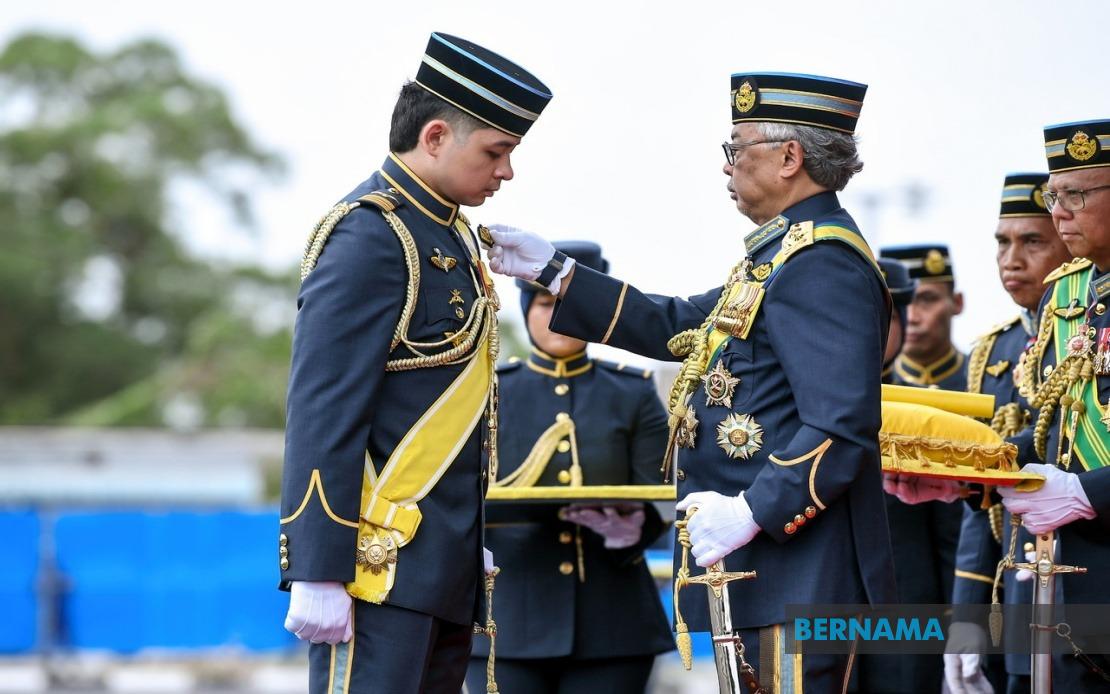
The Tengku Mahkota of Pahang, Tengku Hassanal Ibrahim Alam Shah Ibni Al-Sultan Abdullah Ri'ayatuddin Al-Mustafa Billah Shah, has achieved a historic milestone by becoming the first member of the royal family to successfully complete the Royal Malaysian Air Force's rigorous Basic Helicopter Flying Course at the Air College in Alor Setar. The accomplishment underscores the royal family's commitment to active participation in national defence and military traditions, setting a notable precedent for institutional involvement at the highest echelons of the state.
The formal recognition of this achievement came during the 2026 Flying Wings Presentation Parade, held at the Air College parade ground, where the Sultan of Pahang conferred flying wings upon the Tengku Mahkota alongside 39 other graduates from Malaysia's armed forces. As Colonel-in-Chief of the RMAF, Al-Sultan Abdullah Ri'ayatuddin Al-Mustafa Billah Shah personally presided over the ceremony, underlining the significance of the occasion within military and royal circles. The presentation of wings represents far more than a ceremonial honour; it constitutes formal recognition of combat readiness and professional competence in one of the nation's most demanding technical roles.
The flight training pipeline that produced these 40 graduates encompassed four distinct specialisation tracks within the air force's pilot development system. These included two separate cohorts undergoing basic helicopter instruction, a fixed-wing basic flying programme, and a weapons systems officer training stream. The Tengku Mahkota specifically completed the 67(A)/26 Basic Helicopter Flying Course, which operated between early June and the end of July using the EC120B Colibri helicopter platform. This particular aircraft type, known for its reliability and pedagogical effectiveness, provided an appropriate training environment for developing fundamental rotorcraft skills.
The coursework itself involved multiple assessment phases that progressively challenged the trainees' capabilities across different flight regimes and scenarios. Participants were required to demonstrate competency in Basic Handling Tests, which evaluate fundamental control inputs and aircraft responsiveness. Instrument Flying Tests assessed the ability to navigate and operate safely when visual references are unavailable, a critical capability for modern military aviation. Final Navigation Tests required precision in route planning and execution, while Final Handling Tests consolidated all skills into comprehensive flying performance evaluations. The Tengku Mahkota's successful navigation through this demanding sequence of assessments affirms not merely ceremonial participation but substantive technical achievement.
Beyond the principal honour recipients, the ceremony recognised exceptional performers across the graduating cohorts through six additional awards acknowledging outstanding achievement in flying proficiency, academic performance, discipline, and leadership qualities. These supplementary recognitions highlight the air force's emphasis on holistic development, valuing not only stick-and-rudder skills but also intellectual capability and character formation. For Malaysia's military aviation community, this distinction system reinforces that pilot training encompasses far more than flying hours; it represents comprehensive professional development aligned with the institution's broader mission requirements.
Air Force Chief General Tan Sri Muhamad Norazlan Aris contextualised the graduates' achievements within a framework emphasising perseverance, fighting spirit, mental resilience, and disciplinary rigour. His remarks positioned the completion of flight training not as a culminating achievement but rather as the foundation for expanded responsibilities. He specifically noted that the families and support networks surrounding each graduate played instrumental roles in sustaining morale and commitment throughout the demanding training period. This acknowledgment reflects recognition within professional military structures that pilot development depends not merely on individual aptitude but on broader ecosystem support.
The symbolic weight of the flying wings themselves carries profound institutional meaning within the RMAF. As General Norazlan emphasised, the insignia worn upon the chest represents far more than technical certification; it embodies the honour, expectations, and collective trust reposed by the air force and the nation itself. For the Tengku Mahkota specifically, earning wings through the standard training pipeline rather than through honorary conferment carries particular significance, demonstrating commitment to institutional norms and professional standards. This approach strengthens the legitimacy of the honour and establishes precedent for future royal family participation in national defence institutions.
From a broader Malaysian defence perspective, the symbolic integration of senior royalty into active military training programmes carries implications for civil-military relations and institutional cohesion. When members of the highest constitutional rank demonstrate personal commitment to military professionalism through rigorous training, they reinforce the seriousness with which the institution regards its mission. This personal investment by the Tengku Mahkota signals to officers and personnel throughout the service that excellence and proper procedure remain paramount regardless of rank or status. The willingness to subject oneself to standardised testing and assessment procedures sends powerful messages about institutional culture.
The helicopter flying specialisation chosen by the Tengku Mahkota reflects an area of significant operational importance within regional defence frameworks. Rotorcraft capabilities support diverse missions ranging from transport and logistics through medical evacuation, search and rescue, and armed support roles. As Southeast Asian nations navigate increasingly complex security environments marked by transnational challenges, maritime security concerns, and disaster response requirements, helicopter capabilities remain strategically vital. The development of qualified pilots across the force structure, including participation by senior figures, ensures continued operational depth and institutional knowledge transfer across generations of aviation professionals.
Looking forward, the precedent established by the Tengku Mahkota's successful completion of formal pilot training may influence future approaches to royal family participation in national institutions. Rather than purely honorary or ceremonial roles, this model demonstrates the feasibility and value of substantive engagement with professional military development. For younger members of royal families across Southeast Asia monitoring institutional best practices, this approach offers a template for meaningful contribution to national defence and security frameworks while maintaining appropriate constitutional relationships.
The broader cohort of 39 other graduates represents Malaysia's ongoing investment in human capital development within its armed forces. These pilots and weapons systems officers will populate the operational force structure for decades to come, carrying forward the training standards and professional expectations established during their coursework. The diversity of their backgrounds within the three military services reflects integrated defence planning that recognises aviation capabilities as spanning air force, army, and naval domains. Their successful completion ensures continued operational capability and professional depth throughout the Malaysian Armed Forces' aviation enterprise.

