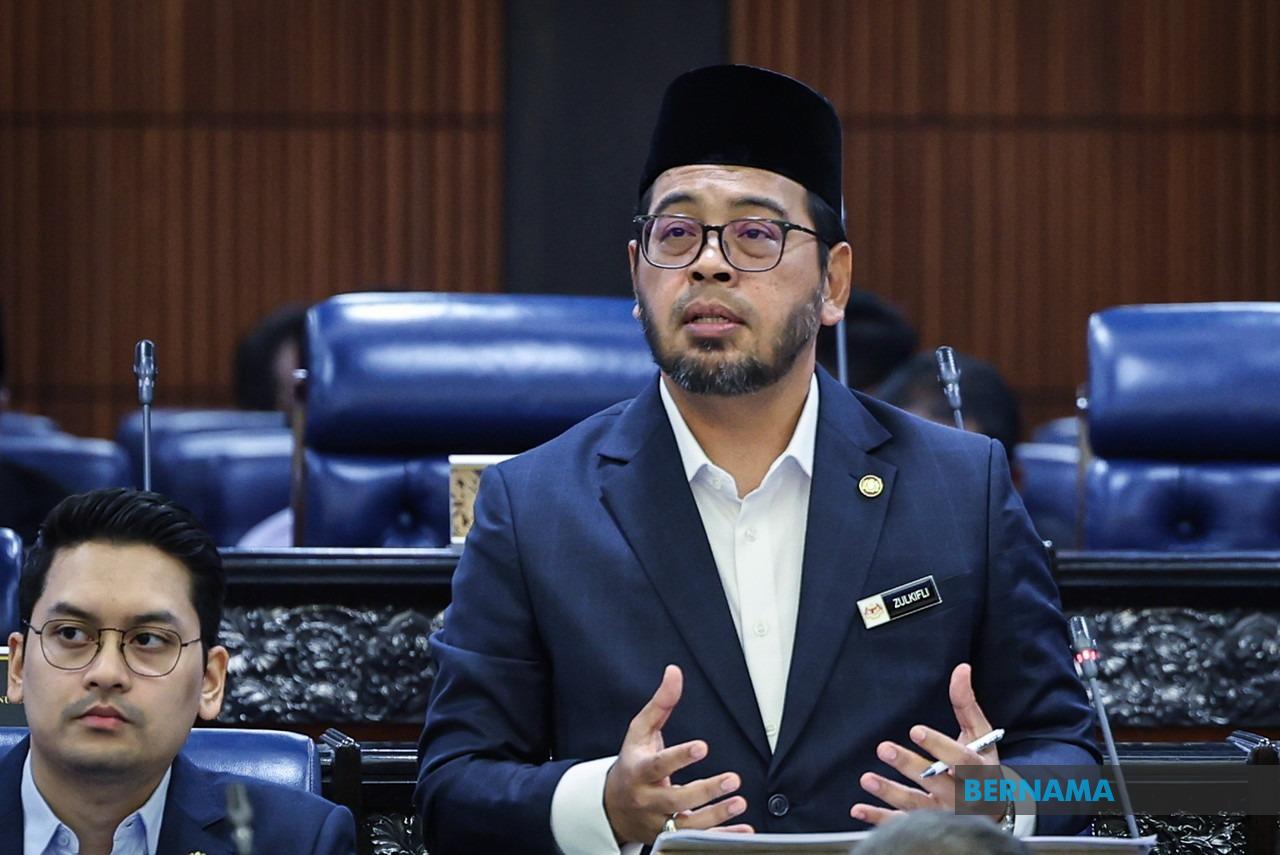
The recovery programme undertaken by Lembaga Tabung Haji over the past six years has delivered measurable improvements to the institution's financial health and operational capacity, according to Minister in the Prime Minister's Department (Religious Affairs) Dr Zulkifli Hasan during a parliamentary briefing on the Royal Commission of Inquiry findings. The transformation represents a critical milestone for an institution central to Malaysian Muslims' ability to fulfil one of Islam's Five Pillars, an undertaking that touches nearly two million registered depositors nationwide.
Dr Zulkifli outlined a comprehensive structural overhaul centred on nine foundational reform pillars, each addressing distinct vulnerabilities that had accumulated in Tabung Haji's operations. These initiatives encompassed stabilising and restructuring the institution's balance sheet, establishing transparent governance frameworks with robust accountability mechanisms, enhancing the calibre of investment decisions, and guaranteeing dependable dividend payments to the millions of Malaysians who have entrusted their savings to the organisation. This multifaceted approach signals recognition that Tabung Haji's challenges stemmed not from isolated failures but from systemic weaknesses requiring integrated solutions.
Central to the recovery narrative is the maintenance of haj pilgrimage affordability at RM33,300 across the 2024-2026 seasons, a remarkable achievement when contextualised against economic realities. The minister emphasised that inflation across the two-decade span from 2001 to 2023 had surged by 250 per cent, fundamentally altering the economics of international travel, accommodation, and services. That Tabung Haji has absorbed these cost pressures without proportional increases to pilgrims represents a deliberate policy choice, one requiring strategic negotiation and operational discipline throughout the supply chain.
The mechanism underlying this price stability reveals pragmatic management innovation. Rather than passively accepting airline pricing, Tabung Haji has secured long-term contracts that lock in airfares despite volatile fuel markets and currency fluctuations. Equally significant, the institution has bypassed conventional hotel intermediaries, negotiating directly with property owners in Mecca and Medina to secure premium accommodation at controlled rates. These moves simultaneously enhance pilgrims' experience through higher-standard facilities while managing expenditure, a balancing act that demonstrates how strategic procurement can serve both quality and affordability objectives.
Governance strengthening has extended beyond financial restructuring into the realm of operational excellence and international recognition. Tabung Haji's consecutive receipt of the Labaytum Diamond Award for two years, extending to five Labaytum awards cumulatively, positions the institution among hajj service providers globally. Such accolades carry significance beyond ceremonial value, serving as external validation of professional management standards and customer-centric operations. For Malaysian pilgrims and their families, these recognitions offer assurance that savings managed by Tabung Haji are overseen by an institution meeting world benchmarks in financial stewardship and service delivery.
The reform architecture incorporates an explicit commitment to autonomous professional leadership insulated from political interference, an aspiration particularly resonant given historical perceptions of governance lapses at major institutions. Dr Zulkifli's characterisation of current management as "professional and capable leadership" driven by strategic planning rather than external pressure suggests a structural recalibration emphasising merit-based decision-making. For a nation where public institutions occasionally struggle with political patronage, this trajectory carries broader implications beyond Tabung Haji's specific remit.
Depositore welfare stands as another reform pillar, reflecting acknowledgement that the institution's fundamental purpose is stewardship rather than accumulation. By guaranteeing continued dividend distributions alongside financial restructuring, Tabung Haji has avoided the false choice between healing balance sheets and meeting beneficiary expectations. This dual commitment requires rigorous capital management and investment discipline, ensuring that returns reflect genuine operational performance rather than accounting adjustments or unsustainable yield assumptions.
The broader context illuminates why Tabung Haji's recovery matters for Malaysian public discourse. As a custodian of religious savings and facilitator of a sacred obligation, the institution carries unique social weight transcending commercial banking relationships. Millions of Malaysians view their Tabung Haji accounts as vehicles for fulfilling spiritual commitments while building modest financial buffers. When governance falters at such an institution, the damage extends beyond balance sheets into erosion of public trust in institutional integrity. Conversely, demonstrated recovery provides reassurance about governance capacity across the public sector.
The timing of formal acknowledgement through the RCI report and ministerial parliamentary briefing signals institutional confidence in the durability of reforms undertaken. By transparently addressing historical challenges and quantifying reform outcomes, Tabung Haji's leadership has chosen accountability over defensiveness, a posture that rebuilds public confidence. For Malaysian Muslims planning pilgrimage over coming years, the affordability guarantee and service quality improvements translate into concrete benefits—manageable savings targets and enhanced experiences in sacred sites.
Regionally, Tabung Haji's stabilisation carries significance for Southeast Asia's Islamic financial ecosystem. As the world's largest and longest-operating Islamic pilgrimage savings institution, its recovery trajectory offers lessons for other nations developing similar mechanisms. The demonstrated feasibility of maintaining affordability while strengthening governance provides a blueprint alternative to institutions either compromising standards for accessibility or sacrificing affordability for financial robustness.
Moving forward, the sustainability challenge extends beyond current reform cycles. Demographic shifts, evolving pilgrimage demand, and macroeconomic volatility will test whether structural improvements prove resilient. The institution's professional leadership must continuously adapt investment strategies, negotiate supply contracts strategically, and maintain governance standards without reverting to complacency. Success requires ongoing institutional discipline and commitment to the foundational principles animating the current recovery programme, translating temporary reforms into permanent organisational culture.

