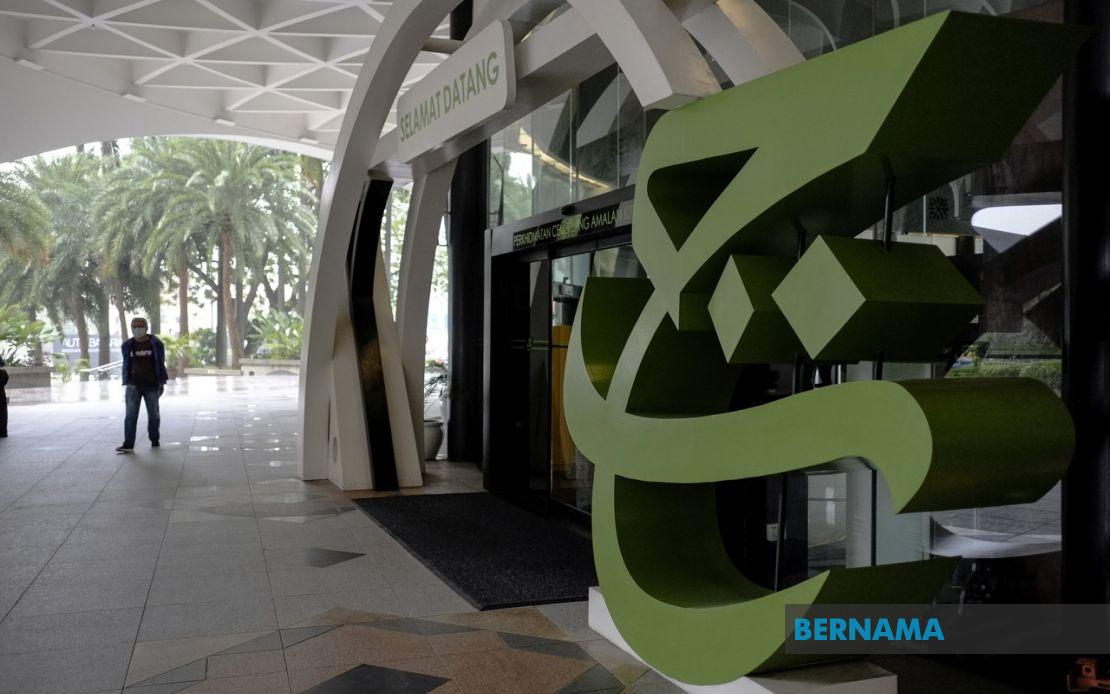
The Royal Commission of Inquiry into Tabung Haji has declared that the institution's comprehensive restructuring and recovery plan has substantially restored its financial health, clearing accumulated investment losses of RM12.6 billion that had threatened the savings of millions of Muslim depositors. The fully declassified RCI findings represent a milestone in resolving one of Malaysia's most significant financial scandals, validating the emergency intervention measures launched in 2018 that included asset transfers and government support mechanisms.
The recovery strategy operated on two tracks. A government-owned special purpose vehicle called Urusharta Jamaah Sdn Bhd (UJSB) absorbed RM10 billion of the losses through an ambitious asset transfer programme in 2018, while the remaining RM2.6 billion was progressively cleared through operational improvements and prudent management extending into 2025. This bifurcated approach allowed Tabung Haji to compartmentalise its most problematic holdings whilst refocusing on its core mandate of managing the annual hajj pilgrimage for Malaysian Muslims. The commission's validation of this strategy suggests Malaysian policymakers have successfully navigated a delicate balance between acknowledging past failures and charting a sustainable future.
Tangible evidence of recovery now appears in Tabung Haji's investment performance. Last year's investment income reached RM4.64 billion, marking the institution's strongest result since 2018 and demonstrating that operational turnaround efforts have gained genuine traction. More immediately for depositors, profit distributions have climbed steadily from just 1.25 per cent in 2018 to 3.5 per cent projected for 2025, restoring confidence among the hajj savings scheme's estimated ten million members who depend on these returns to fund their religious obligations.
Yet the RCI's optimism comes tempered with significant caveats that underscore the fragility of institutional reform in Malaysia. The commission noted that only 75 per cent of its recommendations have been implemented, leaving a quarter of prescribed governance improvements still pending. More troublingly, the report identified several structural vulnerabilities that the recovery plan has not fully addressed, suggesting that financial stabilisation alone does not guarantee long-term institutional health. These warnings carry particular weight given Tabung Haji's role as custodian of sacred savings for Malaysia's Muslim majority, making its failure unthinkable both financially and spiritually.
The asset transfer mechanism itself reveals how the recovery plan masked rather than resolved underlying asset quality problems. UJSB purchased RM19.9 billion in underperforming assets from Tabung Haji at a premium of RM10.2 billion above their RM9.7 billion market valuation, a massive subsidy effectively funded by the Malaysian taxpayer through government backing. This creative accounting, whilst necessary to preserve Tabung Haji's technical solvency, illustrates how governance failures in the original investment decisions necessitated extraordinary government intervention. The arrangement essentially socialised Tabung Haji's losses across the broader Malaysian economy.
Significantly, the RCI flagged as a central concern the government's capacity to sustain its financial commitments to UJSB indefinitely. The special vehicle issued sukuk bonds carrying annual profit rates of 4.05 and 4.10 per cent, backed by government letters of support that theoretically obligate the state to cover any shortfall. If the government becomes unable or unwilling to honour these commitments—a plausible scenario given Malaysia's constrained fiscal position and competing developmental priorities—Tabung Haji could face renewed financial stress without adequate cash reserves. This structural vulnerability suggests the recovery remains hostage to government budgetary discipline and political will across multiple electoral cycles.
Recent asset repurchases by Tabung Haji from UJSB demonstrate modest progress in unwinding the original crisis architecture. The institution recovered Tun Razak Exchange land at RM270 million, RM130 million below the original transfer price, whilst repurchasing UJ Estates oil palm operations for RM695 million, RM105 million below initial valuation. These transactions, occurring only after a fresh strategic review this year, suggest that UJSB's asset portfolio may now contain appreciating holdings, potentially enabling Tabung Haji to recover value over the longer term. However, the gradual pace of repurchases indicates neither party views urgent asset consolidation as feasible or desirable, indicating the separation of problem assets remains permanent strategy rather than transitional arrangement.
The RCI's findings underscore that governance and regulatory frameworks require fundamental overhaul to prevent repetition of the circumstances that generated the original crisis. The commission specifically highlighted weaknesses in corporate governance structures, the outdated Tabung Haji Act 1995, and inadequate risk management protocols as persistent vulnerabilities. These institutional deficits pre-date the investment losses and point toward deeper organisational culture issues that financial recovery alone cannot address. Strengthening these dimensions requires sustained political commitment to uncomfortable changes that may limit discretionary influence over the institution's management.
For Malaysian observers, Tabung Haji's recovery narrative offers cautionary lessons about institutional oversight and the enormous costs of delayed intervention. The RM12.6 billion loss represented catastrophic mismanagement spanning years before emergency measures commenced, suggesting that warning signs existed but were overlooked or suppressed. The subsequent need for government bailouts and asset transfers illustrates how financial crises in significant institutions ultimately burden taxpayers regardless of their religious affiliation, creating cross-community fiscal consequences from governance failures in religiously-specific organisations.
Moving forward, the RCI has essentially certified the recovery plan's tactical success whilst warning that operational stability remains contingent on completing reforms and maintaining government financial support. The remaining 25 per cent of unimplemented recommendations suggest bureaucratic inertia persists even with the crisis nominally resolved. Tabung Haji's future resilience ultimately depends on whether Malaysian policymakers treat the RCI findings as prompting genuine structural transformation or merely as justification for declaring victory prematurely.

