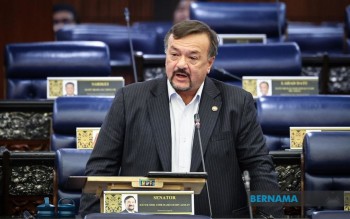
Malaysia's pilgrim fund Tabung Haji (TH) has been caught in a financial catastrophe spanning 14 failed investments totalling nearly RM13 billion in losses, with Finance Minister II Datuk Seri Amir Hamzah Azizan painting a grim picture of mismanagement and poor governance during parliamentary proceedings this week. The scale of the damage—amplified by the fact that seven investments resulted in complete wipeouts rather than partial losses—underscores systemic failures in the fund's investment oversight during the period preceding its 2018 government rescue.
The most damaging single venture centred on Al-Rawda Real Estates Development & Project Management Co Ltd, a Saudi Arabia-registered firm that promised to operate hotels in Makkah and Madinah for pilgrims. Between 2015 and 2017, Tabung Haji committed 1.4 billion Saudi riyals—approximately RM1.5 billion—through an intermediary arrangement to secure leases on four hotels that would supposedly generate revenue. The structure relied heavily on personal promissory notes as security, a troubling indication of the due diligence gaps that plagued the fund's investment decisions during this period.
What followed was a predictable collapse. Al-Rawda, rather than generating the promised rental income of 2.49 billion Saudi riyals, simply ceased payments starting in the first quarter of 2019. By 2024, Tabung Haji was forced to acknowledge the entire exposure as a total loss, taking a RM1 billion impairment charge. The debacle exemplifies how inadequate contract enforcement and weak oversight permitted a foreign entity to capture Malaysian pilgrim savings without consequence.
The broader financial picture reveals how deeply the Malaysian government has had to intervene to stabilise the fund. Of the total RM13 billion in losses, government taxpayers absorbed RM10.2 billion through a 2018 bailout engineered via Urusharta Jamaah Sdn Bhd (UJSB). This intervention, while necessary to prevent complete institutional collapse, essentially transferred private investment risk onto the public balance sheet. The remaining RM2.6 billion represents impairment losses that Tabung Haji itself has carried between 2018 and 2025 for investments still under management, suggesting the full accounting of losses may not yet be complete.
For Malaysian pilgrims and their families, these losses carry profound implications. Tabung Haji functions as both a savings vehicle and a religious obligation fulfillment mechanism, making it unique within Malaysia's financial ecosystem. Subscribers contribute regularly expecting both preservation of capital and reasonable returns to support their hajj aspirations. The discovery that management permitted such egregious capital destruction—particularly through investments guaranteed only by personal promissory notes rather than hard collateral—represents a breach of trust that extends beyond mere financial metrics.
The Royal Commission of Inquiry report, which prompted these disclosures, appears to have uncovered a pattern of recklessness rather than isolated mistakes. The fact that seven of fourteen investments suffered 100 per cent losses suggests systemic failures in investment committee processes, due diligence protocols, and risk management frameworks. This was not a case of reasonable investors making calculated bets that happened to go wrong; rather, it reflects a fundamental breakdown in fiduciary responsibility.
Regional observers should note that Tabung Haji's travails reflect broader governance challenges affecting Islamic financial institutions across Southeast Asia. The fund's struggles with overseas property ventures and intermediary relationships echo similar problems documented in other faith-based investment vehicles. The lesson extends beyond Malaysia: when institutions managing funds derived from religious obligations lack adequate transparency and independent oversight, the vulnerability to opportunistic intermediaries and corrupt dealings becomes acute.
The political dimensions of the RCI report, tabled by Minister in the Prime Minister's Department (Religious Affairs) Dr Zulkifli Hasan, suggest that accountability discussions will likely intensify. Parliamentary debates on the findings create space for opposition scrutiny and public engagement with questions about who bore responsibility for these investment decisions and whether criminal accountability will follow.
Moving forward, Tabung Haji faces the challenge of rebuilding institutional credibility while managing the practical implications of acknowledging such massive historical losses. The fund must implement enhanced investment governance structures, establish independent risk oversight committees, and enforce stricter due diligence procedures. Current subscribers need reassurance that management practices have fundamentally reformed to prevent recurrence of such catastrophic capital destruction.
The RM13 billion loss aggregate also warrants examination of how such decisions proceeded without triggering earlier alarm bells. Investment committees that approved 1.4 billion Saudi riyal commitments guaranteed by personal promissory notes should have faced immediate challenge from auditors and board governance structures. The gap between investment approval and loss recognition—spanning roughly 2015 to 2024—suggests that monitoring and reporting systems failed to surface problems promptly.
For policymakers contemplating financial institution governance more broadly, Tabung Haji illustrates the dangers of allowing specialised funds to operate with inadequate independent oversight. The use of external intermediaries to structure overseas deals created information asymmetries that management apparently could not—or did not—adequately investigate. Future Islamic financial institutions should establish mandatory independent assessment protocols for any investment exceeding specified thresholds, particularly those involving overseas entities or complex guarantee structures.
The path to restoring pilgrims' confidence in Tabung Haji requires not merely structural reforms but also transparent accountability processes. Public understanding of precisely which decisions, by which officials, led to each major loss category would illuminate whether negligence, incompetence, or deliberate misconduct occurred. Only through such clarity can the fund rehabilitate its standing within the Muslim community and demonstrate renewed commitment to preserving and growing the savings entrusted to its stewardship.

